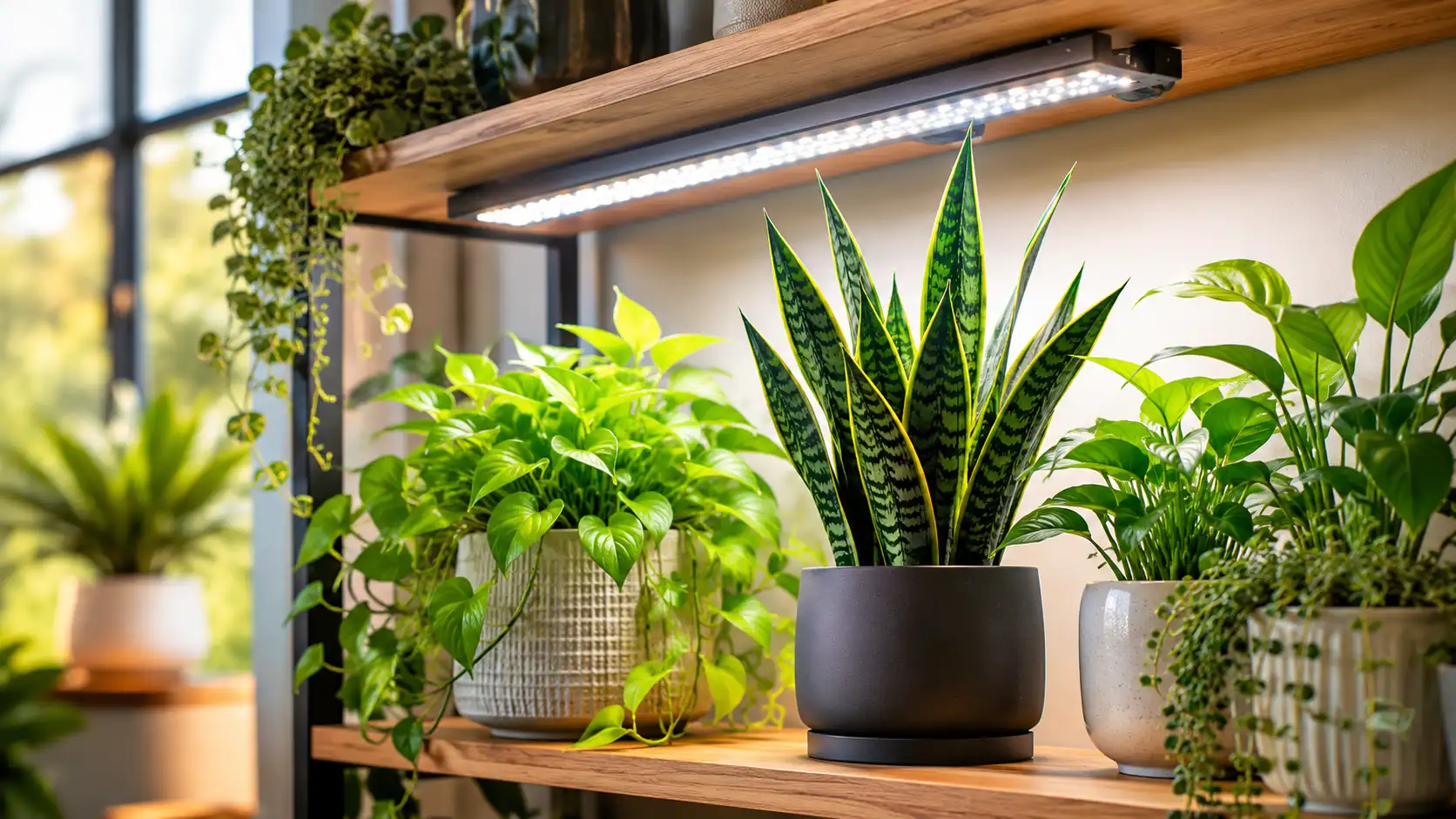
No, most indoor plants do not need UV light to grow or carry out photosynthesis. The light plants use most directly for photosynthesis is in the photosynthetically active radiation (PAR) range, commonly defined as about 400 to 700 nanometers. UV light sits below 400 nanometers and is not a substitute for the visible light a plant needs for photosynthesis.
This does not mean UV has no effect on plants. UVA and UVB can influence plant development, pigments, protective compounds, and stress responses. However, these effects are different from providing the main light energy needed for photosynthesis. For ordinary houseplants, a suitable full-spectrum grow light is generally more important than adding a separate UV lamp.
What Plants Actually Use for Photosynthesis
A massive amount of marketing jargon surrounds indoor gardening, often clouding the fundamental physics of how plants process light. To build a highly effective indoor setup, you need to understand exactly what wavelengths your foliage is hunting for.
Understanding PAR (Photosynthetically Active Radiation)
Plants use light across a range of wavelengths, but the traditional photosynthetically active radiation (PAR) range is about 400 to 700 nanometers. This range represents the portion of light most directly associated with photosynthetic activity.
Other wavelengths can still influence plants through photoreceptors and signaling pathways. UV light, for example, can trigger protective and developmental responses without serving as the main light source for photosynthesis.
If you look at a rainbow, PAR covers the exact visible light spectrum you can see with the naked eye:
- The Blue Spectrum (400–500 nm): This is the engine behind vegetative growth. It triggers strong, stocky stem development, encourages thick leaf production, and keeps plants compact rather than leggy.
- The Red Spectrum (600–700 nm): This wavelength acts as a biological clock, telling the plant when it’s time to flower, produce fruit, or trigger root expansion.
Where Does UV Light Sit?
Ultraviolet light occupies wavelengths below about 400 nanometers. UVA is approximately 315 to 400 nm, while UVB is approximately 280 to 315 nm. UVC occupies shorter wavelengths and is generally filtered by Earth’s atmosphere before reaching the surface.
UV is outside the traditional 400 to 700 nm PAR range, so it should not be treated as the primary light source for photosynthesis. However, ultraviolet radiation can still affect plants through signaling and protective responses. The effect depends on the wavelength, intensity, exposure time, and plant species.
Therefore, a high-quality, standard full-spectrum white LED grow light provides absolutely everything your indoor garden needs to thrive from seedling to mature specimen without emitting a single watt of UV radiation.
UVB Lighting Requirements for Plants
For most houseplants, there is no standard UVB lighting requirement that you need to meet for normal growth. Plants can photosynthesize using suitable visible light in the PAR range without a dedicated UVB lamp.
UVB light falls roughly between 280 and 315 nanometers. Plants can detect UVB through the UV RESISTANCE LOCUS 8 (UVR8) photoreceptor, which can activate protective responses and changes in plant development. At appropriate exposure levels, UVB can influence compounds such as flavonoids and other protective metabolites.
However, UVB is not the same as the primary light source required for indoor plant growth. The amount of UVB a plant receives in nature also varies with species, location, season, and environmental conditions. Excessive UVB exposure can cause oxidative stress, DNA damage, reduced growth, and damage to photosynthetic processes.
For a typical indoor plant shelf, you generally do not need to calculate or provide a separate UVB dose. Focus first on providing adequate intensity and duration of suitable grow light.
Can Plants Grow Without UV Light?
Yes. Indoor plants can grow without a dedicated UV lamp as long as they receive enough suitable light for photosynthesis and their other growing requirements are met.
UV light can influence plant signaling, pigmentation, protective compounds, and stress responses, but these effects should not be confused with the basic light requirement for photosynthesis. For most houseplants, providing an appropriate full-spectrum grow light is more useful than adding a separate UV bulb.
A plant receiving inadequate visible light will not compensate for that shortage simply because a UV lamp has been added.
What Does UV Light Actually Do to Plant Biology?
Even though UV light isn’t a primary source of fuel for photosynthesis, it does interact with plant tissue in fascinating ways. Understanding these secondary reactions clarifies why an aggressive ultraviolet lamp for plants is generally a bad idea for casual indoor hobbyists.
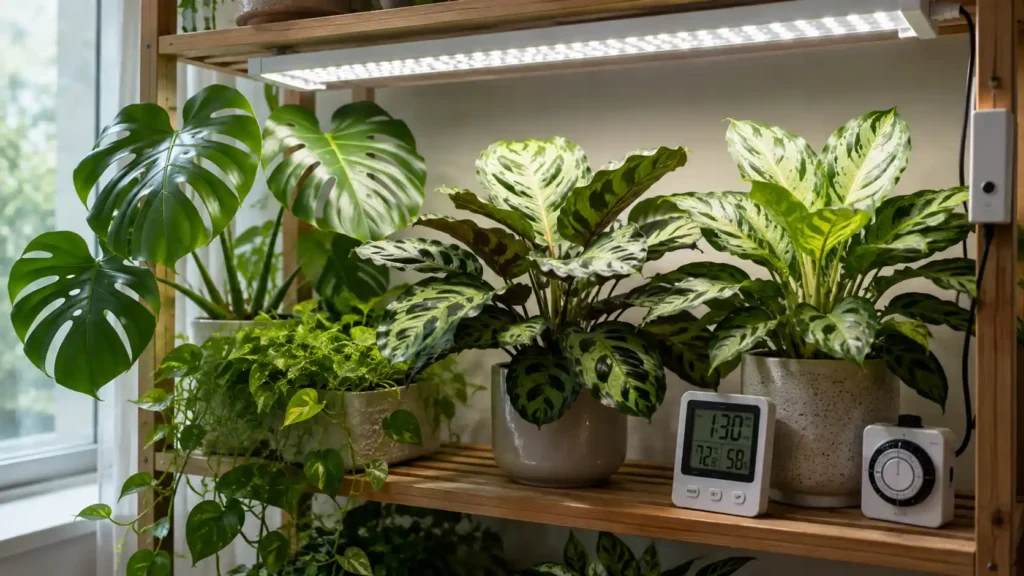
UVA and UVB are both ultraviolet wavelengths, but plants can respond to them in different ways.
UVA: UVA ranges from about 315 to 400 nanometers. It can influence plant development, phototropism, pigmentation, and other physiological processes. The response can vary considerably between plant species and the intensity of exposure.
UVB: UVB ranges from about 280 to 315 nanometers. Plants can detect UVB through the UVR8 photoreceptor, which is involved in protective responses and the production of UV-absorbing compounds such as flavonoids. Low or moderate exposure can act as a biological signal, while excessive exposure can cause stress and tissue damage.
For ordinary indoor houseplants, neither UVA nor UVB should be treated as a replacement for the visible light needed for photosynthesis. If your main goal is healthy growth, providing adequate plant-usable light is more important than adding a separate UV lamp.
1. Increased Pigment and Flavonoid Production
To protect their delicate internal cells from high-energy UV radiation, plants produce secondary metabolites, such as flavonoids and anthocyanins. These compounds often result in:
- Deepened leaf coloration (such as richer reds, purples, or darker greens).
- Slightly thicker leaf cuticles (the waxy outer layer).
- An increase in aromatic oils or resins in certain herbal crops.
2. The High Risk of Leaf Scorch and Cell Damage
While these protective adaptations sound beneficial, the line between an adaptive “tan” and severe cellular destruction is incredibly thin. Because most houseplants originate from dense tropical rainforest floors where taller tree canopies filter out almost all direct sunlight and UV radiation, their evolutionary programming isn’t built to handle high-energy rays.
Furthermore, traditional residential window glass naturally filters out nearly all UVB light. If you suddenly introduce an artificial ultraviolet lamp to an indoor plant, you risk overloading its defenses. This results in photoxidative stress, which manifests as bleached or crispy white spots on the leaves, stunted growth, and a destroyed root dynamic.
Why Reptile UV Lamps Should Never Be Used for Houseplants
Many beginners accidentally assume that any lamp labeled “UV” will benefit plants, but reptile lamps and horticultural grow lights are designed for completely different purposes.
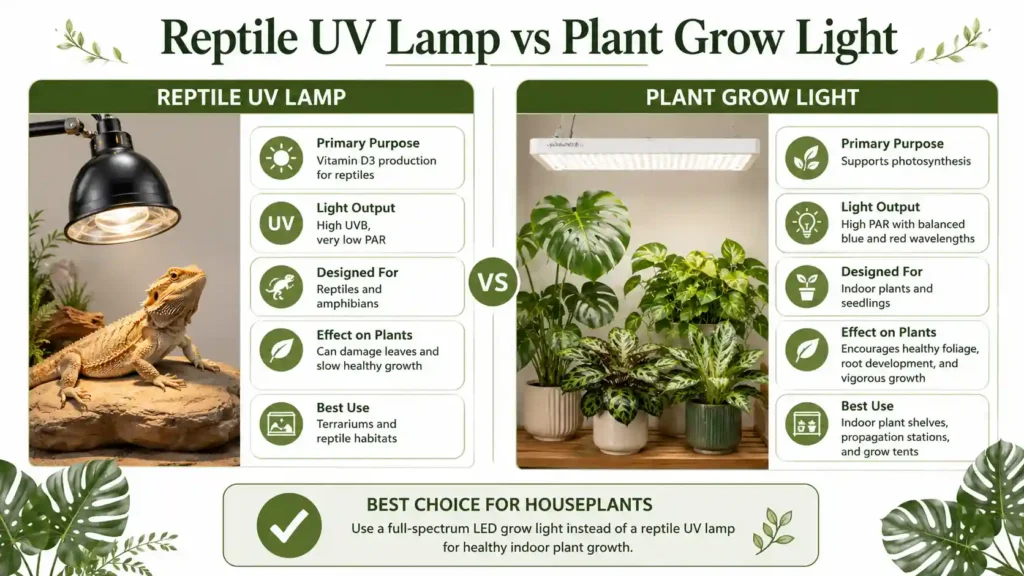
Reptile UV lamps are engineered to help reptiles produce vitamin D3 and metabolize calcium by emitting high levels of ultraviolet radiation. Plant grow lights, on the other hand, are designed to deliver Photosynthetically Active Radiation (PAR), the visible light spectrum plants use for photosynthesis and healthy growth.
A reptile UV lamp is not designed to provide the balanced plant-usable light that a horticultural grow light is designed to deliver. Depending on the fixture, it may provide substantial UV radiation without providing an appropriate amount or distribution of photosynthetically useful light.
For houseplants, using a reptile UV lamp simply because it produces ultraviolet radiation does not solve a lack of suitable grow light. Excessive UV exposure can also cause stress or tissue damage, depending on the wavelength, intensity, and exposure time.
What to Look For When Shopping for a Real Grow Light
If you want to skip the marketing hype and buy an indoor light setup that actually guarantees fast, lush growth, ignore the letters “UV” entirely and look for these four technical specifications on the box:
1. Color Temperature (Kelvin Rating)
For general houseplant maintenance and vegetative growth, look for a light with a color temperature between 5000K and 6500K. This is often labeled as “Daylight” or “Cool White.” It provides a clean, crisp light profile rich in the blue wavelengths that keep plants from stretching out and becoming leggy.
2. Full-Spectrum Balance
If you want to support flowering varieties, search for a “full-spectrum” or “warm white” light (around 3000K to 3500K). These fixtures feature a pronounced red spectrum boost that mimics the shifting light of late summer and autumn, encouraging your indoor selection to push out blooms rather than just green leaves.
3. PPFD and Structural Light Intensity
Light drops off dramatically the farther a plant sits from the light source due to the inverse-square law of physics. Check the manufacturer’s packaging for a chart showing PPFD (Photosynthetic Photon Flux Density) at various hanging heights. A good rule of thumb is to place low-light plants 18 to 24 inches away from a standard household LED grow bulb, while high-light varieties can sit 12 to 18 inches away.
4. A Regulated Photoperiod
Plants require a structured rhythm of light and darkness to regulate their internal metabolic processes. Leaving a grow light running 24 hours a day will exhaust your collection and cause structural failure. Use a cheap mechanical or smart digital timer to establish a consistent 12-to-16-hour daytime photoperiod, giving your plants a reliable 8 to 12 hours of total darkness to breathe and rest.
Maximizing the Impact of Your Indoor Light Setup
If you are choosing plants for an indoor space with limited natural light, start with species that are already suited to indoor conditions, such as the plants covered in our guide to best indoor plants for beginners. This extra light is especially valuable during the darker winter months or in homes with north-facing windows where natural daylight is limited.
Even resilient plants like the Black Coral snake plant respond to consistent supplemental lighting with faster growth and richer, darker foliage, although they remain one of the few species that tolerate lower light conditions well.
For shelves, corners, and other dimmer areas, you can also consider low-light hanging plants that are better suited to lower-light indoor spaces. Colorful varieties like Chinese Evergreen, foliage favorites such as Calathea, and many evergreen indoor plants all perform well under full-spectrum grow lights.
Conclusion
FAQ
Will an ultraviolet lamp for plants hurt my houseplants?
Yes, if it is an intense, unshielded source of raw UV radiation. Standard indoor houseplants are evolved to capture soft, visible light. Flooding them with aggressive UV light can burn the outer leaf cuticle, destroy chlorophyll cells, and stunt overall growth. Stick to full-spectrum LED lights that mimic natural daylight without the harmful UV spikes.
Can sunlight through a standard glass window replace a grow lamp?
For spaces with clear, unobstructed south- or east-facing windows, natural sunlight is usually more than enough for most houseplants. However, if your windows are blocked by outdoor trees or buildings, face north, or if you are managing high-light plants during dark winter seasons, a basic grow light is highly recommended to fill in the lighting gap.
Do all grow lights need to stay turned on all day long?
Absolutely not. Plants have a complex night cycle where they process the energy they gathered during the day. Keeping your grow lights turned on 24/7 will disrupt this natural cycle, leading to weak stems and pale leaves. Set a standard daily timer for 12 to 16 hours of light, allowing for at least 8 hours of uninterrupted darkness every single night.
Can grow lights replace natural sunlight completely?
Yes, high-quality full-spectrum LED grow lights can provide all the light needed for photosynthesis when used at the correct intensity and duration. However, plants still require an appropriate watering routine, nutrients, and suitable temperatures to remain healthy.
Do plants need UV light to grow?
No. Most indoor plants can grow without a dedicated UV lamp as long as they receive enough suitable light for photosynthesis. UV radiation can influence plant signaling and protective responses, but it is not a substitute for adequate plant-usable light.
Do plants need UV light for photosynthesis?
No. Plants can carry out photosynthesis using suitable light within the traditional PAR range of about 400 to 700 nanometers. UV light falls below this range and is not required as the primary light source for photosynthesis.
Can plants grow without UV light?
Yes. A plant can grow indoors without a dedicated UV lamp when it receives adequate photosynthetically useful light, along with suitable water, nutrients, temperature, and other growing conditions.
Do plants need UVB?
Most houseplants do not require a dedicated UVB lamp for normal indoor growth. UVB can act as a biological signal and influence protective compounds and plant development, but excessive UVB can also cause stress and damage.
Do plants need UVA or UVB?
Plants can respond to both UVA and UVB, but neither should be treated as a replacement for the visible light required for photosynthesis. UVA and UVB have different biological effects, and the response depends on the plant species and exposure conditions.
Can UV light replace sunlight for plants?
No. A UV lamp alone cannot replace the broad range of plant-usable light supplied by sunlight or an appropriate grow light. If natural sunlight is insufficient indoors, a suitable full-spectrum grow light is a more appropriate supplemental source.