Inside the Blog
An absolute game-changer for tropical houseplants is a reliable humidifier. Most homes sit at 30% to 40% relative humidity, while many tropical plants want 50% to 60%. The gap between those numbers shows up as crisp brown edges, curling leaves, and stalled growth, no matter how carefully you manage watering and light.
This guide simplifies the buying process by detailing what features actually matter for plant health and which marketing gimmicks you can safely skip.
Both types raise ambient moisture effectively, but they function differently in a living space.
Cool Mist Humidifiers
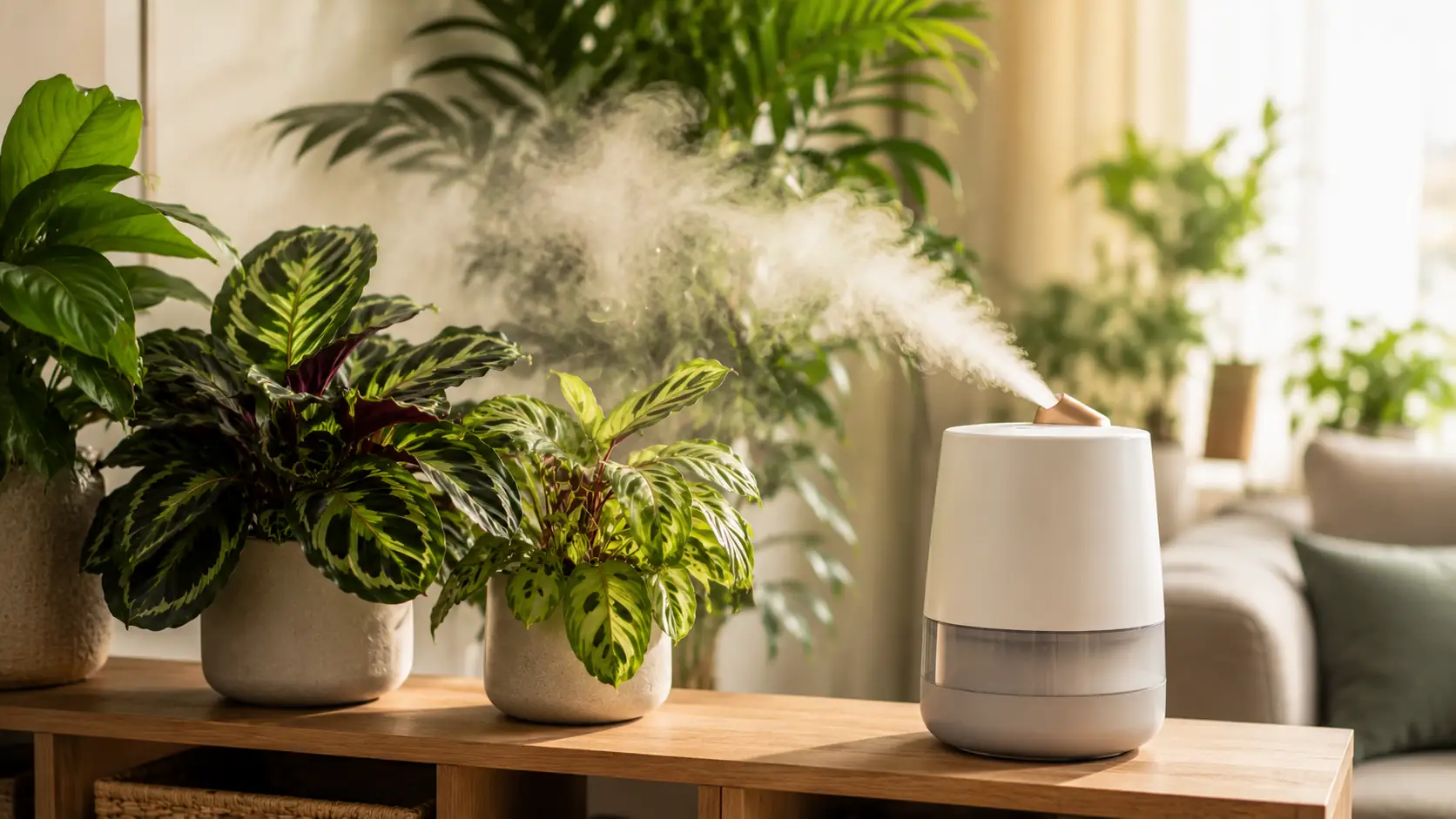
Ultrasonic or evaporative models are the top recommendation for plant owners. They consume very little electricity, run quietly, and carry no risk of burning curious pets or children since they contain no heating element. Ultrasonic models produce a fine, visible mist by vibrating water at an ultrasonic frequency. This mist looks great on plant shelves, though it is the invisible dispersion of moisture into the air that raises the room’s humidity, not the water droplets physically landing on the leaves.
Warm Mist Humidifiers
These units boil water internally to release clean steam. The boiling process kills off waterborne bacteria and traps mineral deposits before they can enter the air. On the downside, they pull significantly more power from the wall, present a minor burn risk if knocked over, and raise the room temperature, which can turn an already warm room uncomfortably stuffy.
For the vast majority of indoor plant setups, a cool mist ultrasonic humidifier offers the best balance of safety, noise control, and efficiency.
What Tank Size Do You Actually Need?
Tank capacity directly dictates how often you will be carrying the unit to the sink. Pick a size that aligns with your daily routine and the scale of your collection.
- Small Tanks (0.5 to 1.5 Liters): Best for a tight cluster of plants on a single small shelf or desk. Expect to refill these every 8 to 12 hours.
- Medium Tanks (2 to 4 Liters): The sweet spot for a dedicated plant room or an average-sized living area filled with greenery. These usually run for 12 to 24 hours on low or medium settings before needing a top-off.
- Large Tanks (5 Liters and Above): Ideal for open-concept spaces or if you prefer to refill the unit only twice a week. They take up a larger visual footprint and cost more upfront, but they eliminate daily maintenance friction.
A Quick Warning: Avoid buying an undersized model just to save a few dollars. If a tiny tank forces you to refill the machine three times a day, you will eventually leave it turned off out of sheer frustration, defeating the purpose entirely.
Essential Features Worth the Investment
When comparing models, prioritize these practical upgrades:
- Adjustable Mist Output: A simple dial or button to throttle the moisture flow prevents over-saturating the room. Running a unit on a gentle, low setting is far better than blast-humidifying a small space into a swamp.
- Built-In Humidistat: High-quality models feature a built-in sensor that measures room moisture. You can program the unit to hit 55% humidity, and it will automatically cycle on and off to maintain that target. This saves water, cuts electricity use, and prevents mold growth on your walls.
- Automatic Shut-Off: A safety necessity for ultrasonic units. This feature instantly cuts power the moment the tank runs dry, preventing the motor from overheating and burning out.
- 360-Degree Directional Nozzle: A rotating nozzle lets you point the moisture stream directly toward your plant grouping while steering it away from drywall, electronics, and wooden furniture.
Gimmicks That Are Not Worth the Extra Cost
Skip these features if you are buying a machine specifically for gardening purposes:
- Aromatherapy Trays: Never add essential oils to a humidifier meant for plants. Many common essential oils, like eucalyptus and tea tree, are toxic to dogs and cats when vaporized into the air.
- Color-Changing LED Lights: These decorative nightlights drive up the retail price without offering any physiological benefit to your greenery.
- Over-Engineered Smart App Controls: Unless your home is fully integrated with automated routines, basic physical buttons or dial controls do the exact same heavy lifting with fewer connectivity headaches.
Smart Placement Strategies
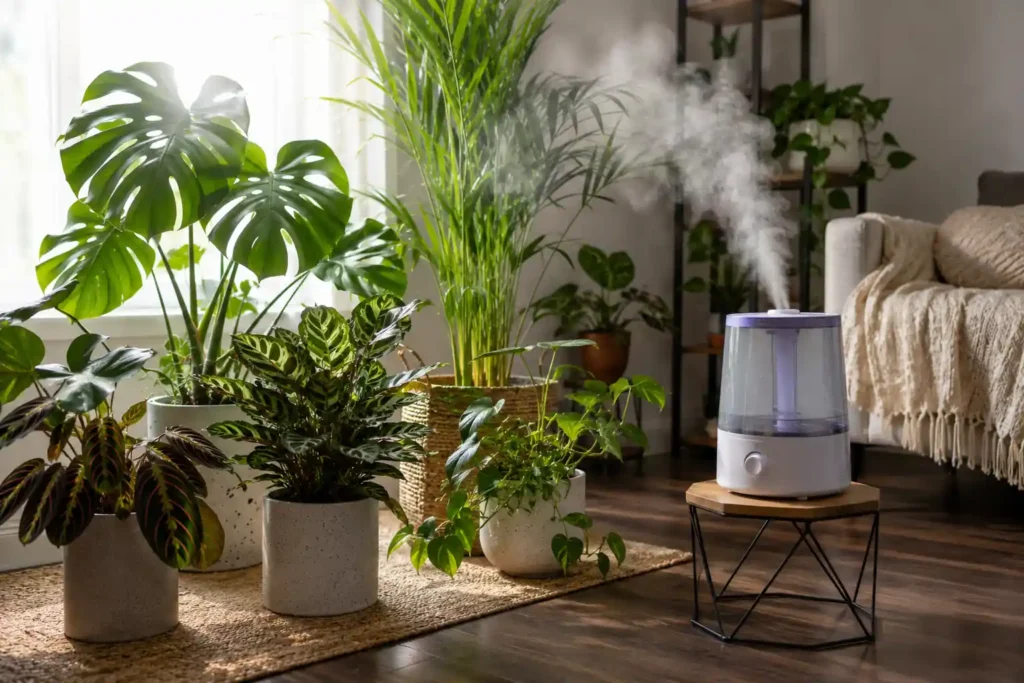
Position your unit near your plant grouping, but keep it roughly 1 to 2 feet away from the nearest leaf. The goal is to humidify the surrounding air, not to drench the foliage. If leaves remain physically wet for hours at a time, you open the door to fungal spotting and bacterial leaf rot.
Additionally, avoid placing the humidifier flush against a wall or directly on a hardwood floor. Heavy moisture buildup over time can blister paint, peel wallpaper, or warp wood finishes. Elevating the unit on a water-resistant stool or side table yields the best air circulation.
Three Free Alternatives to Try First
If you want to test the waters before buying a dedicated appliance, give these methods a try:
- Plant Grouping: Tropical plants naturally release moisture through their pores via a process called transpiration. By clustering your Calathea care guide subjects alongside a Lemon Lime prayer plant, you create a localized microclimate that retains ambient moisture much better than a single isolated pot.
- Pebble Trays: Pour water into a shallow tray filled with river stones, then place your potted plant right on top. The bottom of the pot must rest securely on the dry stones, completely out of the standing water, to protect the roots from rotting. As the water evaporates, it creates a subtle column of humidity right around the foliage.
- Ditch the Spray Bottle: While frequently recommended online, misting leaves with a spray bottle provides a temporary spike in humidity that disappears within minutes. The lingering water droplets on the leaves do very little to solve dry room air and frequently spark fungal issues in rooms with poor air movement.
Which Plants Benefit the Most?
High-humidity environments are crucial for finicky tropical varieties. The delicate, thin leaves covered in our Calathea care guide and our Lemon Lime prayer plant care guide show dramatic improvement when supplemental moisture is introduced. Adding a humidifier also encourages larger leaf development and faster fenestration growth for species detailed in our Monstera deliciosa care guide.
Conversely, desert natives like the Black Coral snake plant thrive in arid conditions and can rot if kept in a humid environment. Keep your succulents, cacti, and snake plants well away from the humidifier zone.
Quick FAQ
Can a humidifier cause mold on my potting soil?
It can if the room lacks air circulation or if the humidity levels consistently exceed 65%. Keeping the room between 50% and 60% relative humidity and running a small household fan nearby will prevent mold spores from settling on your soil.
How do I track my home’s actual humidity levels?
Buy an inexpensive digital hygrometer. These small, battery-operated meters cost less than $10 online and give you a precise temperature and moisture readout within seconds, taking the guesswork out of plant care.
Do I absolutely need to use distilled water?
If you run an ultrasonic model, tap water with heavy mineral content will create a fine white dust that settles all over your plant leaves and furniture. Switching to distilled, reverse-osmosis, or collected rainwater eliminates this dust and keeps your humidifier’s internal parts scale-free. Evaporative models are much more forgiving with hard tap water because the internal paper wick traps the minerals before they enter the room.