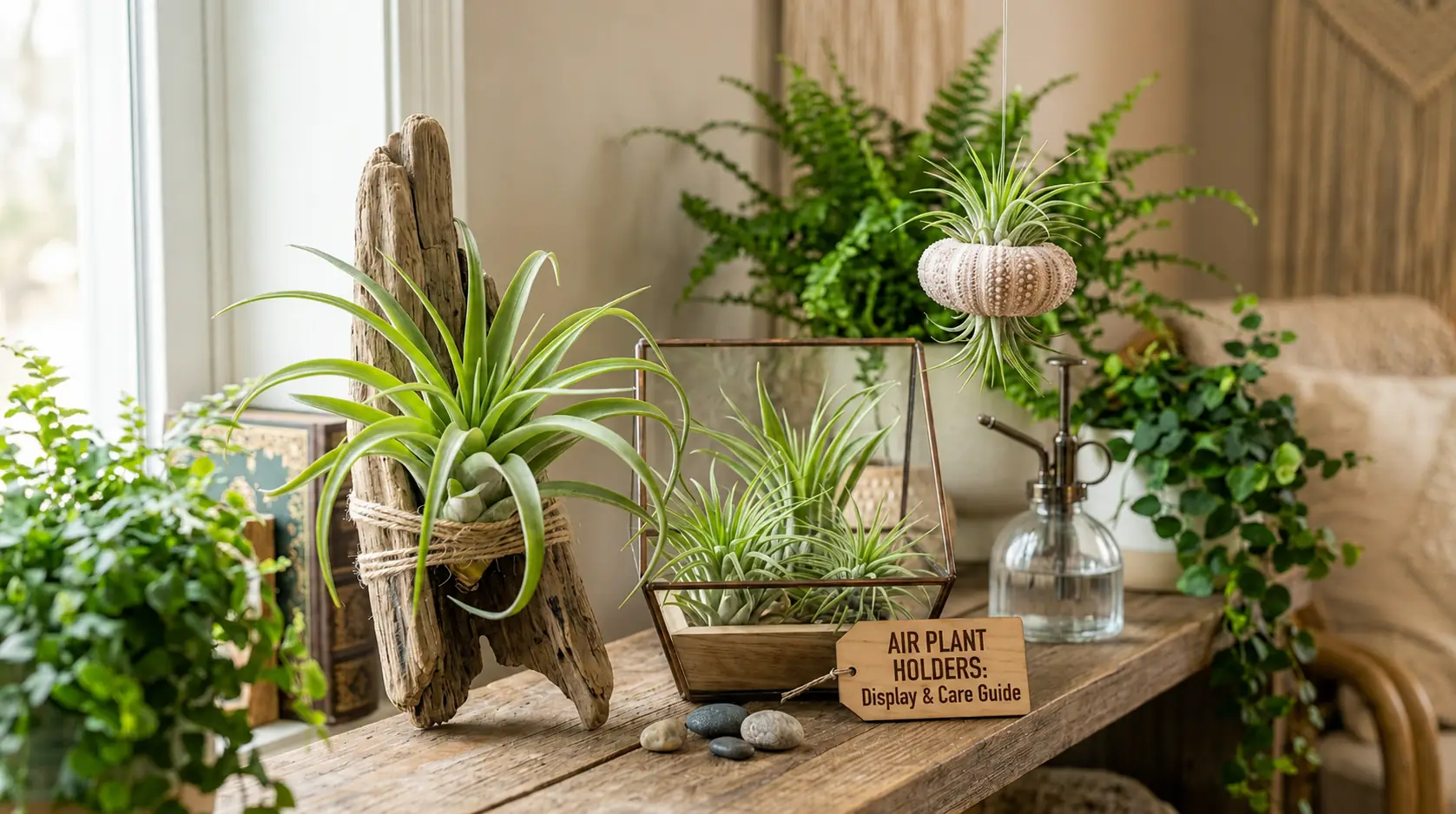
Air plants (Tillandsia) are the ultimate rule-breakers of the houseplant world. Because they don’t grow in soil, they give you total freedom to get creative with how you display them. You can hang them from strings, nestle them into crystals, or mount them directly to the wall.
But that exact flexibility is also where most gardeners accidentally kill them. The wrong type of holder acts like a trap, pooling stagnant water and rotting the plant from the base up. If you want your air plants to actually thrive—not just look cute for a month before falling apart—here is how to choose a holder that puts their health first.
The Golden Rule: Airflow is Everything
In their native habitats across Central and South America, air plants don’t sit in stagnant dirt. They hitch a ride on tree branches, cliff faces, and rocks, soaking up nutrients from the air and rain. Crucially, they are exposed to constant wind, which dries them out quickly after a storm.
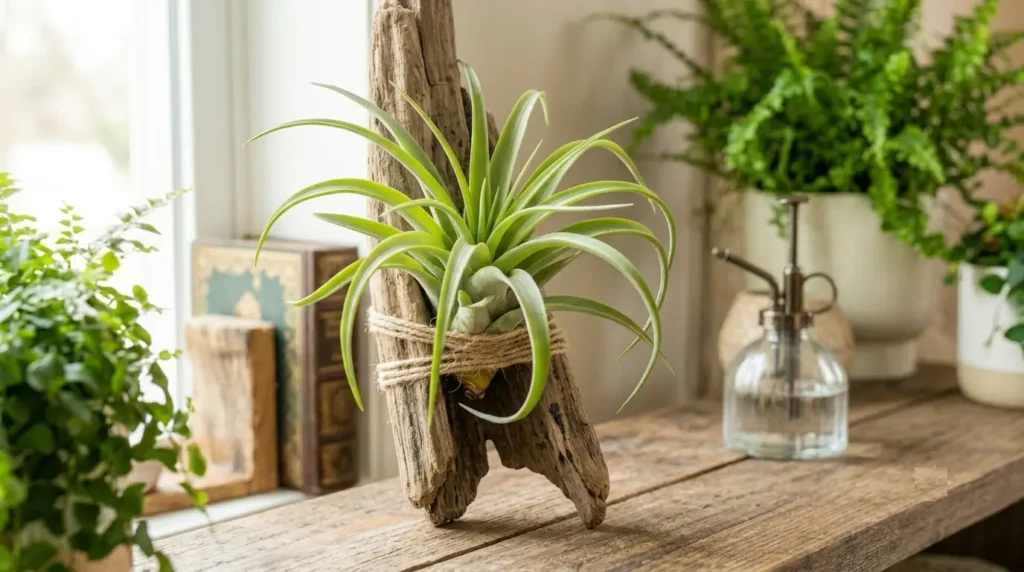
When you put an air plant into a holder that blocks airflow or traps water against its base, you create a breeding ground for rot. Style is great, but air circulation must always come first.
The Best Types of Air Plant Holders
Not all holders are created equal. Let’s look at the options that keep your plants happy and how to use them safely.
1. Mounted Holders (Driftwood, Cork, and Wire Frames)
Mounting your plants onto natural wood or geometric wire frames mimics how they grow in the wild. It keeps the base completely exposed to the open air.
- The Wire Warning: You can use thin wire, fishing line, or natural twine to secure your plants. Never use copper wire. Copper is highly toxic to air plants and will slowly poison them when wet.
- Skip the Glue: While many stores sell air plants glued to rocks or wood, it’s a terrible long-term strategy. It makes it nearly impossible to remove the plant for a proper soak without tearing its base.
2. Open Terrariums and Glass Globes
Glass globes look beautiful hanging near a window, but they require a little extra caution.
- The Closed-Globe Danger: Never put an air plant inside a fully enclosed glass terrarium. The moisture has nowhere to escape, and the plant will suffocate and turn to mush.
- The Fix: Only use globes with wide, generous openings. And when it’s time to water, always take the plant completely out of the glass, let it dry entirely, and then pop it back in.
3. Sea Shells, Stones, and Crystals
Urchin shells (often called “jellyfish displays” when hung upside down), heavy crystals, and hollowed-out stones make fantastic, minimalist resting spots. The major benefit here is that the plant isn’t attached to anything, making watering day a breeze. Just make sure the hollow part of the shell or stone doesn’t hold hidden pockets of water.
The “Upside Down” Secret to Watering
No matter what kind of holder you choose, your watering routine will make or break your plant. You can mist them 2 to 3 times a week, but the best method is a weekly deep soak.
- Take the plant out of its holder and submerge it in room-temperature water for 20 to 30 minutes.
- The Critical Step: Remove the plant from the water and give it a firm shake to dislodge any water trapped between the leaf layers.
- Dry It Upside Down: Lay the plant upside down on a towel in a well-ventilated room for at least 4 to 5 hours. If you put a damp air plant right back into a tight container, the water trapped at the base will rot the plant within days.
Lighting: Bright But Protected
Air plants need plenty of light to photosynthesize since they don’t have roots to pull energy from the ground.
- Ideal Light: Bright, indirect sunlight is perfect. A spot near an east- or west-facing window works beautifully.
- What to Avoid: Keep them out of intense, scorching afternoon sun. This is especially true if they are inside a glass holder, which can act like a magnifying glass and literally bake the leaves.
Styling Your Plant Shelf
Because air plants are so unique and compact, they are perfect for filling in the structural gaps on a crowded plant shelf.
If you are just building out your collection, mix them in with some low-maintenance soil-dwellers from our beginner indoor plant guide. For a striking contrast in textures, try styling a few wispy air plants right next to a lush, broad-leafed specimen like the Lemon Lime prayer plant.
FAQ
Can air plants live without ever being in a holder?
Yes! They don’t care about the holder at all. You can literally sit an air plant directly on a bookshelf, a decorative tray, or a stack of books, and it will be perfectly happy as long as it gets light and water.
How do I know if my air plant is rotting?
Look at the very bottom of the plant. If the base turns dark brown or black, feels soft and mushy, or if the inner leaves pull out effortlessly with a gentle tug, the plant has rotted. Unfortunately, once rot takes over the core, the plant cannot be saved.
Do air plants ever need fertilizer?
They don’t strictly need it to survive, but they will grow much faster and produce beautiful blooms if you use a diluted, bromeliad- or air-plant-specific fertilizer once a month. Just mist it onto the leaves or add it to your weekly soaking bucket.