Inside the Blog
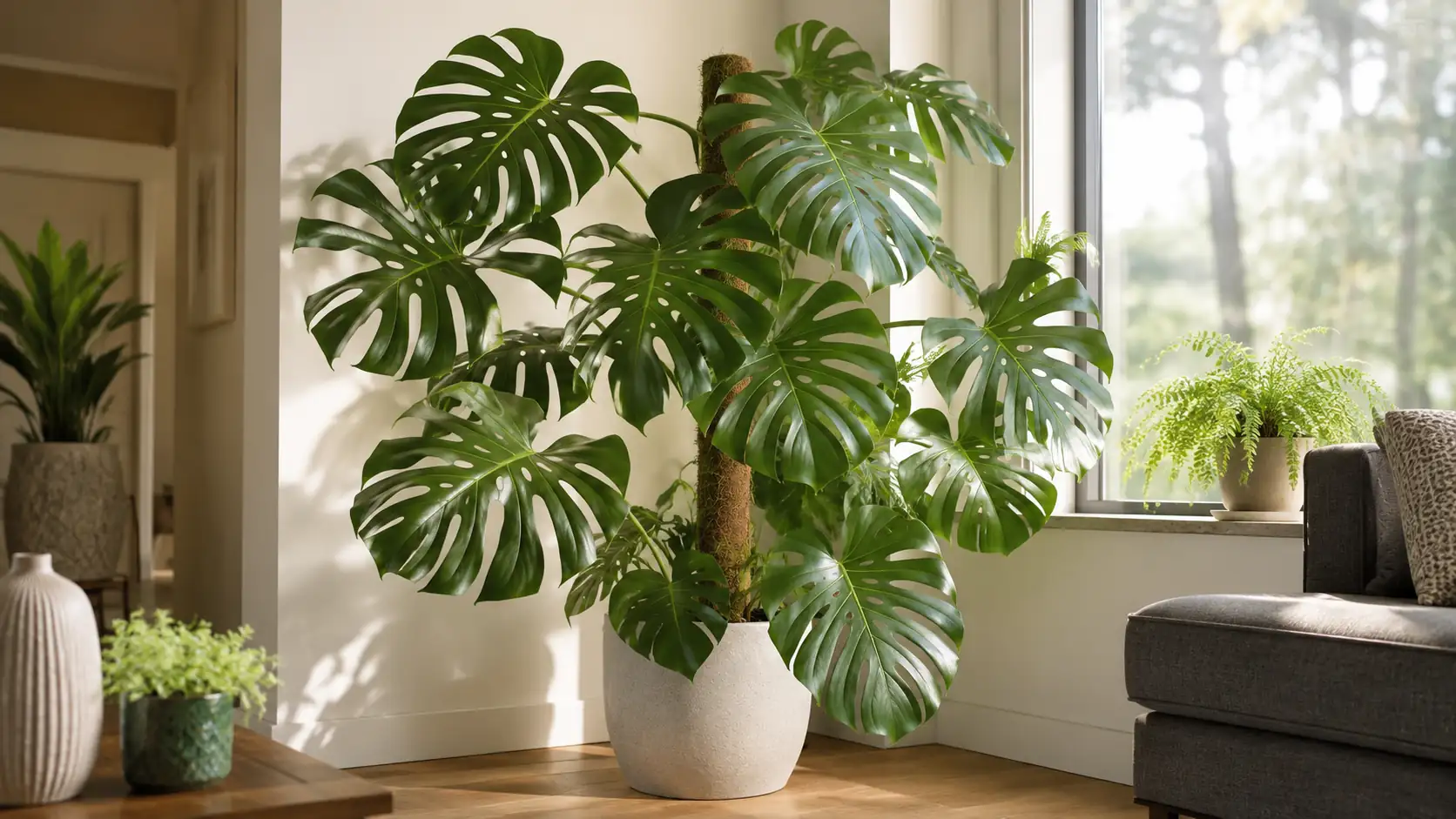
Monstera deliciosa is one of the most rewarding indoor plants to grow when its basic needs are met. Bright indirect light, proper watering, and a well-draining potting mix encourage faster growth, larger leaves, and the distinctive natural splits known as fenestrations. Most common problems develop gradually and can usually be corrected by adjusting one part of the care routine.
Why Leaves Split and What Prevents It
The journey from a juvenile houseplant to a mature, fenestrated masterpiece is a common source of confusion for many indoor gardeners. Young Monstera leaves naturally emerge completely solid, heart-shaped, and devoid of any holes or cuts. As the vine grows older, it relies on a specific environmental cue to begin altering its cellular structure: high-intensity ambient light.
In its natural rainforest habitat, the plant develops these splits to allow high winds to pass safely through its giant canopy without tearing the tissue, while simultaneously letting flickering sunlight reach the lower, younger leaves on the forest floor. If your mature plant continues to push out small, completely solid leaves month after month, the issue is rarely a lack of fertilizer or an incorrect soil blend.
This is the single most misunderstood element of monstera deliciosa care. Plant owners frequently spend money on unnecessary chemical leaf shines, elaborate humidity tools, or frequent repotting schedules when the only true biological fix is moving the specimen into a zone with stronger, more consistent light energy.
Light Requirements for Monstera Deliciosa
Bright, indirect light is the absolute fuel that powers fenestration production and keeps your vine from becoming leggy.
Ideal Placement Strategies
To replicate the dappled canopy conditions this plant loves, position it a few feet away from a large south-facing or east-facing window. This provides excellent ambient brightness without exposing the delicate leaf cuticles to direct solar radiation. Alternatively, placing it directly on the sill of a large north-facing window that receives clear, unobstructed daylight works beautifully. While your Monstera can easily tolerate a few hours of soft morning sun, intense, unfiltered western or afternoon sunlight will quickly bleach the rich green chlorophyll, resulting in permanent, crispy brown scorch marks across the foliage.
Supplemental Lighting Solutions
A healthy Monstera produces larger leaves, shorter gaps between stems, and increasingly pronounced fenestrations as it matures. If new leaves remain small, solid, or the stems begin stretching toward the nearest window, the plant likely needs brighter indirect light.
How to Water a Monstera Deliciosa Correctly
Establishing an intentional, moisture-driven watering routine is the key to preventing long-term root failure. Monsteras are highly expressive plants, but their root systems demand a distinct wet-to-dry cycle.
The Simple Watering Rule
To keep things easy, follow this straightforward approach based on how the soil actually feels:
- When the top two inches are dry: Water the pot thoroughly until you see it running freely out of the drainage holes at the bottom.
- When the soil still feels damp or wet: Leave it completely alone. Skipping a watering when moisture is already present is the absolute best way to protect your plant from anaerobic root rot.
The Soak-and-Dry Method
Never water your Monstera on a strict calendar schedule. Instead, always gauge the soil manually. Push your finger down into the potting mix to a depth of two inches; if the soil feels damp, cold, or clings to your skin, check back in a few days. Once that top layer feels completely dry and powdery, carry the pot to a sink or tub and water it deeply until moisture flows freely out of the drainage holes at the base.
Seasonal Adjustments
During the active summer growing season, a robust Monstera processing high levels of sunlight will typically drink enough to require watering roughly once a week. However, when the dark winter months arrive and the plant enters a semi-dormant metabolic state, its water consumption drops dramatically. The soil may take two weeks or longer to dry out appropriately. When in doubt, it is always safer to let the plant sit dry for a few extra days rather than watering early, as stagnant, waterlogged soil deprives the root cells of oxygen, leading to rapid root rot.
Best Soil and Repotting Tips for Monstera Deliciosa
Because Monstera deliciosa is an epiphytic climbing vine rather than a standard terrestrial plant, its roots are evolutionarily designed to breathe air and grip rough surfaces, meaning dense, heavy soil mixes are highly destructive.
Crafting the Perfect Aerated Substrate
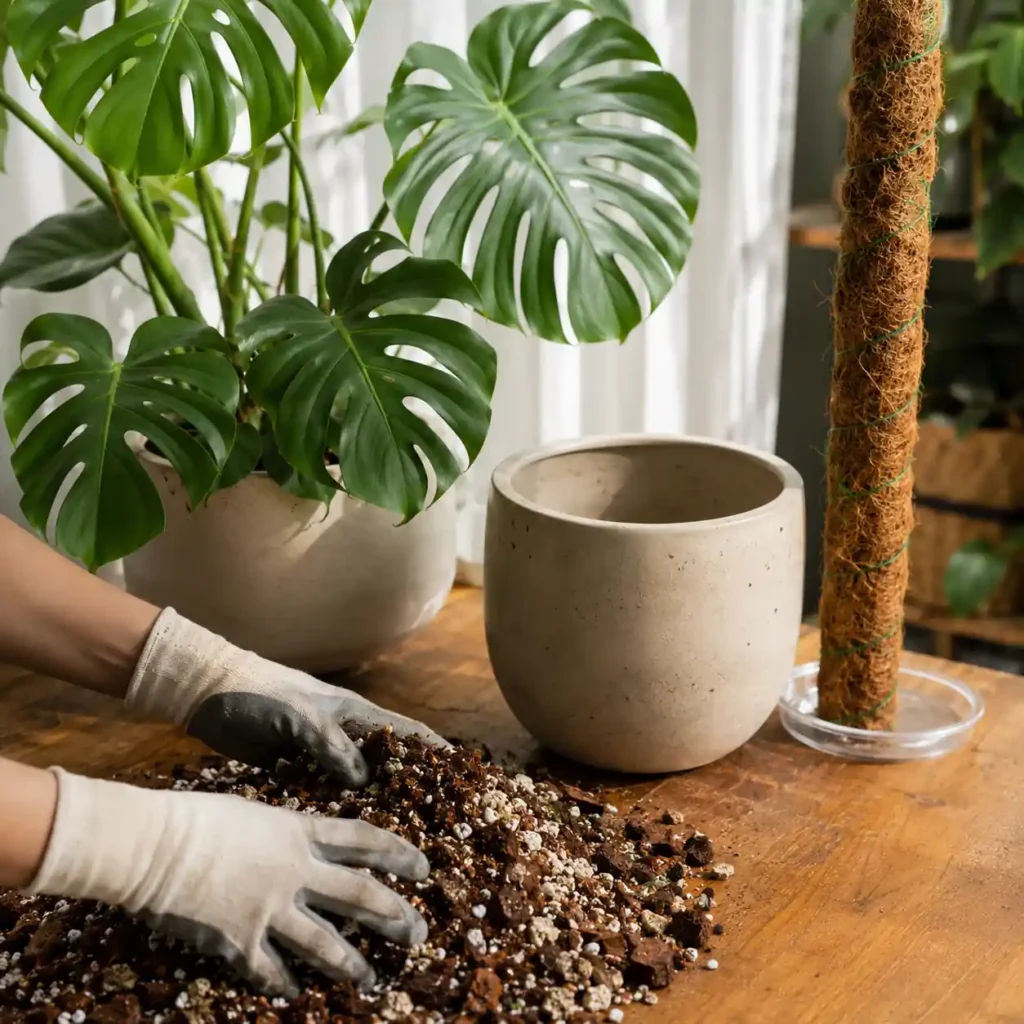
Standard, straight-out-of-the-bag potting soil holds onto water for far too long, packing tightly around the roots and cutting off essential airflow. To keep the root ecosystem healthy, mix a custom, chunky medium using these three key components:
- 50% High-Quality Potting Soil: Provides a stable nutrient base and basic structural retention.
- 30% Coarse Perlite or Pumice: Creates permanent macroscopic air pockets and ensures rapid water drainage.
- 20% Orchid Bark Chips: Mimics the coarse, woody debris the plant naturally clings to in the wild, allowing roots to wrap and breathe.
When and How to Repot
Always choose a pot with drainage holes to allow excess water to escape freely. Select a new container only slightly larger than the previous one, as oversized pots hold excess moisture that increases the risk of root rot.
On average, a rapidly growing Monstera will outgrow its container every one to two years. Warning signs that your plant is ready for a larger home include thick roots visibly circling the top of the soil, roots forcefully pushing out through the bottom drainage holes, or water running straight through the pot without being absorbed by the root ball.
When upgrading, select a new container that is no more than 2 to 3 inches larger in diameter than the old one to avoid excess uncolonized soil turning soggy.
Ideal Humidity and Temperature for Monstera
While Monsteras are remarkably resilient and adapt to average residential conditions better than most tropical imports, keeping them inside their ideal atmospheric zones will noticeably speed up leaf production.
Managing Air Moisture
This species thrives when relative humidity sits between 50% and 60%. If your home’s air runs dry—which is incredibly common during the winter when indoor heating systems run constantly—the plant may struggle to cleanly unfurl new leaves, or develop ugly, dry margins. Running a dedicated cool-mist humidifier near your plant display is the most efficient way to maintain a stable microclimate.
Temperature Thresholds
Keep your indoor environment consistently warm, maintaining temperatures between 65°F and 85°F (18°C to 29°C). Be highly mindful of placement: avoid setting your Monstera directly in the path of blast-freezing air conditioning vents, drafty winter windowsills, or intense, drying heat radiation from radiators.
Understanding Monstera Aerial Roots
As your Monstera deliciosa scales upward, it will begin producing long, thick, brown, wood-like cords extending outward from the nodes along the main stem. These are aerial roots, and they serve a critical dual purpose in the wild: climbing vertical tree trunks to access brighter light and absorbing atmospheric moisture.
How Monstera Growth Patterns Work
A mature Monstera manages its growth by sending two entirely different structures out from its main stem, each hardwired with its own biological job:
- Leaf Petioles (Phototropism): These are the leaf stems. They are genetically programmed to grow toward the nearest light source, ensuring the large glossy leaves absorb maximum solar energy.
- Aerial Roots (Gravitropism): These are the woody, brown cords. They are programmed to grow downward toward the earth, searching for physical support to anchor the heavy vine or soil to tap into for extra water.
Indoors, these roots can look wild and untamed, but you should never cut them off flush with the stem. Snipping them away removes a core piece of the plant’s vascular system, reducing its ability to take up moisture and support its own physical weight. Instead, manage them cleanly using one of these two practical methods:
- Tuck Them Away: Gently guide the growing tips downward and tuck them directly into the potting soil, where they will eventually transform into standard underground roots, adding extra physical stability to the heavy top growth.
- Utilize a Support Structure: Guide the aerial roots into a damp moss pole or a sturdy coco coir support stake. This encourages the vine to climb vertically, mimicking its natural behavior and resulting in significantly larger leaves and tighter node spacing.
Common Monstera Problems and Solutions
- Yellow Leaves: This is the universal distress signal for overwatering, poor drainage, or a pot lacking drainage holes entirely. Check the deep soil moisture immediately and allow the medium to dry completely before considering another watering.
- No New Growth: If the plant stops pushing out new leaves during the spring or summer, it is typically starving for light or completely rootbound. Move it closer to a window and inspect the root ball for crowding before applying fertilizer.
- Brown Leaf Edges and Crispy Tips: This symptom usually points to chronically low humidity levels or highly inconsistent watering habits (allowing the soil to bone-dry for weeks, followed by sudden drowning).
If you’re building an indoor plant collection, understanding common plant care mistakes can help prevent issues such as overwatering, poor drainage, and incorrect lighting. Monstera deliciosa also pairs well with several species featured in our best indoor plants for beginners, making it easy to create an attractive indoor display with plants that have similar care requirements.
Quick FAQ
Why does my Monstera have no splits on its leaves?
If your plant is already mature but only produces solid, heart-shaped leaves, it is almost certainly starving for light. Move the container into a spot that receives ample bright, indirect sunlight. Within a few growth cycles, the plant will react to the increased light energy by producing new leaves with deep fenestrations.
How fast does Monstera deliciosa grow?
Under optimal indoor conditions—featuring bright indirect sun, warm room temperatures, and a consistent wet-to-dry watering routine—a healthy Monstera can easily produce one to two large new leaves every month during the spring and summer. This growth rate will naturally drop to near zero during the dark, cold winter months.
Is Monstera toxic to pets?
Yes. Monstera deliciosa foliage and stems contain microscopic, needle-sharp insoluble calcium oxalate crystals. If chewed or swallowed by dogs or cats, these crystals pierce the soft oral tissues, causing intense mouth irritation, excessive drooling, visible swelling of the lips and tongue, and acute vomiting. Always position this plant on a high shelf or inside a secure room well out of reach of curious pets.
Should I rotate my Monstera?
Yes. Rotate the pot every few weeks so all sides receive even light, encouraging balanced growth.
Does Monstera need a moss pole?
A moss pole isn’t required, but it supports natural climbing growth and often encourages larger, more mature leaves.
Can I cut aerial roots off my Monstera?
It’s best to leave healthy aerial roots intact or guide them into the soil or a moss pole rather than removing them.
How often should I repot a Monstera?
Most healthy plants benefit from repotting every one to two years or when roots begin growing through the drainage holes.
Why are my Monstera leaves turning yellow?
Yellow leaves are most commonly caused by overwatering, poor drainage, or soil that remains wet for too long.