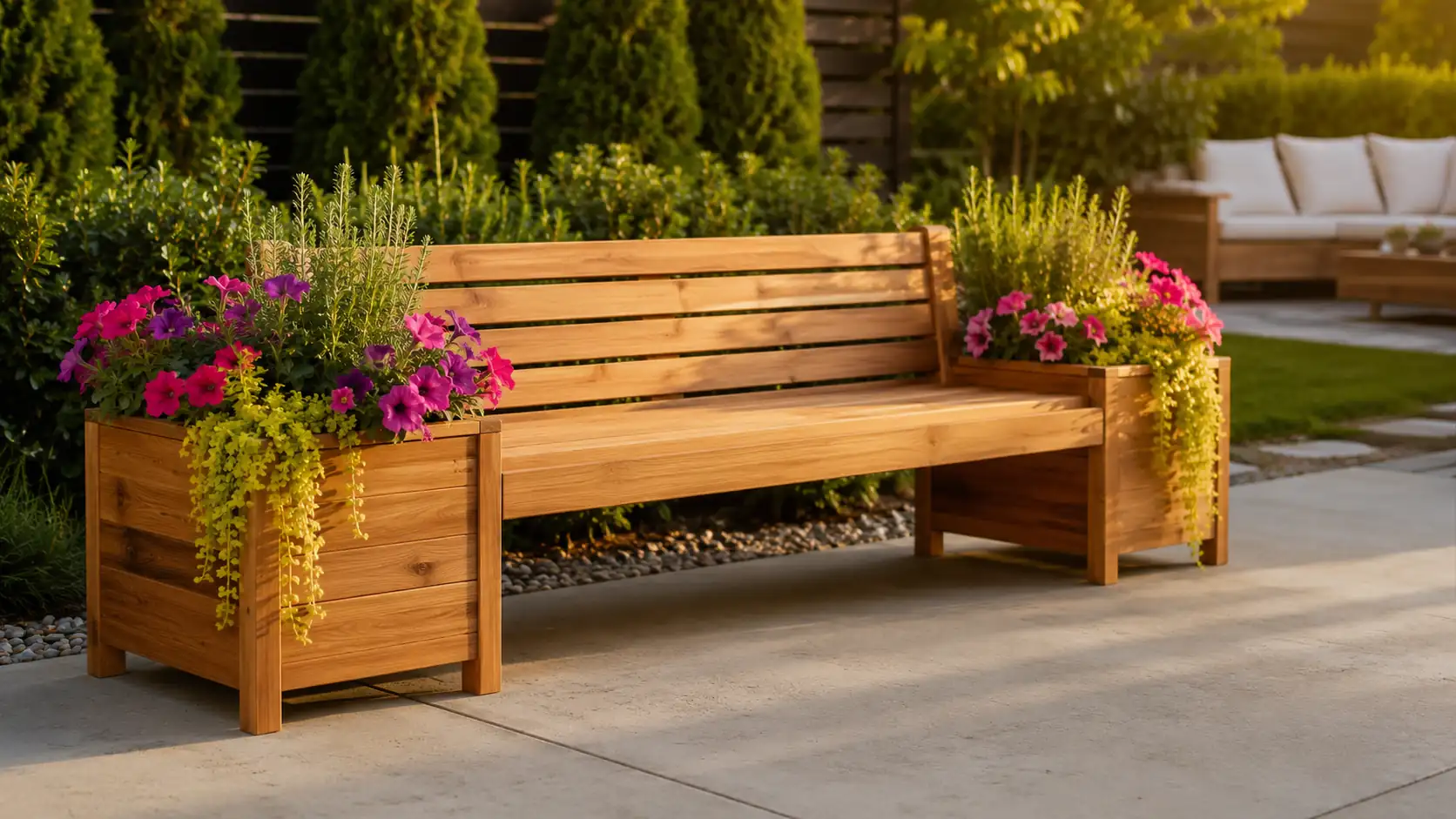
A planter bench combines seating with built-in planting boxes, usually at each end or along the back. It is a practical option for small patios and porches where there is not enough room for separate furniture and containers. Whether you are buying one ready-made or building it yourself, the material choice matters more than the design.
Why Material Choice Matters for a Planter Bench
The component of a planter bench most susceptible to structural failure is the interior lining or frame in direct, continuous contact with damp substrate. Selecting the wrong material can result in wood rot or metal oxidation within one to two growing seasons.
- Cedar and Redwood: These are the optimal natural lumber choices for DIY builds. They contain natural oils and tannins that inherently resist rot, decay, and boring insects without requiring chemical pressure-treatment. This makes them completely safe for growing edible herbs or vegetables, as no synthetic toxins will leach into the root zone.
- Composite Decking Material: Engineered wood-plastic composites offer exceptional moisture resistance, will not splinter, and require zero annual sealing, though they carry a higher upfront material cost than standard lumber.
- Corten Steel: Weathering steel alloys develop a stable, protective rust-like patina when exposed to the elements. They are highly durable and pair seamlessly if you feature corten steel planters across your broader landscape design, creating a unified architectural aesthetic.
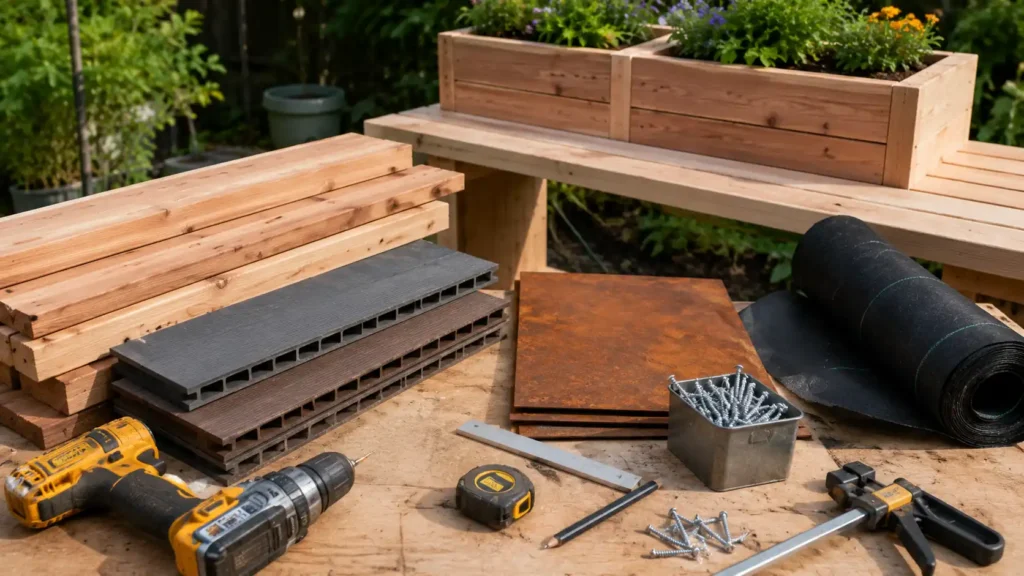
Avoid untreated pine or fir inside the planter boxes. Constant exposure to damp soil causes these softwoods to deteriorate quickly, often leading to rot within a few growing seasons. If you’re using them for budget reasons, line the interior completely with a waterproof liner and ensure excess water can drain freely.
How to Build Proper Drainage in a Planter Bench
Inadequate drainage is the leading cause of premature planter bench failure. Without functional exit points for excess water, saturation occurs at the base of the root zone, pooling against the structural joints and accelerating wood rot from the inside out.
To properly configure your drainage system:
- Drill drainage holes every 6 inches along the floor of the planter boxes.
- Line the entire interior cavity with a high-quality, permeable landscape fabric before adding soil.
- This configuration allows excess water to escape freely while preventing fine soil particles from washing out and staining your patio surface.
Best Plants for a Planter Bench
Because built-in bench containers typically feature shallower soil profiles than standalone raised beds, selecting species based on root architecture is critical to avoid root-bound stunting.
- Compact Culinary Herbs: Shallow-rooted perennial herbs like thyme, oregano, and chives thrive in confined soil volumes.
- Succulent Varietals: Succulents such as sedum and sempervivum thrive in shallow planter boxes because they store moisture inside their leaves and tolerate dry soil extremely well. If you’re planning a drought-friendly arrangement, combining several succulent varieties creates a planter that needs very little maintenance throughout the season.
- Trailing Flora: Creeping Jenny (Lysimachia nummularia) or ornamental sweet potato vine (Ipomoea batatas) provide visual softening by cascading over the hard edges of the bench framework.
- Seasonal Annuals: Petunias, marigolds, and pansies offer high-impact visual color without demanding extensive root space.
Avoid planting aggressive species with deep taproots or expansive, woody root networks. Restricted soil depths will restrict their development, requiring constant watering and eventual structural soil compaction.
Where Should You Place a Planter Bench?
Siting your planter bench requires balancing user comfort with horticultural health:
- Partial afternoon shade offers the best balance between plant health and seating comfort. It keeps the bench cool enough to use during summer while slowing soil evaporation, reducing how often the planter needs watering.
- Full Sun Exposure: Highly appropriate for sun-loving annuals and succulents, but necessitates a rigorous irrigation schedule, as shallow container profiles dry out significantly faster than deep, ground-level beds.
How to Style a Planter Bench in Your Garden
When designing a compact outdoor area, pairing your furniture with structured, slow-growing flora creates clean visual lines and minimizes ongoing maintenance.
If you want to create a planter bench that looks attractive throughout the year, pair seasonal flowers with compact evergreen shrubs that provide permanent structure. A Green Velvet Boxwood is an excellent choice because its naturally dense growth habit frames the seating area without overwhelming the space, making it especially well suited to smaller patios and gardens.
Common Planter Bench Mistakes to Avoid
Use the Wrong Wood
Untreated softwoods such as pine absorb moisture quickly and often begin rotting within a couple of seasons. For a longer-lasting planter bench, choose naturally rot-resistant cedar, redwood, composite materials, or weathering steel.
Forget Drainage
Without drainage holes and landscape fabric, excess water becomes trapped inside the planter box. This damages plant roots and shortens the lifespan of the bench.
Overcrowding Plants
Large shrubs and deep-rooted plants quickly outgrow shallow planter boxes. Choose compact herbs, annual flowers, succulents, or trailing plants that stay healthy in limited soil.
Ignoring Sun Exposure
Plants that need full sun will struggle in permanent shade, while shade-loving plants may scorch on exposed patios. Match the plant selection to the amount of daily sunlight the bench receives.
Frequently Asked Questions
Can I use pressure-treated lumber for a planter bench?
It is best to avoid traditional pressure-treated lumber inside the planter sections if you plan to grow herbs, vegetables, or other edible plants. However, it can safely be used for the structural frame, legs, and seating where it does not come into direct contact with the growing soil.
What is the minimum soil depth required for a planter bench?
For basic annual flowers and culinary herbs, a minimum soil depth of 8 to 10 inches is required. If your goal is to plant small ornamental shrubs, dwarf conifers, or structural perennials, ensure your planter box design provides a minimum depth of 12 to 15 inches to accommodate larger root balls.
Do planter benches require indoor winter storage?
If constructed from high-quality rot-resistant timber (like cedar), composite materials, or weathered steel, they can remain outdoors year-round. Prior to winter freezing, remove dead annual vegetation, cultivate the top layers of soil to prevent solid ice compaction, and verify that the bottom drainage holes are completely clear of debris to prevent trapped water from freezing and cracking the container walls.
What are the best plants for a planter bench?
Compact herbs, trailing plants, succulents, and seasonal flowers are the best choices for a planter bench because they grow well in shallow soil. Popular options include thyme, oregano, chives, petunias, marigolds, Creeping Jenny, sweet potato vine, sedum, and sempervivum.