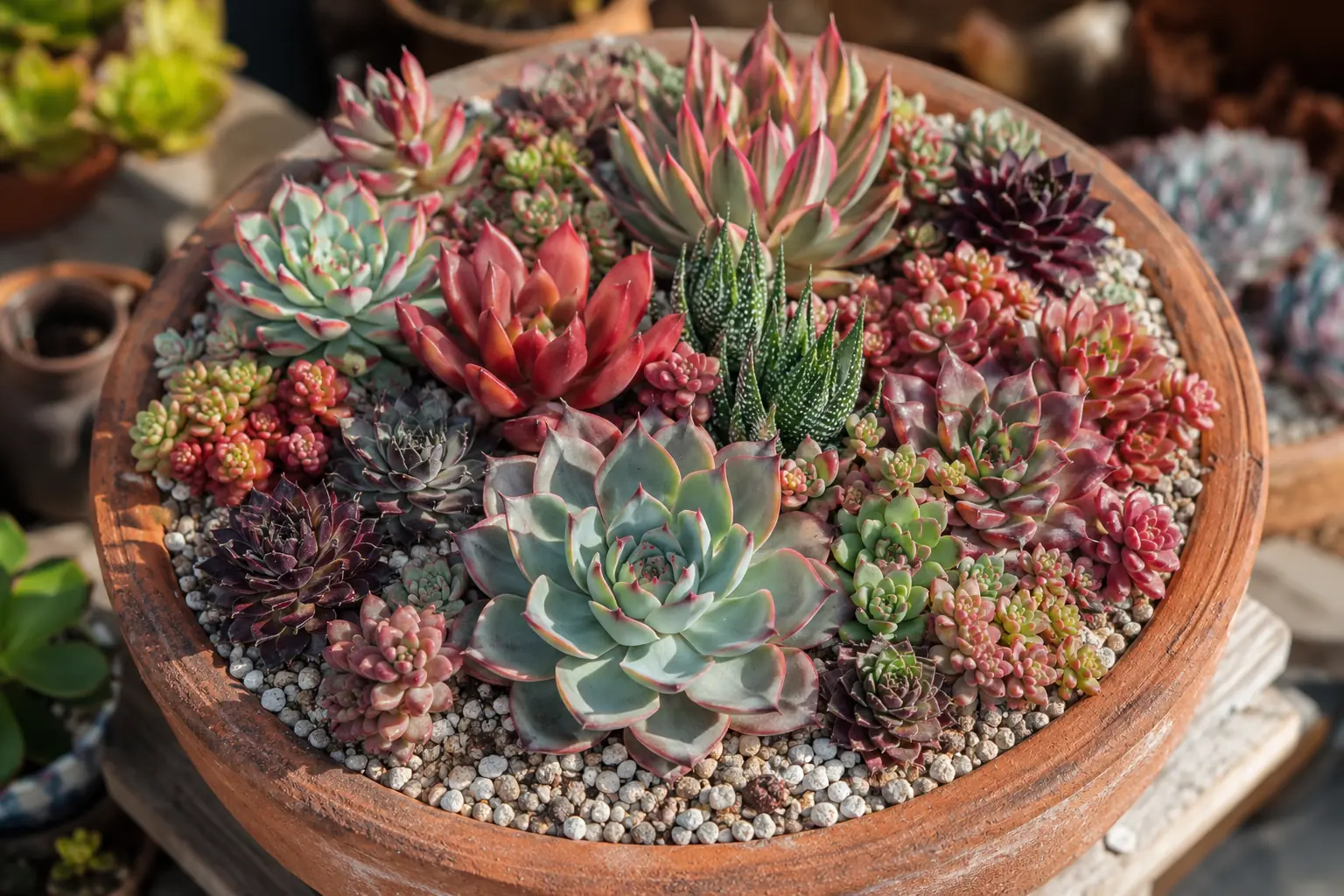
Few things match the frustration of bringing home a plump, vibrant succulent, only to watch it collapse into a mushy, black mass weeks later. You followed the plastic tag instructions, gave it a splash of water, and kept it on a windowsill. Yet it died anyway. If this has happened to you, understand that you did not fail because you lack a green thumb. You failed because standard houseplant wisdom is a death sentence for arid plants.
Succulents are often listed among the best indoor plants for beginners because they are resilient, attractive, and require less attention than many tropical houseplants. However, their reputation for being “easy” can be misleading. Most succulent deaths happen not from neglect but from too much care.
After fifteen years of managing commercial greenhouses, propagating hundreds of thousands of echeverias, haworthias, and sedums, I have learned that long-term survival boils down to one rule: mimic the native habitat. Succulents are evolutionary marvels built to withstand extreme drought, blistering sun, and nutrient-poor, rock-strewn soils. When we stuff them into peat-heavy potting soil and stick them in stagnant indoor air, we shock their biological systems. To grow them successfully, you must shift your perspective from pampering a delicate plant to managing an engineered drainage system.
1. Indoor vs. Outdoor Environments: The Rules of Engagement
The environment dictates how your plant processes moisture and light. A succulent growing in the ground faces fundamentally different challenges than one sitting in a small terracotta pot on your kitchen counter.
The Indoor Struggle: Light Starvation and Stagnant Air
Inside a home, the biggest adversaries are lack of usable solar energy and poor air circulation. Even a bright south-facing window filters out significant amounts of ultraviolet light. Without enough light, succulents undergo etiolation, stretching out toward the light source, losing their tight rosette shapes, and turning a pale green as they lose their protective stress pigments.
Furthermore, indoor air is relatively still. Outdoors, wind sweeps across the soil surface, accelerating evaporation. Indoors, moisture sits in the container for days, starving the roots of oxygen. When planting indoors, you must compensate by choosing smaller pots, using heavily amended soil, and placing your plants in windows that receive a bare minimum of six hours of direct sun daily. If your windows face north or are blocked by trees, invest in full-spectrum LED grow lights positioned six to eight inches above the plants.
The Outdoor Dynamic: Ground Planting and Climate Shielding
Planting directly in the garden allows roots to spread out and access deep soil moisture, but it strips away your ability to control the environment during extreme weather. Soil dynamics in the ground are governed by your existing garden texture. If you have heavy clay soil, planting a succulent directly into it will cause the root system to suffocate during the first heavy rain storm.
To plant in the ground successfully, you must create raised beds or berms, banking up the soil at least eight to twelve inches above the natural grade line. This uses gravity to pull water down and away from the delicate crown of the plant. Outdoor succulents also experience intense temperature swings. While they thrive on the dramatic difference between hot days and cool nights, which triggers gorgeous pink, red, and purple color changes, they must be shielded from prolonged freezing temperatures and torrential rainy seasons.
2. The Core Mechanics of Planting Succulents
To give your succulents the best start, you must get your hands dirty and understand the physical interactions between the roots, stems, and substrate.
Custom Substrate Formulation
Never use standard bagged potting soil straight out of the bag. It is formulated to hold moisture, which is exactly what we want to avoid. A professional mix relies on coarse mineral elements to create large macro-pores, allowing both water to drain instantly and oxygen to reach the roots.
My go-to greenhouse recipe that works across almost all genera is a simple three-part volumetric ratio:
- 1 Part Organic Base: Double-sifted coco coir or a high-quality peat-based potting soil with large chunks and sticks removed.
- 1 Part Pumice: Sized at roughly 3/16 inch. Pumice is a porous volcanic rock that absorbs a tiny amount of moisture inside its microscopic chambers while leaving the outside surface dry.
- 1 Part Perlite or Coarse Quartz Sand: Provides structural integrity and ensures the mix does not compact over time. Do not use fine play sand, as it packs together like wet concrete.
When you mix this substrate, it should feel distinctly gritty in your hands. If you squeeze a handful of damp mix together, it should fall apart completely the moment you open your palm, rather than forming a solid clod.
Planting Depth, Stem Placement, and Spacing
When moving a succulent into its new home, look closely at the transition zone between the green stem and the root system. This is the crown, and it must sit exactly flush with or slightly above the final soil level. Burying the stem too deeply traps moisture against the soft tissue, inviting fungal pathogens to enter and rot the plant from the core.
Your spacing strategy depends on your timeline and long-term goals:
- The Landscape Method (Spacing for Growth): Leave two to four inches of open space between individual plants. This allows species like Sempervivum or trailing Sedum to throw out offsets and fill the gaps naturally over one or two growing seasons. It requires patience but results in healthier, larger individual specimens.
- The Florist Method (Immediate Aesthetic Appeal): Pack the plants tightly together, with their leaves gently touching. This creates an instant, lush tapestry. However, because the plants compete for resources and light, they will grow more slowly and will require thinning, trimming, and repotting within six to nine months to prevent the lower leaves from rotting due to trapped humidity.
3. Container Deep Dive: Choosing and Managing Vessels
The vessel you choose changes how you manage moisture. Let us evaluate the primary options available to the modern grower.
| Material Type | Porosity & Drainage Performance | Best Suited For | Disadvantages to Consider |
| Terracotta / Unglazed Clay | High. Pulls moisture out through the pot walls, drying the soil evenly. | Beginners, indoor setups, and moisture-sensitive species like Lithops. | Dries out very rapidly in hot outdoor weather; fragile. |
| Plastic / Resin | Zero porosity. Retains moisture for much longer periods. | Outdoor gardens in arid climates, trailing species, and lightweight shelves. | Easy to overwater indoors; degrades and becomes brittle under intense UV rays. |
| Ceramic (Glazed) | Zero porosity on glazed surfaces. Heavy and holds temperature well. | Showcase display pieces, large structural succulents like Agaves. | Often lacks adequate drainage holes; heavy to move around. |
| Concrete | Medium to High. Highly breathable but leaches lime over time. | Modern outdoor displays, large installations. | Can raise soil pH slightly; very heavy and prone to cracking in hard freezes. |
Mastering the Standard Drainage Pot
A pot with a generous drainage hole is your safety net. When you water a succulent in a standard pot, you should pour water evenly over the soil surface until it flows freely out of the bottom. This flushes out accumulated mineral salts and ensures the entire root ball is saturated. Never let the pot sit in a saucer filled with the runoff water. Pour that excess water out within fifteen minutes of watering.
The Precise Mechanics of Surviving a Pot Without Drainage
Can you grow a succulent in a container without a drainage hole? Yes, but it requires a strict understanding of volume and physics. Forget the old advice of putting a layer of rocks at the bottom of the pot. This does not create drainage; it creates a “perched water table.” The water simply collects in the spaces between the rocks, keeping the soil directly above it saturated and rotting the roots that grow down into it.
To plant in a non-draining vessel, like an antique teacup or a sleek ceramic bowl, follow this protocol:
- Use a mix that is 70% mineral (mostly pumice and perlite) and only 30% organic matter.
- Calculate your water input exactly. You cannot drench this pot. Instead, measure out a volume of water equal to roughly one-fourth to one-third of the total volume of the container.
- Apply the water slowly around the base of the plants, allowing the gritty substrate to distribute it via capillary action without pooling at the bottom.
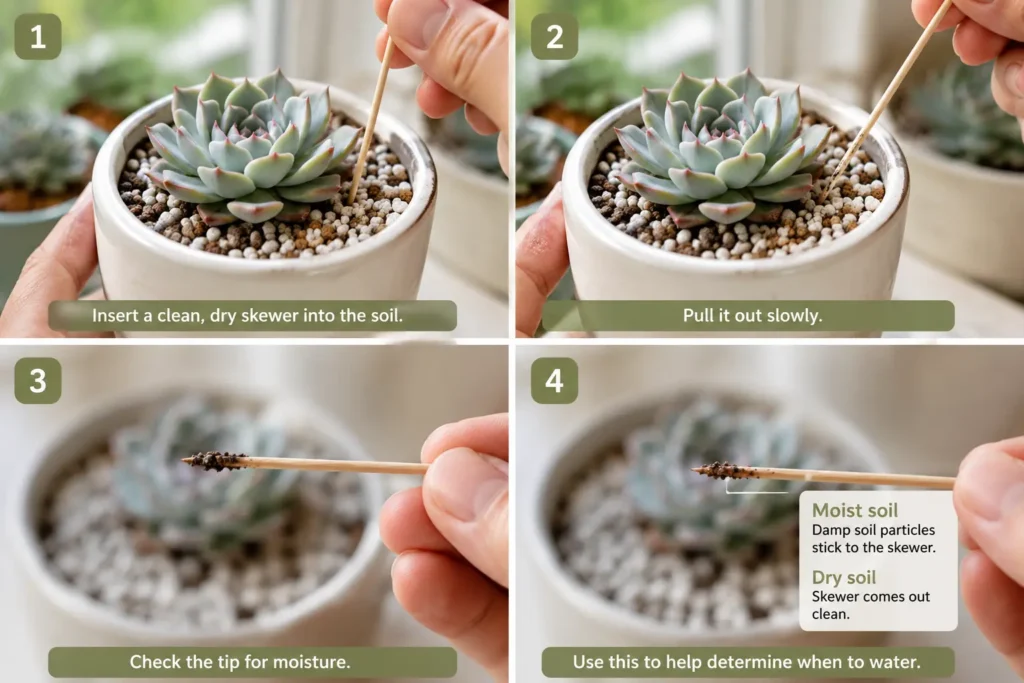
- Use a wooden skewer inserted deep into the container to check for moisture before watering again. If it comes up with damp soil particles clinging to it, do not water.
[IMAGE PLACEHOLDER: A step-by-step visual showing a wooden skewer being pulled out of a non-draining ceramic succulent pot, displaying how to read the soil moisture levels.]
Planting in Unique, Creative Vessels
Succulents adapt beautifully to unusual containers if you adjust your planting technique:
- Strawberry Planters: These vertical pockets are fantastic for creating a cascading look. Plant rosette-forming types like Echeveria on the flat top, and tuck trailing varieties like Crassula marginalis or Senecio rowleyanus(String of Pearls) into the side pockets. Pack the soil firmly behind each pocket to prevent it from washing out during watering.
- Shallow Bowls and Bird Baths: These offer a wide surface area but minimal depth. They are perfect for small, slow-growing species. Focus on creating a miniature landscape by mixing vertical growers (like Crassula ovata) with low carpet-formers (like Sedum album). Secure the shallow root systems by pressing small top-dressing stones around the base of each plant.
- Driftwood and Log Crevices: Natural wood contains beautiful nooks. Line the cavity with a thin layer of damp sphagnum moss to hold a small handful of gritty soil in place. Tuck the succulent roots into the moss-lined pocket, and secure the plant with floral wire or a touch of hot glue applied safely to the woody stem if necessary. Over time, the roots will anchor themselves directly into the decaying wood fibres.
Also Read:
- Biochar for Houseplants: How to Supercharge Your Potting Mix
- Do Plants Need UV Light? A Guide to Grow Lamps
4. The Propagation Blueprint
One of the most rewarding aspects of working with succulents is their incredible ability to regenerate from small pieces. Understanding how to handle these pieces prevents them from rotting before they can form roots.
Stem Cuttings and Rootless Plants
When you take a stem cutting, you create an open wound that is highly vulnerable to soil bacteria. You must let this cut heal. Place the cutting in a dry, shaded area for three to seven days until a firm, dry callus forms over the cut end. It should feel smooth and leathery, not wet or sticky.
Once calloused, insert the stem directly into dry potting mix. Do not water it yet. A plant without roots cannot absorb water; adding moisture to the soil only encourages rot. Keep the container in bright, indirect light. Within two to four weeks, the stem will send out thin, pink or white searcher roots. Give the plant a gentle tug: if you feel resistance, roots have formed, and you can begin your regular watering routine.
Leaf Propagation
To propagate from a single leaf, you must obtain a clean break. Grasp a healthy leaf firmly near the base and gently wiggle it back and forth until it snaps cleanly off the main stem. If the leaf tears or leaves a piece of its base behind on the stem, it will not grow.
Lay the intact leaves flat on a tray filled with dry potting mix in a room with bright, filtered light. Do not bury them. Within a few weeks, the leaf will develop tiny roots and a miniature clone of the parent plant at its base. As the new rosette grows, it draws all its water and nutrients from the mother leaf. Once the old leaf shrivels up and turns brown, gently pinch it off and pot your new miniature succulent into its own small container.
Separating Mother Offsets
Many succulents, such as Aloes, Haworthias, and Sempervivums, produce miniature clonal pups around their base. Wait to separate these offsets until they are at least one-third the size of the parent plant. This ensures they have developed enough independent mass to survive the transition.
Gently brush away the topsoil to locate the stolon, the thick connecting stem that links the pup to the mother plant. Using a sterile, sharp knife, slice through the connecting stem as close to the mother plant as possible. If the pup already has its own roots, you can pot it up immediately into dry soil. If it is rootless, treat it like a stem cutting and let it callus over before planting.
The Ultimate Patience: Growing from Seeds
Growing succulents from seed is a slow, meticulous process, but it is the only way to raise rare species. Fill a shallow tray with a very fine, sterilized mineral mix. Surface-sow the seeds, as they are often as tiny as dust motes and need light to germinate. Do not cover them with soil.
Mist the surface thoroughly with a fine spray bottle, then seal the entire container inside a clear plastic bag to maintain 100% humidity. Place the tray under grow lights at a temperature between 70°F and 80°F. Germination can take anywhere from one week to several months. Once tiny green spheres appear, gradually open the plastic bag over a week to acclimate the seedlings to ambient humidity, and keep the mix damp but never soggy until they develop true leaves.
5. The Crucial Post-Planting Week and Beyond
What you do immediately after planting determines whether your succulent establishes successfully or fails early on.
The Exact First-Watering Timeline
The golden rule of succulent planting is simple: never water a freshly potted succulent immediately after planting.Even if you are incredibly careful, the process of unpotting, cleaning, and resetting a plant creates microscopic tears in its root system. If you pour water into the soil right away, pathogens enter these open wounds. Wait five to seven days before giving your newly potted succulent its first drink. This gives the root system plenty of time to callus over and heal in the dry, protective substrate.
Targeted Succulent Food Schedule
Succulents are slow-growing plants that do not require heavy feeding. Over-fertilizing causes rapid, weak, watery growth that stretches the plant out and makes it highly attractive to pests like mealybugs.
Only fertilize during the active growing season, which is typically spring and summer for most genera. Use a balanced, water-soluble fertilizer formulated specifically for cacti and succulents, or a standard low-nitrogen houseplant fertilizer. Dilute the fertilizer to one-fourth or one-half of the strength recommended on the product label. Apply this diluted food once every three to four waterings. When the plant goes dormant in the dark winter months, stop fertilizing completely.
Pro Greenhouse Tip: Reading the Plant Instead of following a calendar schedule, let the succulent tell you when it wants water. Look at the lower leaves. If they are plump, firm, and rigid, the plant is fully hydrated. When they begin to show slight wrinkles on the undersides and feel soft to a gentle squeeze, its internal water reserves are dropping. This is the optimal time to water thoroughly, recreating the natural cycle of desert downpours and long, dry spells.
By understanding how these plants interact with light, substrate, and water, you can confidently plant them in any container or garden setting. Focus on excellent drainage, give them ample light, and respect their need for a dry healing period, and your succulents will thrive for years to come.
Why are the lower leaves of my succulent turning yellow and translucent?
This is a clear sign of overwatering. The plant has absorbed too much water, causing its cell walls to rupture. This turns the leaves mushy, soft, and see-through.
How can I tell the difference between an underwatered and overwatered succulent?
Underwatered: The lower leaves look wrinkly and shriveled, but they feel dry and crispy. The rest of the plant remains firm.
Overwatered: The leaves look bloated, drop off at a gentle touch, and feel squishy or limp.
Do I really need to use a top dressing like gravel or pebbles?
It is highly recommended. A thin layer of gravel or rocks keeps the lower leaves from resting directly on wet soil, which prevents rot. It also keeps lightweight perlite from floating to the top when you water.
Why is my succulent growing tall, skinny, and spaced out?
Your plant is starving for light and stretching toward the nearest light source. Move it to a brighter window or under an LED grow light. To fix the stretched look, you will need to cut the top off, let it callus, and replant it as a fresh cutting.
Conclusion
Growing healthy succulents isn’t about constant pampering; it is about stepping back and letting them thrive in conditions that mimic their dry, desert homes.
By mixing a gritty, fast-draining soil with plenty of pumice, giving them ample sunlight, and always waiting a week after potting before you water, you eliminate the risk of root rot. Pay close attention to what the leaves are telling you, give your plants a dry healing period, and you can confidently grow stunning succulents in any pot, garden, or creative vessel for years to come.