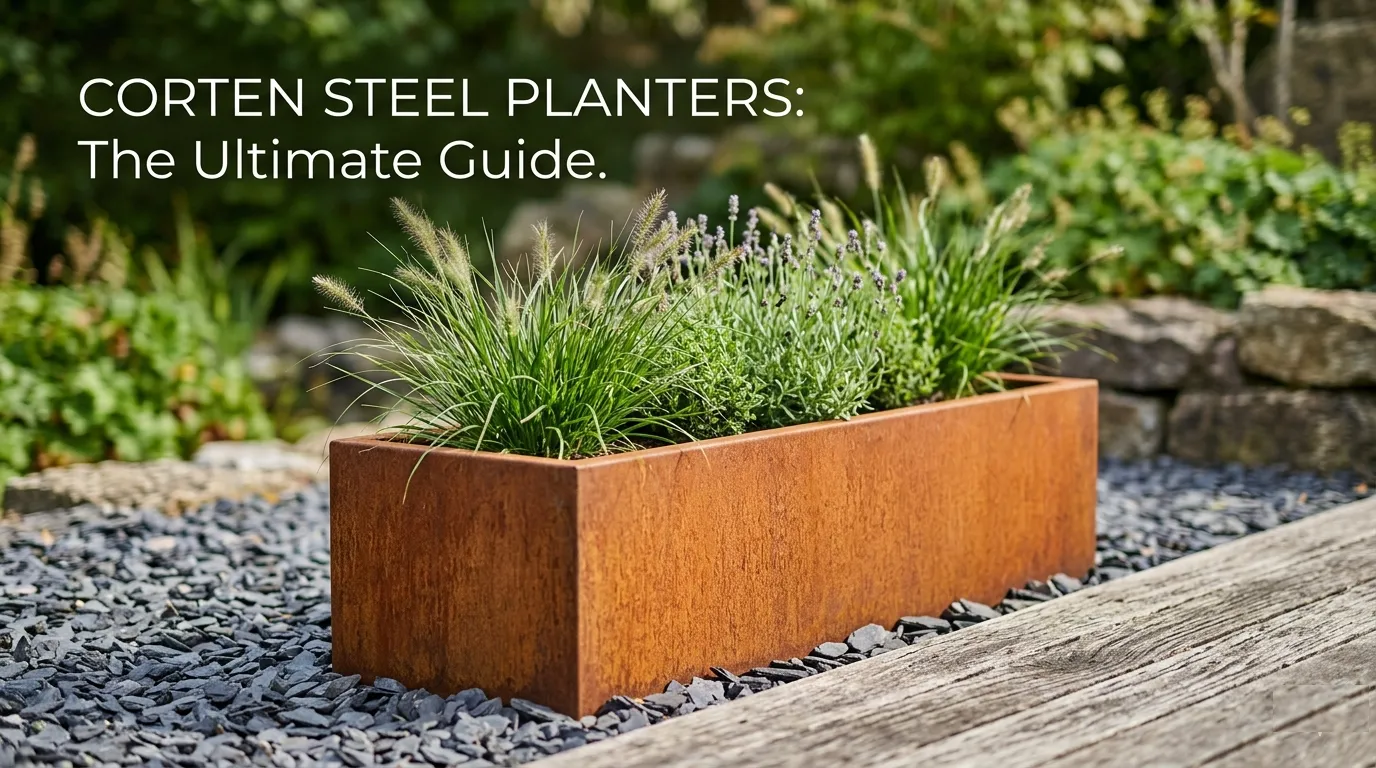
If you’ve spent any time looking at modern landscape design lately, you’ve definitely seen Corten steel planters. They have become the go-to choice for gardeners who want a clean, intentional look that doesn’t feel overly manicured. The deep, industrial rust finish contrasts beautifully with green foliage, and unlike plastic or cheap wood, these things are built to survive decades of harsh weather.
But before you drop a chunk of cash on one, you need to know what you’re actually getting into. Corten steel behaves very differently from regular metal, and there are a few quirks you’ll want to prepare for before it arrives on your doorstep.
The Big Surprise: What Makes Corten Steel Different
Here is the first thing most people don’t realize: your planter will likely arrive looking like bright, clean, ordinary steel.
Corten is a specialized weathering steel. It doesn’t come pre-rusted. Instead, as it sits out in the rain, wind, and sun, it develops a stable, protective layer of iron oxide (rust) on the surface. Unlike regular steel, which keeps rusting until it structurally fails and falls apart, Corten’s rust layer actually seals the underlying metal, protecting it from further corrosion.
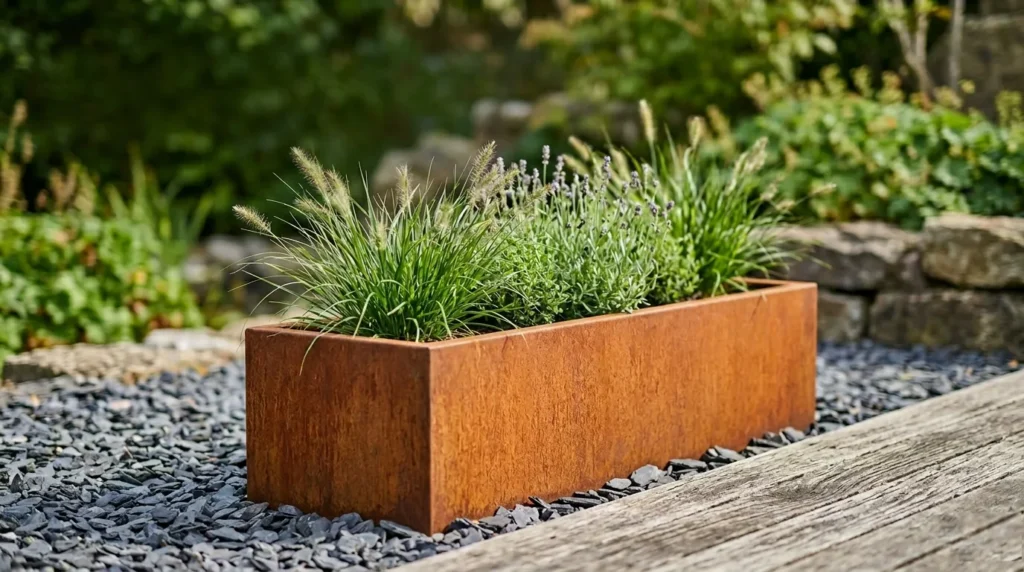
The color will shift dramatically over the first year or two—moving from a bright orange-gold to a rich, deep, burnt-sienna brown. It’s a living finish that reacts directly to your local climate.
The Real Pros and Cons
Let’s skip the marketing fluff and look at how these planters actually perform in a real yard.
The Pros
- Insane Durability: A good Corten planter can easily last 40 to 50 years. They don’t crack in freezing winters like terracotta, and they won’t rot or fade like wood.
- The “Cheat Code” for Modern Design: If your garden feels a bit chaotic or disorganized, the sharp, clean lines of a Corten planter instantly anchor the space and make it look professionally designed.
- Low Maintenance: You don’t paint it, you don’t seal it, and you don’t bring it inside for the winter. You just let it exist.
- Scratches Fade Away: If you nick the side with a lawnmower or weed whacker, you don’t ruin the finish. The metal will simply rust over the scratch and blend right back in within a few weeks.
The Cons
- The Notorious Rust Runoff: During the first year, when the rust layer is actively forming, rain will wash rusty water off the planter. If it’s sitting on a concrete patio, light stone, or wooden decking, it will stain them permanently.
- The Summer Heat Trap: Metal gets hot. In July and August, the walls of the planter can bake the soil closest to the edges, which can fry the delicate roots of sensitive plants.
- Upfront Cost: These are an investment. They cost significantly more upfront than fiberglass or resin planters.
- They are Heavy: Even empty, thick-gauge steel is heavy. Once you fill it with soil and water, it isn’t moving. You need to be 100% sure about placement before you fill it.
Pro Tip: How to Speed Up the Rusting Process
If you don’t want to wait months for nature to take its course, you can fast-track the patina in a single afternoon using a simple DIY mixture.
The Quick-Rust Recipe
- 16 oz Hydrogen Peroxide
- 2 oz White Vinegar
- 1 tablespoon Table Salt
Mix the ingredients in a standard spray bottle. Clean your planter down with soapy water to remove any factory oils, let it dry, and then spray it down with the mixture. You’ll literally watch it turn orange before your eyes. Do this 2–3 times over a couple of days for a rich, established base layer.
How to Properly Pot a Corten Planter (And Protect Your Plants)
Because metal transfers heat so quickly, you shouldn’t just dump dirt straight into a Corten planter and call it a day. Follow these steps to ensure your plants actually thrive:
- Check for Drainage: Make sure the planter has drainage holes. If it doesn’t, grab a drill and a metal bit and make some. Standing water will ruin your plants and can degrade the steel over time.
- Line the Inside: To protect roots from summer heat and winter freezes, line the inside walls of the planter with 1/2-inch rigid foam insulation boards or a thick plastic liner (just make sure to slice holes in the bottom for drainage). This creates a vital barrier between the hot metal and the soil.
- Add a Filter Layer: Lay down a piece of landscape fabric over the drainage holes before adding soil. This keeps the dirt from washing out and clogging the holes (which also helps reduce rusty mud runoff).
What Actually Grows Well in Corten?
Because Corten containers naturally run a little warmer, you want to choose hardy plants with robust root systems that don’t mind a warmer root zone.
- Ornamental Grasses: Fountain grass, Karl Foerster, and switchgrass look incredible against the rustic metal and can handle the heat beautifully.
- Hardy Shrubs: Structurally sound shrubs like green velvet boxwood provide a clean, formal look that complements the sharp edges of the metal.
- Drought-Tolerant Perennials: Lavender, sedum, coneflowers, and yarrow thrive in these warmer containers. For more inspiration on tough, structure-building plants, check out our guide to easy-to-grow woody plants for small gardens.
- What to Avoid: Keep delicate, moisture-loving plants like ferns, fuchsias, or shallow-rooted annuals away from Corten planters—especially if the container is going to be sitting in full afternoon sun.
Integrating Corten Into Your Whole Yard
Corten looks best when it doesn’t feel like an accident. If you have a lone steel box sitting in the middle of a traditional brick patio, it can look out of place. Try to tie the material into other elements of your outdoor space.
A great way to do this is through your seating areas. In our guide on choosing or building a planter bench, we break down exactly how to pair the industrial look of weathered steel with warm wood tones (like cedar or ipe) to create a space that feels balanced, cozy, and completely custom.
Does Corten steel rust forever?
No. After the initial active rusting phase (usually 1 to 2 years, depending on your climate), the surface stabilizes. The rusting slows down to a crawl, and it won’t rust all the way through under normal backyard conditions.
Is Corten steel toxic to plants or vegetables?
Not at all. The rust layer is simply iron oxide. The trace amounts that might leach into the soil are completely non-toxic and won’t harm your plants or any food you grow in them. Your biggest concern is staining your patio, not harming your tomatoes.
Can I leave a Corten planter outside all winter?
Yes, absolutely. They are designed to live outdoors year-round. Just make sure your drainage holes are completely clear before the first freeze; if water pools at the bottom and freezes into a solid block of ice, the expanding pressure can distort the shape of the metal or crack your plants’ roots.