Inside the Blog
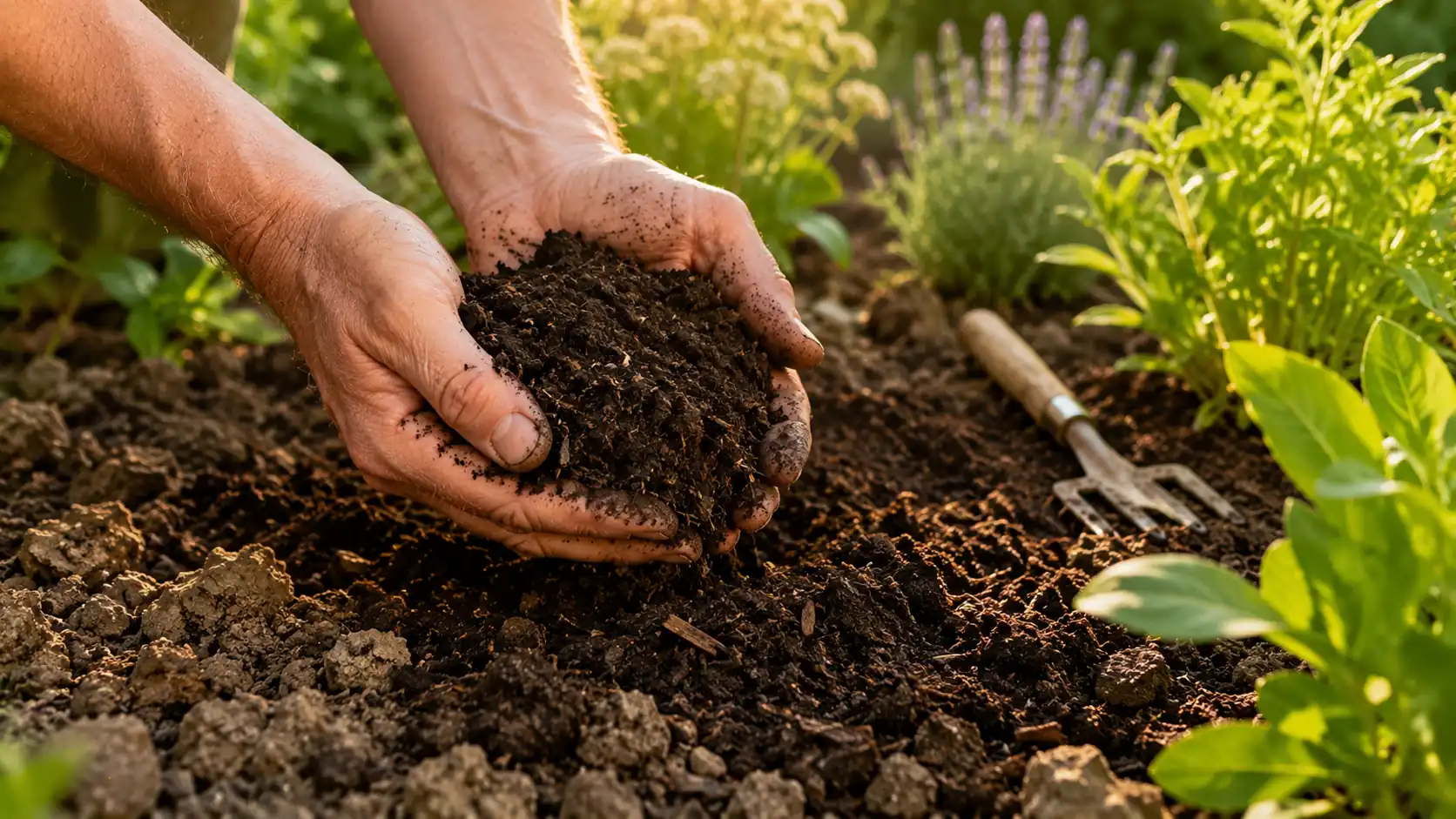
Clay soil is challenging, but it is far from hopeless. Unlike poor sandy soil that struggles to hold nutrients, clay already contains plenty of minerals that plants need. The goal is not to replace it but to improve its structure so roots can grow, air can circulate, and excess water can drain away.
Most clay soils improve gradually over one to three growing seasons with regular additions of organic matter. The earlier you start improving the soil before planting, the healthier your plants will become.
How to Know If You Have Clay Soil
Testing your ground does not require fancy equipment or lab tests. A quick hands-on check tells you everything you need to know.
Take a small handful of moist soil and squeeze it into a ribbon between your thumb and index finger. Heavy clay rolls into a smooth, flexible ribbon that stays together without crumbling, much like craft dough. It also feels slick or sticky when wet. Sandy soil drops apart instantly, while ideal garden loam forms a short ribbon before breaking into soft crumbs.
Another telltale sign: if your lawn or planting beds form standing puddles that linger for hours after a rainstorm, dense clay drainage is almost certainly the culprit.
What Not to Add to Clay Soil
Before jumping into what works, it helps to address a myth that ruins many garden beds: adding sand.
Adding small amounts of sand to heavy clay creates a texture similar to low-grade concrete. Fine clay particles wrap tightly around coarse sand grains, locking up the remaining pore space and making drainage worse. You would have to mix in an unrealistic amount of sand to change the soil texture for the better. Save your time and skip the sand entirely.
What Actually Improves Clay Soil Structure
1. Organic Matter
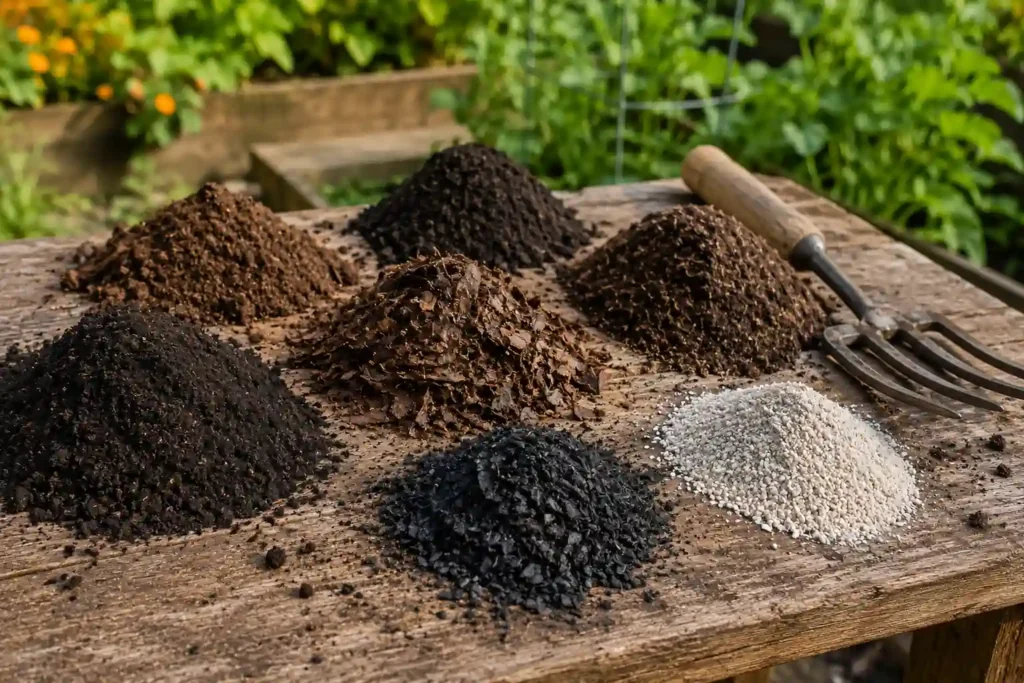
Organic matter creates spaces between tiny clay particles, allowing water to drain more evenly while giving roots room to spread. As compost breaks down, earthworms and beneficial microbes continue improving the soil, making each year’s planting a little easier than the last.
Spread a thick 3 to 4 inch layer of organic material over the surface and gently work it into the top 12 inches of your soil.
This is a gradual process rather than an overnight fix. Clay improves steadily as soil microbes break down organic matter over two to three seasons. Working fresh organic material into your beds every spring and autumn delivers the best long-term results.
2. Gypsum (Calcium Sulfate)
Gypsum can help break up specific types of clay. The calcium ions encourage fine particles to group together into larger crumbs, creating room for air and water. Keep in mind that gypsum works best on sodic soils (clay with elevated sodium levels), so its effectiveness varies depending on your local geology.
3. Biochar
Biochar is another long-lasting soil builder. This porous form of carbon improves physical structure, encourages beneficial soil microbes, and holds moisture and nutrients right in the root zone. Our detailed guide on biochar for houseplants and potting mix explains how it works, and the same fundamental principles apply to outdoor garden beds.
How Much Organic Matter Should You Add?
For new garden beds, spread 3 to 4 inches of compost across the surface before planting. If your clay is extremely dense, repeat the process every spring and autumn until the soil becomes easier to dig.
Established beds only need a 1 to 2 inch compost top-dressing each year to maintain healthy structure.
Smart Planting Techniques for Clay Soil
Even after adding organic amendments, how you plant makes a massive difference in how your garden performs.
1.Check soil moisture before digging:Timing.
Never work clay when it is soaking wet. Digging or walking on wet soil squashes the air pockets and undoes all your hard work. Wait until the soil dries enough to crumble easily when pressed between your fingers.
2.Dig wide rather than deep:Hole Preparation.
Dig your planting holes two to three times wider than the root ball, keeping the depth equal to the container size. Deep holes in clay act like water buckets, holding excess water around the roots.
3.Scrape the smooth sides of the hole:Root Development.
Use a hand fork or trowel to scratch and roughen the slick walls of the hole. This helps young roots break through into the surrounding dirt instead of circling inside a smooth clay pocket.
4.Build raised beds for instant results:Fast Option.
If you want to plant right away without waiting seasons for ground improvement. Raised beds provide an immediate growing area with loose, fertile soil while the clay underneath improves gradually. This approach is especially useful for vegetables, herbs, and flowering perennials that struggle in compacted ground. Fill them with a quality topsoil and compost mix, allowing plants to thrive while the clay underneath gradually loosens over time.
5. Apply Mulch After Planting
Cover the soil with 2 to 3 inches of shredded bark, leaf mulch, or wood chips while keeping the mulch a few inches away from plant stems.
Mulch helps reduce soil compaction from heavy rain, slows moisture loss during summer, and feeds the soil gradually as it breaks down.
Plants That Perform Well in Clay Soil
While you work on building up organic matter, picking tough plants that handle heavy ground keeps your garden green and active.
| Plants That Grow Well | Plants That Prefer Better Drainage |
|---|---|
| Hostas | Lavender |
| Astilbe | Rosemary |
| Daylilies | Thyme |
| Coreopsis | Cacti |
| Ornamental Grasses | Most Succulents |
| Viburnum | Alpine Plants |
| Native Dogwood | Mediterranean Shrubs |
| Roses (with improved drainage) |
My recommendations for the best plants for zone 5 gardens include several hardy perennials that do well in heavy ground. If you are looking for living mulches that fill in fast, check our best ground cover plants guide for tough options that suppress weeds while conditioning the ground.
Long-Term Maintenance Tips
Once you establish good soil structure, avoid compacting the ground again. Set up clear stepping paths through your garden so you never walk directly on cultivated beds.
Try to minimize heavy tilling or deep digging once your soil improves. No-dig techniques preserve earthworm tunnels and beneficial fungal networks that take years to build. Spreading a fresh top-dressing of compost every autumn lets earthworms pull rich organic matter down into the root zone naturally.
To keep your newly planted garden running smoothly, review our guide on 5 common plant care mistakes beginners must avoid so you do not run into issues with overwatering or improper planting depth.
Avoid These Common Mistakes
- Digging clay while it is wet.
- Walking repeatedly across planting beds.
- Mixing in small amounts of sand.
- Leaving bare soil exposed all year.
- Skipping yearly compost applications.
Frequently Asked Questions
How long does it take to turn clay into good garden soil?
You will notice easier digging and better drainage after one to two seasons of adding compost. Achieving deep, crumbly topsoil usually takes two to four years of regular organic matter additions.
Can I build a raised bed directly over clay soil?
Yes. Building raised beds straight over unimproved clay is one of the fastest ways to start a garden. Roots from your raised bed will eventually work their way down into the clay layer, loosening it up over time.
Do I need to add lime to clay soil?
Only if a reliable soil test shows your ground is excessively acidic. Adding lime without testing first can raise soil pH too high, making essential nutrients impossible for plants to absorb.
Can vegetables grow in clay soil?
Yes. Many vegetables grow well in clay soil once it has been improved with compost and organic matter. Raised beds are another good option if the soil is extremely compacted.
What is the fastest way to improve heavy clay soil?
The quickest approach is to add 3 to 4 inches of compost and build raised beds for immediate planting. Improving clay in the ground is a gradual process that takes regular organic matter additions.
How often should I add compost to clay soil?
Add compost every spring or autumn. An annual top-dressing helps maintain good soil structure and keeps beneficial soil organisms active.
Does mulch help improve clay soil?
Yes. Organic mulch reduces compaction, conserves moisture, and slowly breaks down to add more organic matter to the soil.