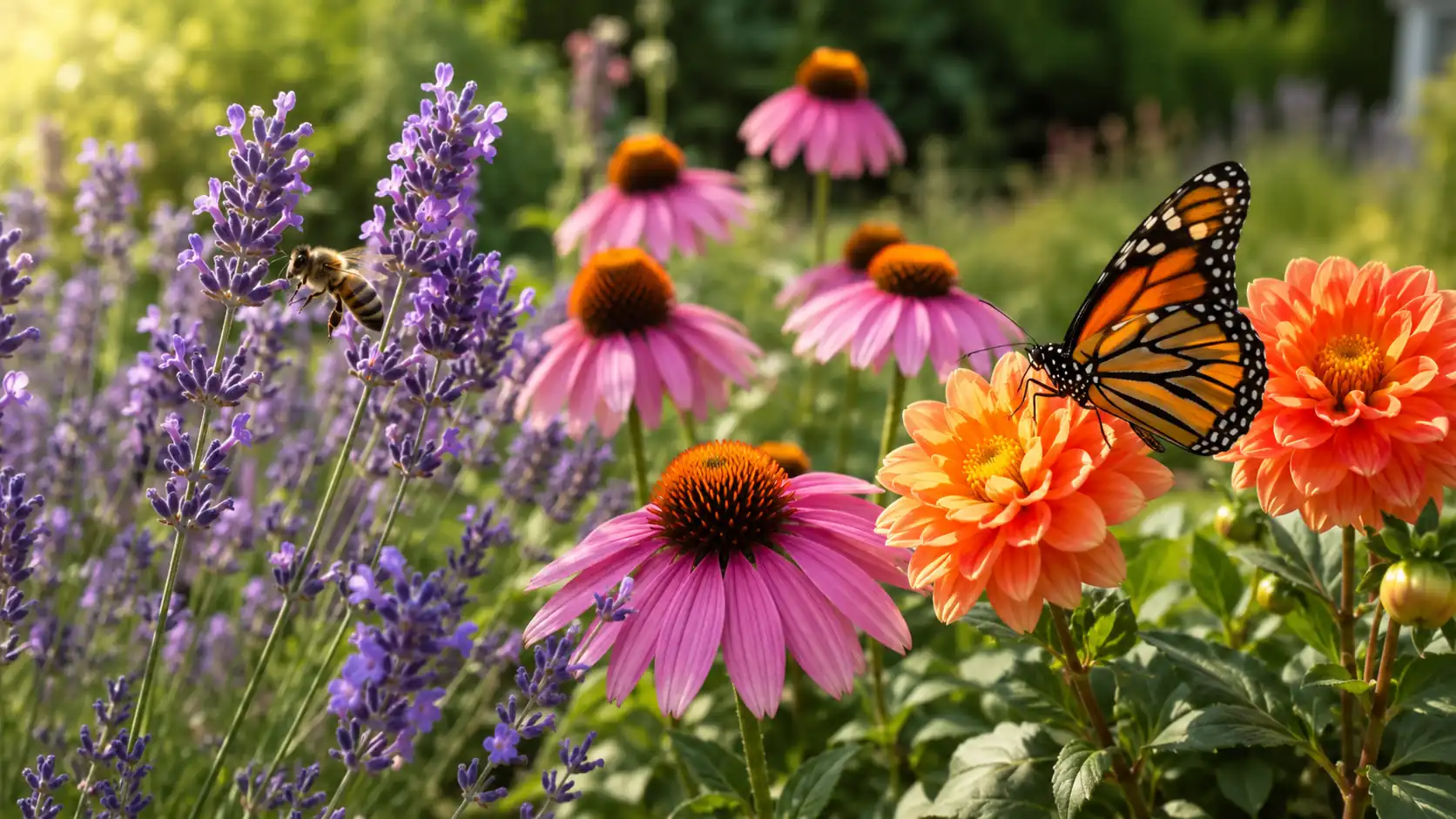
Many people plant flowers hoping to see more butterflies and bees, but a few blooms alone rarely make much difference. Pollinators need food throughout the growing season, safe places to rest, and nesting spots that are often missing from modern gardens.
The good news is that you do not need a large yard to make your outdoor space more welcoming. Whether you have a backyard, a small flower bed, or a few containers on a patio, choosing the right plants and avoiding a few common mistakes can noticeably increase visits from bees, butterflies, and other helpful insects.
A pollinator-friendly garden also benefits you. Better pollination can improve harvests from tomatoes, cucumbers, squash, peppers, berries, and many fruit trees. At the same time, a healthier mix of insects helps support natural predators that keep common garden pests under control.
In this guide, you’ll learn which plants attract pollinators, how to keep flowers blooming across the seasons, and simple maintenance habits that help insects return year after year.
Why Pollinators Avoid Certain Gardens
Before adding new plants, it helps to understand why foraging insects bypass some yards altogether. In many suburban and urban settings, common landscape choices accidentally create food deserts or hazardous environments for wildlife.
- Extended Bloom Gaps: Planting species that all bloom during a single two-week window in June leaves insects without a consistent food supply for the rest of the year.
- Widespread Pesticide Reliance: Systemic insecticides and synthetic sprays persist on foliage and inside pollen, harming non-target beneficials long after application.
- Overly Tidy Winter Cleanup: Removing every fallen leaf, clearing out hollow plant stems, and covering all bare ground destroys critical wintering sites for solitary bees, hoverfly larvae, and overwintering pupae.
- Focusing on Double-Flowered Cultivars: Many modern hybrids bred for extra rows of showy petals have lost their nectar guides or feature structures that physically block insects from reaching pollen.
Addressing these issues gives every new flower you plant a much greater impact on local insect populations.
Think Beyond Flowers
Flowers are the main food source for pollinators, but they are only one part of the picture. Many beneficial insects also need shelter from wind, places to nest, and access to clean water. A garden that offers all three is usually far more active than one that simply has colorful blooms.
For example, leaving a small corner of your garden undisturbed, keeping a few hollow stems through winter, or placing a shallow dish of water with stones can make your space much more useful for wildlife without adding extra maintenance.
Plant Flowers in Groups Instead of Scattering Them
Many gardeners assume that planting one or two flowers in different corners of the yard is enough to attract pollinators. In reality, insects are more likely to notice large patches of the same flower than isolated plants spread across the landscape.
Growing several lavender plants together, for example, creates a stronger visual signal for bees searching for nectar. The same idea works with echinacea, salvia, borage, and other pollinator-friendly flowers. Even in a small garden, grouping three to five plants of the same variety often produces better results than planting single specimens throughout different beds.
If space is limited, focus on creating one dedicated pollinator border rather than scattering flowers everywhere. A concentrated planting area allows insects to move efficiently from flower to flower while reducing the energy they spend searching for food.
This simple planting strategy also creates a more attractive display for people, making the garden look fuller and more natural during the growing season.
A Simple Planting Formula
If you are starting from scratch, avoid buying one of every flower that catches your eye. Instead, choose three to five reliable pollinator plants and grow several of each together.
A simple combination might look like this:
- 5 Lavender plants
- 3 Coneflowers
- 4 Salvias
- 2 Borage plants
- 2 Asters
Grouping plants like this creates larger patches of nectar that are easier for bees and butterflies to find while giving your garden a more natural appearance.
The Most Reliable Pollinator Plants for Outdoor Beds
Choosing the right plants means looking past high-nitrogen flowers that look pretty for a weekend and selecting species with high nectar flow, accessible pollen stores, and long flowering periods.
High-Impact Nectar and Pollen Sources
Lavender (Lavandula): One of the most reliable magnet plants for bumblebees and honeybees. It thrives in full sun and fast-draining soil, producing dense floral spikes rich in essential oils and sugar. A single mature shrub can support dozens of foragers simultaneously on a warm day.
Purple Coneflower (Echinacea purpurea): A native perennial powerhouse for midsummer and early autumn. Its broad central cone provides an easy landing pad for butterflies, hoverflies, and solitary bees. Leaving the seed heads intact into winter offers a valuable natural food source for goldfinches and finches.
Single-Flowered Dahlias: While heavy pompom and dinnerplate dahlias block entry, single-flowered varieties keep their central pollen disk exposed. They supply vital late-season food when earlier perennials begin to fade. To time your blooms for peak pollinator season, review our breakdown on when to plant dahlia bulbs.
Globe Alliums (Allium species): Flowering in late spring and early summer, ornamental alliums bridge the critical gap between spring bulbs and summer perennials. Their rounded, nectar-dense heads attract early-emerging solitary bees and hoverflies.
Verbena (Verbena bonariensis): Tall, wiry stems topped with clusters of rich purple flowers provide unobstructed feeding for migrating butterflies like Monarchs and Painted Ladies. It self-seeds readily to fill empty border gaps without crowding out nearby perennials.
Borage (Borago officinalis): A fast-growing annual herb that refills its nectar reservoirs every few hours. It produces star-shaped blue blossoms that bumblebees visit continuously throughout the heat of summer.
Dragon’s Breath Celosia: As highlighted in our Dragon’s Breath plant care guide, this vibrant annual holds up exceptionally well through summer heatwaves, offering reliable color and forage when high temperatures cause other annuals to stall out.
Plants That Bloom the Longest
If your goal is to support pollinators for as many weeks as possible, prioritize flowers with long blooming periods instead of those that flower for only a short time.
| Plant | Typical Bloom Time |
|---|---|
| Lavender | Early summer to late summer |
| Verbena bonariensis | Summer until frost |
| Borage | Summer through autumn |
| Salvia | Late spring to autumn |
| Asters | Late summer through autumn |
Long flowering plants reduce gaps in nectar availability and often require fewer replacements during the season.
Planning a Continuous Bloom Calendar
Insects require an uninterrupted food supply from the moment they emerge in spring until they enter winter dormancy. Grouping your garden layout across three distinct flowering windows ensures your landscape stays productive across every month of active growth.
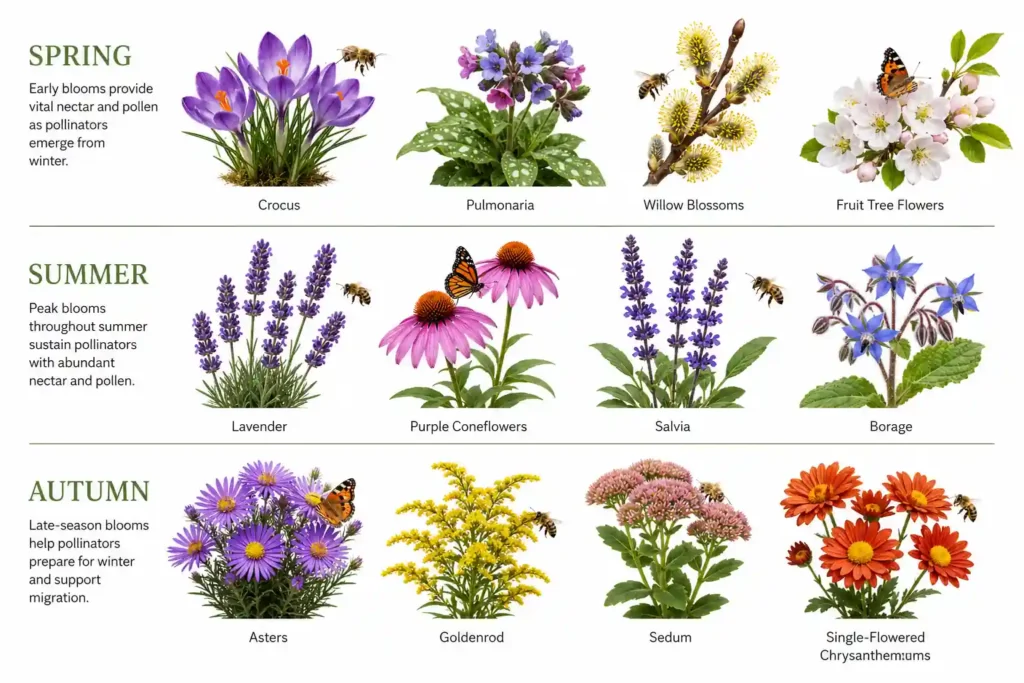
1. Spring Fuel (March to May)
Early-emerging queen bumblebees and solitary mining bees need quick energy after winter survival. Early spring bulbs like crocus, alongside pulmonaria, hellebores, native willow, and fruit tree blossoms, provide the initial nectar boost needed to establish new colonies.
2. Summer Abundance (June to August)
This window brings maximum insect activity. Combine deep-rooted perennials like echinacea, lavender, and catmint with fast-blooming herbs like borage and annual salvias to support growing populations and brood development.
3. Autumn Fuel for Winter Prep (September to November)
Late-season forage helps wild queens store energy for winter survival and gives migrating butterflies the calories needed for long flights. Late-blooming asters, goldenrod, sedums, single chrysanthemums, and mature ivy flowers are essential for filling out this late-season gap.
What If You Only Have Room for Five Plants?
Limited space should not stop you from creating a pollinator-friendly garden. Even a small flower bed or a few containers can provide a reliable food source when you choose plants that bloom at different times.
A simple combination of lavender, salvia, echinacea, borage, and asters can provide nectar from late spring into autumn while attracting a wide variety of bees and butterflies.
Field-Tested Maintenance Habits That Protect Beneficials
Planting flowers is only half the process. How you manage soil, plant debris, and water sources determines whether beneficial insects can nest and reproduce in your garden over the long term.
Leave Patches of Undisturbed Bare Soil
Over 70 percent of native solitary bee species nest in the ground, needing dry, uncompacted soil or gentle slopes to excavate their tunnels. Clear a small, unmulched patch of dirt in a sunny, quiet spot where ground-nesting bees can build nests without disruption.
Delay Your Autumn Border Cleanup
Avoid cutting back perennial stalks in November. Stem-nesting solitary bees lay eggs inside hollow or pithy stems of plants like rudbeckia, echinacea, and elderberry. Keep these standing through winter and trim them back to about 8 to 12 inches high in late spring after temperatures consistently stay above 50°F (10°C).
Set Up a Shallow Insect Hydration Station
Foraging insects need water to drink and cool their nests during hot spells, but deep birdbaths carry a risk of drowning. Fill a wide, shallow dish with smooth pebbles or marbles, then add water until the tops of the stones stay just above the surface to give bees a stable landing spot.
Transition Away From Synthetic Chemical Sprays
Phase out broad-spectrum chemical pesticides and synthetic fertilizers that disrupt soil health. Allowing a small pest population to persist early in the season encourages ladybirds, lacewings, and hoverfly larvae to move in and provide natural pest control.
Small Changes That Make a Big Difference
Not every improvement requires planting new flowers. These simple habits often have an immediate impact.
- Refill shallow water dishes during hot weather.
- Leave a few flowering herbs to bloom instead of harvesting every stem.
- Avoid mowing flowering weeds until nearby flowers begin blooming.
- Grow different flower shapes to attract different pollinator species.
- Replace one section of lawn with flowering plants each year instead of redesigning the whole garden.
Integrating Pollinator Plants into Kitchen Gardens
Bringing native flowers into vegetable beds creates a symbiotic environment that increases harvest yields on fruiting crops like squash, tomatoes, peppers, and cucumbers.
Interplanting low-growing cover species around heavy feeders helps bring pollinators right to the base of your crop plants. For instance, pairing container crops with compact herbs creates an inviting entry point for low-flying wild bees. If you grow vegetables in tight spaces, our guide on growing tomatoes in containers covers setup strategies that maximize airflow and fruit set.
Similarly, incorporating low-profile creeping thyme or alyssum around raised beds, as detailed in our best ground cover plants guide, suppresses weeds while keeping small pollinators working at ground level.
For gardens located near woodlines where deer forage heavily, selecting browsing-resistant choices keeps your pollinator beds intact.
Vegetables That Benefit Most From Pollinators
While leafy vegetables such as lettuce and spinach grow without insect pollination, many popular crops produce better harvests when bees regularly visit their flowers.
These crops benefit the most:
- Tomatoes
- Peppers
- Cucumbers
- Squash
- Zucchini
- Pumpkins
- Strawberries
- Blueberries
- Apples
Growing pollinator-friendly flowers nearby can increase flower visits throughout the growing season, especially during warm, sunny weather when insects are most active.
Comparing Essential Pollinator Plant Types
| Plant Class | Primary Pollinators | Peak Value Period | Best Growing Conditions |
| Spring Bulbs (Crocus, Alliums) | Solitary bees, early queen bumblebees | March to May | Well-drained soil, full sun to partial shade |
| Aromatic Herbs (Lavender, Borage, Thyme) | Honeybees, bumblebees, hoverflies | June to August | Lean soil, full sun, sharp drainage |
| Native Perennials (Echinacea, Asters) | Long-tongued bees, butterflies | July to October | Average soil, full sun, low maintenance |
| Tall Annuals (Verbena, Celosia) | Butterflies, moths, beneficial wasps | July to first frost | Rich soil, consistent moisture, full sun |
Frequently Asked Questions
What is the single best plant for attracting bees?
English and French lavender varieties consistently draw the widest range of bee species over a long summer window. Their high nectar volume and rich essential oils make them a top-tier choice for any sunny space with well-draining soil.
Do pollinators visit small urban balcony gardens?
Yes. Urban areas often host surprising plant diversity across balconies, parks, and residential yards. Container plantings with lavender, salvia, and single-flowered dahlias on high-rise balconies regularly see visits from nimble wild bees and hoverflies.
Is it safe to encourage large numbers of bees near an outdoor seating area?
Solitary bees make up the majority of native bee species and do not have hives to defend, making them extremely docile and incapable of stinging unless aggressively crushed. Bumblebees and honeybees foraging on flowers are focused on collecting food and will ignore people unless directly disturbed.
Which flower attracts the most butterflies?
Butterflies are especially attracted to nectar-rich flowers with open blooms. Verbena, coneflowers, asters, lantana, and butterfly bush are among the most popular choices. Planting several together creates a stronger food source than growing single plants throughout the garden.
Can pollinator gardens grow in containers?
Yes. Containers filled with lavender, salvia, thyme, marigolds, and borage can attract bees and butterflies, especially when placed in sunny locations where flowers remain visible from above.
Should I leave flowers after they finish blooming?
Some flowers can be deadheaded to encourage more blooms, while others are worth leaving because their seed heads provide food for birds or shelter for beneficial insects during colder months.