Inside the Blog
My first Shasta daisies came from a neighbour who divided her clump in the autumn and passed half of it over the fence in a bucket with a little soil. She told me to plant it anywhere sunny and forget about it. I planted it in a spot that I was struggling to find anything for, a dry, slightly exposed bed along the side of the house, and by the following summer it was producing more flowers than I knew what to do with. I had vases of them inside from June through August. That introduction to daisy growing set expectations I have been comparing every other plant to since, because very few plants produce that kind of return for almost no input.
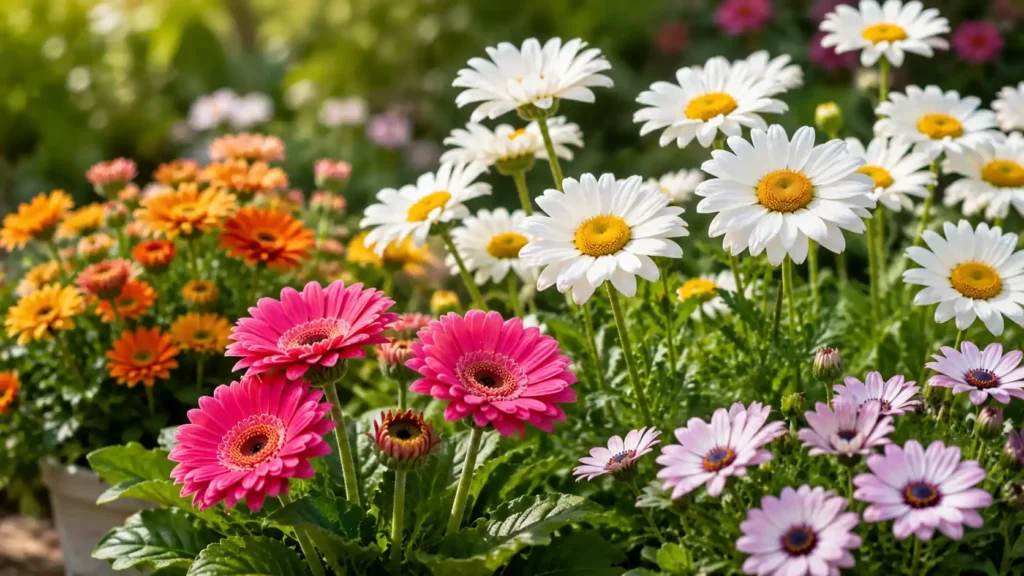
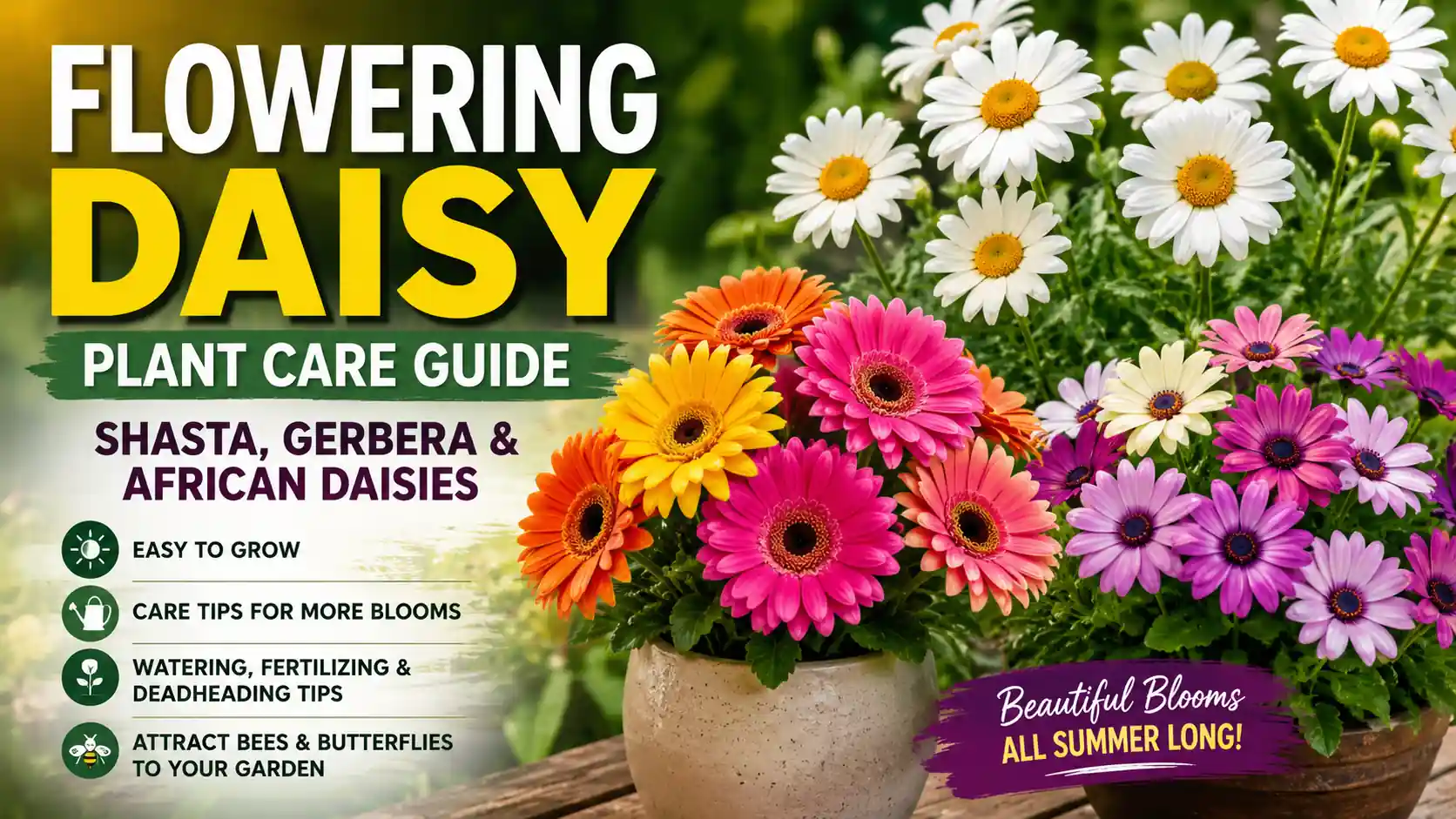
Daisy is a broad term that covers several different plants with similar flower shapes but quite different care needs and growth habits. The most commonly grown types in the US are Shasta daisy (Leucanthemum superbum), a perennial that comes back year after year; Gerbera daisy (Gerbera jamesonii), often grown as an annual outdoors or as a houseplant; and African daisy (Osteospermum), a half-hardy annual to tender perennial grown for summer colour. Understanding which one you have, or are planning to grow, is the starting point for the right care.
Shasta Daisy Care: How to Grow and Get More Flowers
Shasta daisies are classic cottage garden plants that produce the white-petalled, yellow-centred flowers most people picture when they hear the word daisy. They are perennials, reliably hardy in zones 4 through 9, and once established they return each spring, spread gradually, and produce flowers over a long summer period.
Full sun is where Shasta daisies do their best work. They tolerate partial shade but produce fewer flowers and develop weaker stems that need staking in lower light. Well-draining soil is important since they do not tolerate waterlogged conditions. They are actually quite tolerant of dry, slightly poor soil, which is why my dry side bed suited them so well.
Deadhead spent flowers regularly to extend the blooming period. Removing the faded flowers before they set seed keeps the plant producing new buds for a much longer season. Leave some flowers to go to seed at the end of the season if you want the plant to naturalise and spread, or if you want the seed heads for winter interest.
Divide Shasta daisies every two to three years in early spring or autumn. Like hostas, the centre of an established clump tends to die out over time as the plant expands outward. Division keeps the planting vigorous and produces new plants to spread to other parts of the garden.
Gerbera Daisy Care: How to Grow Gerbera Daisies Indoors and Outdoors
Gerbera daisies are the brightly coloured, long-stemmed daisies sold in flower shops and garden centres across the US. Outdoors they behave as annuals in most climates, producing flowers through summer but not surviving winter cold reliably beyond zone 8 or 9.
Indoors, gerbera daisies can be grown as houseplants in a very sunny south-facing window. They need more direct sun than most houseplants to continue flowering, and without adequate light they produce leaves but no new blooms. A grow light supplement significantly extends the indoor flowering period during darker months.
Water gerbera daisies at the base rather than overhead. Wet crowns, where the leaves emerge from the base of the plant, develop rot quickly, which is one of the most common reasons gerberas decline even in otherwise suitable conditions. Let the top inch of soil dry between waterings and never leave them sitting in water.
Gerbera daisies produce flowers over several months but eventually become exhausted. Rather than trying to nurse a spent plant back to flowering, most gardeners in the US treat them as seasonal plants to be replaced rather than long-term investments.
African Daisy Care: How to Grow and Keep African Daisies Blooming
Osteospermum, the African daisy, is a South African native that thrives in heat and dry conditions that slow most other summer annuals. The flowers close at night and in heavy overcast, which is different from Shasta or Gerbera daisies and can be alarming if you do not know it is a normal behaviour.
Plant African daisies in full sun. Partial shade causes leggy growth and significantly reduces flowering. They are drought tolerant once established and actually flower more freely in lean conditions than in rich, consistently moist soil. Deadheading spent flowers keeps them producing through summer.
African daisies tend to slow their flowering in the intense heat of midsummer in the hottest parts of the US. Rather than being a problem, this is a pause. They resume flowering when temperatures moderate in late summer and produce their best display from late summer through the first frost.
How to Fertilize Daisy Plants for More Flowers
For Shasta daisies in the garden, a balanced slow-release granular fertiliser applied once in early spring is enough for most established plants. Rich soil encourages leafy growth at the expense of flowers, so heavy feeding is not beneficial.
For gerbera daisies in pots, a balanced liquid fertiliser applied every two to three weeks during the flowering period supports the energy-intensive process of continuous bloom production. Our guide on how to fertilise houseplants covers the types and timing that work for flowering plants in containers.
For outdoor beds, adding organic matter to the soil before planting improves structure and provides slow, steady nutrition without the need for synthetic feeding.
How Daisy Plants Attract Bees and Butterflies
Single-flowered daisy varieties are among the most visited flowers by bees and butterflies. The open, flat flower structure gives pollinators easy access to pollen and nectar. Double-flowered cultivars, with extra rows of petals, provide less access and are less beneficial to pollinators, so mixing in some single-flowered varieties produces a better habitat garden alongside attractive display.
Our guide on how to attract pollinators to your garden all season long covers companion plantings that work well alongside daisy varieties to provide a continuous resource for pollinators from spring through autumn.
Flowering Daisy Plant Care FAQs
Do daisy plants come back every year?
It depends on the type. Shasta daisies are perennials that come back reliably in zones 4 through 9. African daisies are tender perennials that behave as annuals in most US climates and need replanting each spring. Gerbera daisies are perennial only in zones 8 and above. In colder regions they are grown as annuals.
Why has my daisy plant stopped flowering?
For Shasta and African daisies, the most common reasons are not deadheading spent flowers, insufficient sun, or midsummer heat causing a temporary pause. Regular deadheading extends the flowering period significantly. For gerbera daisies grown indoors, insufficient direct sunlight is almost always the cause.
How do I deadhead daisy plants?
Cut the stem of a spent flower back to just above the next bud or leaf junction. For Shasta daisies, cutting back to the nearest side shoot or leaf encourages the plant to produce the next flush of flowers more quickly than leaving a long bare stem above the cut.
Can daisy plants grow in pots?
Yes. Gerbera daisies are commonly grown in pots. Shasta daisies can be grown in larger containers with good drainage. African daisies do well in pots in sunny locations on patios. All container-grown daisies need more frequent watering than those in the ground since pots dry out faster.
Why are my daisy plant leaves turning yellow?
Yellow leaves in the growing season usually point to overwatering or soil that is staying too wet. For outdoor Shasta daisies, yellow older leaves at the base of the plant as summer progresses can also be natural aging. Check the soil drainage and watering frequency before adjusting anything else.
Have questions about your daisy plants? Drop them in the comments below. I read every one and love talking about this stuff.