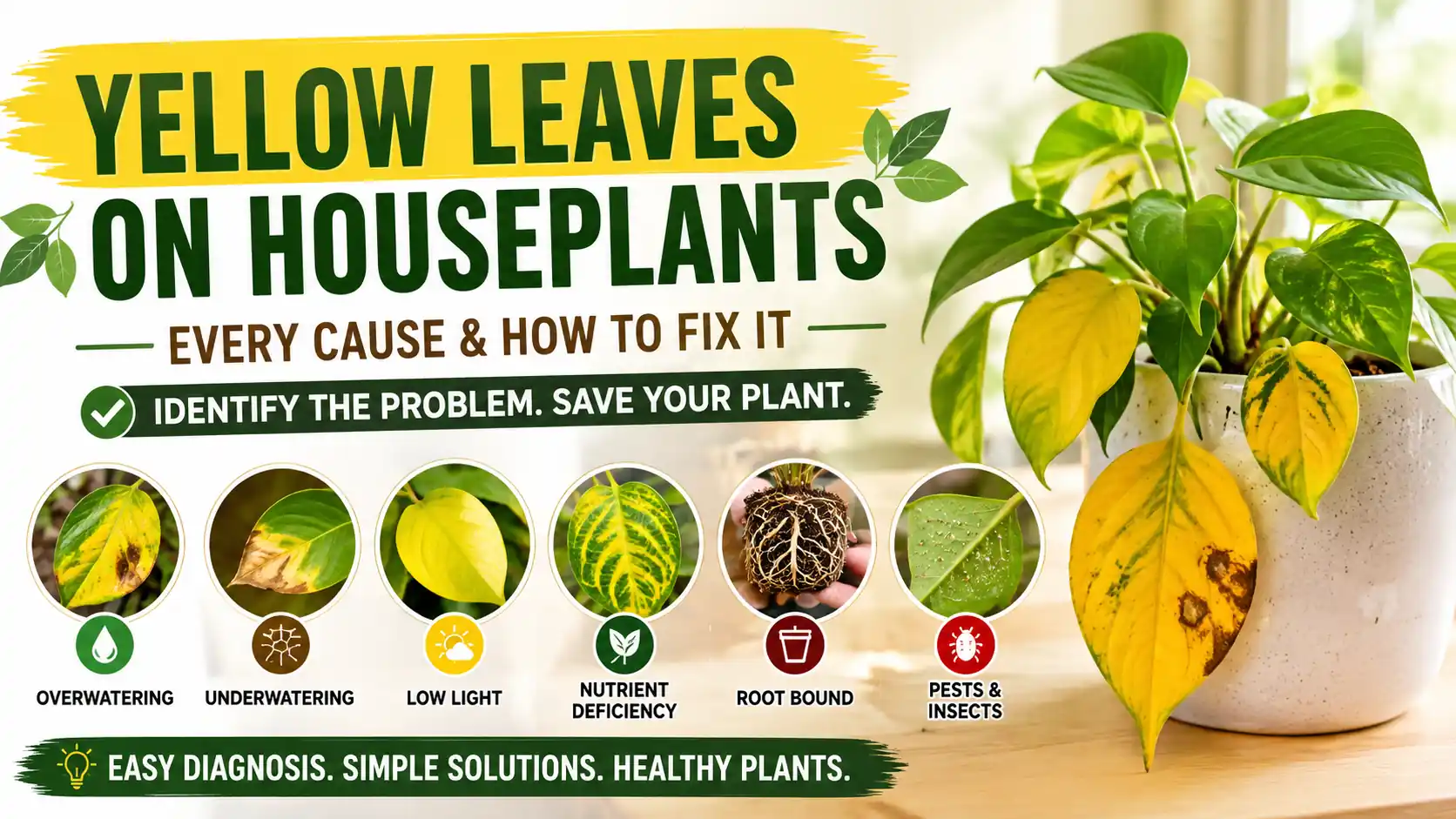
A few years ago I went through a phase where I was convinced I had some kind of unusual inability to keep plants alive. Three different plants, all going yellow, all for what seemed like the same reason, and nothing I tried was working. The frustrating part was that overwatering, underwatering, low light, and nutrient deficiency all produce yellow leaves. They look similar on the surface but need completely different responses. I was treating underwatered plants like they were overwatered and making things worse. Once I understood that the location of the yellowing, the texture of the affected leaves, and the pattern of spread all point to different causes, diagnosing the problem became much more straightforward.
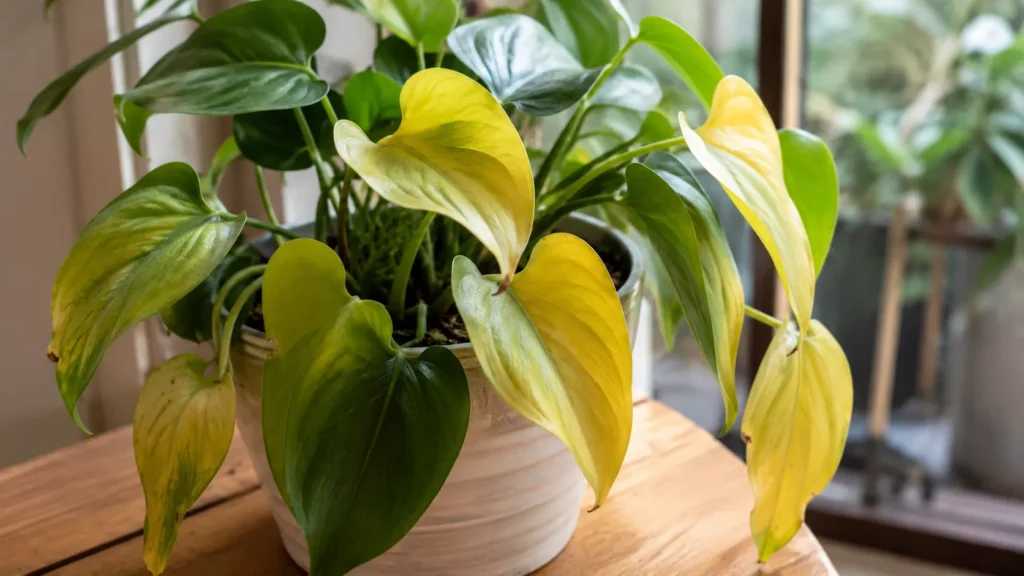
This is the guide I wished I had then. Yellow leaves are not a single problem. They are a symptom, and reading them correctly is what gets your plant back on track.
Overwatering Houseplants: Why It Causes Yellow Leaves
Overwatering is responsible for the majority of yellow leaf cases across all houseplant types. When roots sit in consistently wet soil they cannot absorb oxygen, root tissue begins to break down, and the plant loses its ability to move water and nutrients upward into the leaves even though the soil is technically wet. This is why an overwatered plant can look both yellow and droopy at the same time, which seems counterintuitive until you understand that the problem is not too little water but too much.
The yellowing from overwatering typically starts on lower, older leaves and progresses upward. The leaves often feel soft and limp rather than dry and crispy. The soil will feel damp or even wet well below the surface when you push your finger in. If you catch it early, simply letting the soil dry out completely before watering again, and adjusting your watering frequency going forward, is enough to reverse the damage. If lower leaves continue to yellow and feel mushy, root rot may have already developed and the plant may need to come out of its pot for inspection.
Underwatering Houseplants: Yellow Leaves, Dry Soil and Other Signs
Underwatering also produces yellow leaves, but the pattern is different enough to tell apart once you know what to look for. Underwatered plants tend to yellow at the tips and edges of leaves first, with the rest of the leaf staying green longer. The affected leaves feel dry and crispy rather than soft. The soil will be bone dry all the way through when you check.
The fix is simpler than overwatering: water thoroughly, let it drain fully, and adjust your frequency going forward. Most underwatered plants recover quickly once a proper watering is given, often showing visible improvement within a day. The key habit to build is checking the soil with your finger before every watering rather than following a calendar schedule, since watering needs change with the seasons and with pot size.
Low Light: Why Houseplant Leaves Turn Yellow
Plants need light to produce the chlorophyll that gives leaves their green colour. When light is insufficient, plants cannot maintain that production and leaves begin to pale and yellow, often starting with the lower or inner leaves that are most shaded. The yellowing from low light tends to be gradual and uniform rather than patchy, affecting whole leaves rather than just edges or tips.
Moving the plant to a brighter spot, even just a few feet closer to a window, often stops the yellowing within a few weeks as new growth comes in healthier. If natural light is genuinely limited in your space, our guide on whether plants need UV light and how to choose a grow lamp covers the options for supplemental lighting that actually make a difference.
Natural Leaf Aging: When Yellow Leaves Are Normal
This one trips up a lot of people. Most plants naturally shed their oldest, lowest leaves as they grow. These leaves yellow and drop because the plant is redirecting resources toward new growth, not because anything is wrong. A single yellow leaf on the lowest part of a healthy, actively growing plant is almost always natural aging rather than a care problem.
The way to tell the difference is to look at the overall picture. If only the oldest, lowest leaves are yellowing one or two at a time while the rest of the plant looks healthy and is producing new growth, this is normal. If multiple leaves at different positions on the plant are yellowing simultaneously, or if the yellowing is progressing up the plant steadily, something in the care routine needs adjusting.
Nutrient Deficiency: Yellow Leaves Caused by Low Nutrients
Plants kept in the same soil for a long time gradually exhaust the available nutrients. Nitrogen deficiency is the most common, producing a general yellowing that starts on older leaves and moves upward as the plant pulls nitrogen from lower leaves to support new growth. Iron and magnesium deficiencies produce a more specific pattern called interveinal chlorosis, where the leaf tissue between the veins turns yellow while the veins themselves stay green.
A balanced liquid fertiliser applied monthly during spring and summer addresses most deficiency cases without needing to diagnose the specific nutrient. Our post on how to fertilise houseplants covers what to use, when to apply it, and how to avoid over-fertilising, which causes its own set of problems.
Root Bound Houseplants: Can Crowded Roots Cause Yellow Leaves
When a plant has been in the same pot for too long, the roots circle the pot so densely that they crowd themselves out. A severely root bound plant cannot absorb water or nutrients efficiently and starts to show stress through yellowing leaves and slow growth. You will usually see roots emerging from drainage holes or visibly circling the inside of the pot when you lift the plant out.
Repotting into a container one size larger with fresh potting mix resolves this fairly quickly. Our guide to repotting a plant without causing stress walks through the timing, pot size choice, and method to get the plant settled without triggering additional shock from the move.
Temperature Stress and Drafts: Another Cause of Yellow Leaves
Sudden temperature drops, cold drafts from windows or doors in winter, and air from heating or cooling vents all cause yellowing and leaf drop in otherwise healthy plants. This type of yellowing tends to appear suddenly after a position change or the start of a cold season, affecting leaves closest to the source of the temperature stress first.
Fiddle leaf figs are particularly sensitive to this, as covered in our fiddle leaf fig care guide. Calatheas react similarly, and moving a cold-stressed plant to a stable, draft-free position usually stops the progression within a week or two, though leaves already damaged will not green up again.
Houseplant Pests: How Spider Mites, Scale, and Mealybugs Cause Yellow Leaves
Spider mites, scale insects, and mealybugs all cause yellowing by feeding on plant cells and disrupting the plant’s ability to move nutrients through its tissues. Pest-related yellowing often appears patchy or stippled rather than uniform, and you may notice other symptoms alongside it: fine webbing, sticky residue, or visible insects on the stems and undersides of leaves.
Turn leaves over and check stem junctions carefully before assuming yellowing is a care issue. Our spider mites guidecovers identification and treatment in detail.
How to Diagnose Yellow Leaves on Houseplants
Check these things in this order before doing anything else. Look at where the yellowing is starting, whether it is lower leaves, edges, between veins, or random patches. Check the soil moisture by pushing your finger two inches down. Look at how quickly the yellowing is progressing and whether it is on one or multiple leaves. Turn leaves over and check for pests. Then look at the plant’s location for light levels, proximity to vents, and temperature stability.
Most yellow leaf situations have one clear primary cause once you look at the full picture rather than just the leaf colour. Addressing the right thing makes the difference between a plant that recovers and one that keeps declining despite your efforts.
Frequently Asked Questions About Yellow Leaves on Houseplants
Should I remove yellow leaves from my plant?
Yes. Once a leaf has turned fully yellow it will not recover its green colour, and removing it cleanly at the base of the stem directs the plant’s resources toward healthy growth instead. Use clean scissors or pruning shears and cut close to the stem without leaving a stub. Leaving yellowed leaves attached for too long can occasionally invite fungal issues in humid conditions.
Why are only the bottom leaves of my plant turning yellow?
Lower leaf yellowing on an actively growing, otherwise healthy plant is usually natural aging. Plants shed their oldest leaves as they put energy into new growth at the top. If the plant is also producing new healthy leaves, losing one or two at the bottom occasionally is normal. If yellowing is progressing steadily upward through the plant, overwatering or a root problem is more likely.
Can yellow leaves turn green again?
Once a leaf has yellowed significantly, the chlorophyll in that tissue is gone and it will not return to green. Catching the cause early and correcting it stops further yellowing and allows new growth to come in healthy, but the already-affected leaves typically remain yellow until they drop. Focus on stopping the spread rather than reversing existing damage.
Why is my plant yellowing even though I water it properly?
Correct watering is only one factor. Low light, nutrient depletion in old soil, being root bound, temperature stress, and pests all cause yellowing independent of watering habits. Work through each possibility systematically. Check light levels, check the roots, check for pests, and consider when the soil was last refreshed.
Why are the new leaves on my plant turning yellow instead of the old ones?
New leaves yellowing is a different pattern from old leaf aging and usually points to a nutrient deficiency, particularly iron or manganese, or a pH issue in the soil that is preventing the plant from absorbing nutrients even if they are present. A balanced liquid fertiliser during the growing season addresses most cases. If it persists after feeding, consider repotting into fresh soil.
How long does it take for a plant to recover from yellow leaves?
Recovery time depends on the cause and how early you caught it. An underwatered plant can perk up within 24 to 48 hours. Overwatering recovery takes longer, often two to four weeks before you see consistently healthy new growth. Root rot recovery varies widely depending on how much root damage occurred. The yellow leaves themselves will not recover, but the absence of new yellowing is the sign that the plant has stabilised.