Inside the Blog
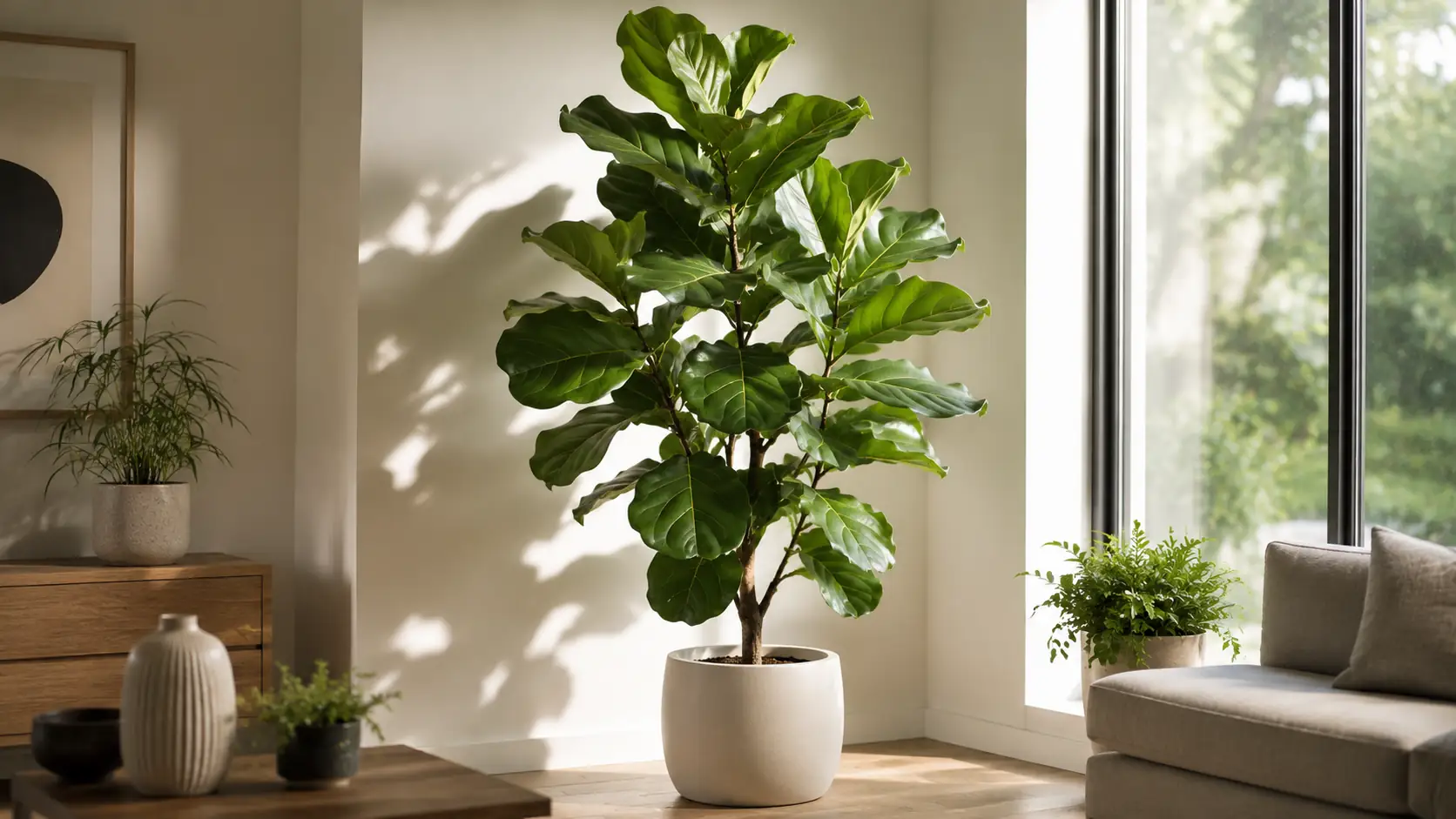
A healthy fiddle leaf fig depends on three things: consistent bright light, careful watering, and a stable indoor environment. Most problems, including leaf drop and brown spots, develop when one of these conditions changes suddenly. Understanding how the plant responds to light, moisture, and temperature makes it much easier to grow successfully indoors.
Why Fiddle Leaf Fig Leaves Drop (and How to Fix It)
Leaf drop is the primary issue indoor gardeners worry about, and it has a handful of distinct causes that produce slightly different patterns across the foliage.
- Brown spots from the edges inward, then leaf drop: This is almost always a localized moisture issue, pointing to either prolonged dehydration or environmental drying. Dry, lighter-edged browning that makes the foliage crisp up usually means the roots are parched. Low humidity from winter heating also accelerates this pattern.
- Sudden leaf drop without obvious spotting: This is typically a pure stress response to a change in location, a sudden cold draft, or an abrupt temperature shock. Fiddle leaf figs are incredibly sensitive to environmental movement. A plant that was stable and healthy in one corner will often shed several large leaves simply from being relocated to the opposite side of the same room.
- Lower leaves dropping while upper leaves look fine: This points directly to a lack of light energy. When the base of the stalk sits in deep shadow, the plant sheds its lower leaves because it cannot produce enough energy to sustain them.
Light Requirements for a Healthy Fiddle Leaf Fig
Bright, indirect light is an absolute necessity, and this species requires a higher volume of solar energy than most indoor growers realize.
Setting your plant right near a large south-facing or east-facing window provides the consistent daylight it needs to grow. While it enjoys ample ambient brightness, make sure to shield it from harsh, unfiltered afternoon sun, which can permanently scorch the delicate leaf surfaces. Placing it in a dim corner will almost certainly result in stunted growth, pale new leaves, and continuous leaf dropping.
Once you find an indoor location where the plant stops shedding and begins to thrive, leave it there permanently. Shifting a fiddle leaf fig around is a major source of stress, and even a minor move can cause it to react defensively by dropping leaves. If your natural indoor daylight is weak, using a supplemental grow lamp can stabilize the environment and provide the necessary light spectrum to keep the canopy full.
How to Water a Fiddle Leaf Fig Correctly
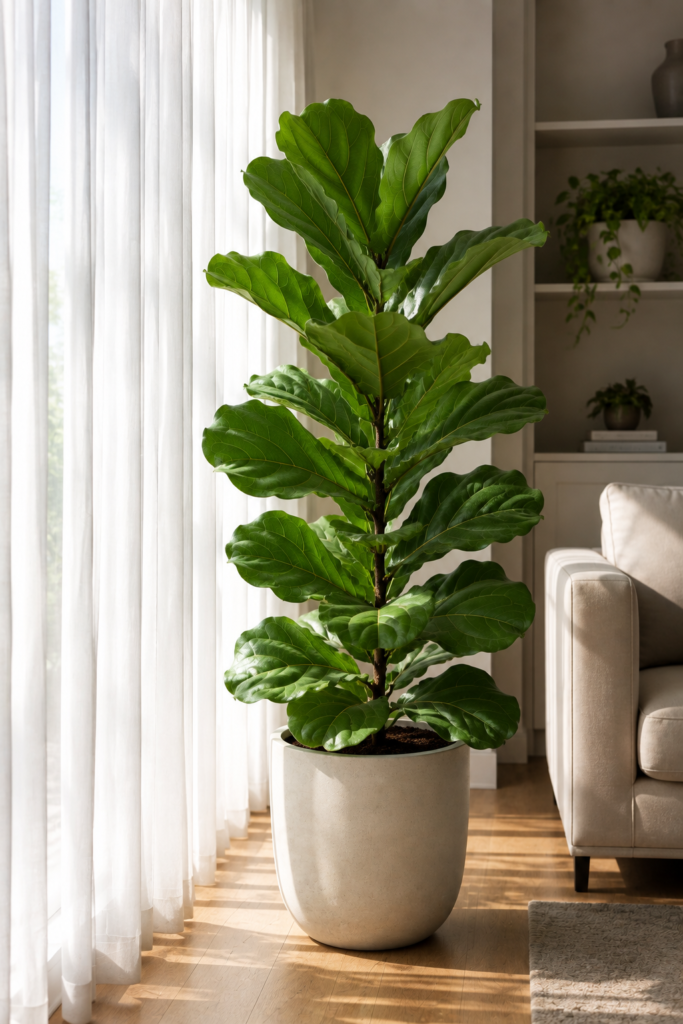
Improper moisture management is the main reason fiddle leaf figs fail indoors. You must learn to read the soil rather than watering on a fixed calendar schedule.
Pour water evenly over the soil surface until it flows freely out through the bottom drainage holes, ensuring the entire root ball is saturated. Let the container drain completely, empty the saucer beneath it, and do not water again until the top two inches of soil feel dry and powdery to the touch. Letting the pot sit in a pool of stagnant water triggers anaerobic root rot, which manifests as dark brown or black spots spreading from the center of the leaf outward.
When winter arrives and daylight hours shrink, the plant enters a semi-dormant phase and processes water at a much slower rate. You will need to reduce your watering frequency significantly during these months. Forcing moisture into cool, damp winter soil is a fast path to root rot, which is a structural issue that mirrors the initial challenges found in monstera deliciosa care.
Best Soil and Pot for a Fiddle Leaf Fig
A loose, heavily aerated potting medium is critical for long-term root health. Heavy, peat-dense soils pack down tightly over time, trapping moisture against the roots and suffocating the lower ecosystem.
You can fix this easily by mixing a generous amount of coarse perlite or pumice into a standard indoor potting soil to open up macroscopic air channels. To supercharge your substrate further and improve the microbial environment, adding a handful of biochar for houseplants to the mix creates a stable structural foundation that helps roots access nutrients safely.
Plan to upgrade your plant to a slightly larger container every two to three years, or whenever you notice the roots circling the base tightly and pushing out of the bottom drainage holes. Taking the time to refresh the medium properly prevents growth from stalling out completely.
Ideal Humidity and Temperature for Fiddle Leaf Figs
Keep your indoor living spaces consistently warm, maintaining temperatures between 60°F and 80°F (15°C to 27°C). Fiddle leaf figs crave a predictable, unchanging environment. Sudden changes are highly damaging, so keep your plant well away from icy winter windows, blast-chilling air conditioning vents, and direct heat radiation from radiators.
Average indoor humidity is usually fine for this plant, though prolonged dry air from winter heating can cause the large leaf margins to dry out and crack. If you want to increase the atmospheric moisture safely without creating stagnant puddles on the leaves, grouping your plants together or running a dedicated room humidifier will keep the air comfortably moist.
Seasonal Care Tips
Spring and summer are the active growing months, so your fiddle leaf fig will need more frequent watering and regular feeding. During autumn and winter, growth slows naturally. Reduce watering, stop fertilising, and keep the plant away from cold drafts and heating vents that quickly dry the air.
When and How to Fertilise a Fiddle Leaf Fig
During the active spring and summer growing season, applying a balanced liquid houseplant fertilizer once a month provides the nutritional fuel required to develop large, glossy new leaves.
As soon as autumn arrives and the days begin to cool, stop all fertilizer applications entirely. When a plant is not actively pushing out new stems, it cannot process these raw nutrients. The unused minerals will simply build up as toxic fertilizer salts in the soil, burning the root tips and causing structural leaf damage that ruins the look of the canopy.
How to Revive a Struggling Fiddle Leaf Fig
If your plant has already suffered a major setback, dropped half its leaves, and looks thin, the most important step is to avoid panicking. Resist the urge to change every single care factor simultaneously. Moving the pot to a new room, changing the watering routine, repotting the root ball, and drenching it in fertilizer all in the same week will shock the plant further and likely kill it.
Instead, pinpoint the single most likely issue, correct it patiently, and give the plant a few weeks to stabilize. If you are dealing with an overwatered plant where the subterranean roots have rotted, carefully trim away the mushy, black roots. Let the remaining healthy root sections dry out slightly in the open air before placing the plant into fresh, dry potting soil. Hold off on watering for the first week to allow the raw root wounds to heal cleanly.
Should You Remove Damaged Leaves?
Leaves with small brown patches can remain on the plant because they still produce energy through photosynthesis. Remove leaves only when they are mostly brown, badly damaged, or have naturally reached the end of their life.
If your fiddle leaf fig continues struggling despite adjusting its care, reviewing a few common plant care mistakes can help identify everyday problems such as overwatering, poor drainage, or excessive fertiliser. Gardeners looking for easier indoor foliage plants may also enjoy growing evergreen indoor plants or other beginner-friendly houseplants that tolerate typical indoor conditions with much less attention.
Quick FAQ
Why does my fiddle leaf fig have brown spots?
The location of the browning tells you exactly what is wrong. If dry brown spots are creeping inward from the very edges of the leaves, the plant is likely thirsty or suffering from low humidity. If dark, soft, irregular patches are forming near the center of the leaf or where the leaf joins the main stem, the soil is waterlogged, signaling root rot from overwatering.
How often should I water a fiddle leaf fig?
You should never water on a fixed weekly schedule, as indoor evaporation rates change constantly. Always test the soil manually and water only when the top two inches are entirely dry. Generally, this means watering roughly once a week during the hot summer months and extending the interval to once every ten to fourteen days during the winter.
Can I put my fiddle leaf fig outside in summer?
Yes, you can move it outdoors for the summer if you place it in a sheltered, fully shaded area that mimics a tropical canopy and ensure temperatures stay reliably above 55°F (13°C). Be sure to bring it back inside before the first cool autumn nights arrive, and be prepared for the plant to drop a few leaves as it adjusts to the environmental transition both ways.
Why are new fiddle leaf fig leaves smaller than older ones?
Smaller new leaves usually indicate the plant needs more light or nutrients during the growing season.
Should I rotate my fiddle leaf fig?
Yes. Rotate the pot about a quarter turn every few weeks to encourage even growth without frequently moving it to a different location.
Does a fiddle leaf fig need a pot with drainage holes?
Yes. Drainage holes allow excess water to escape and greatly reduce the risk of root rot.
Can I prune a fiddle leaf fig?
Yes. Pruning in spring encourages branching and helps control the plant’s size while removing damaged growth.