
Inside the Blog
Evergreen indoor plants keep their foliage throughout the year, giving your home a steady touch of green instead of changing with the seasons. They range from compact plants that fit on a desk or shelf to larger varieties that can fill an empty corner of a living room.
Some are especially forgiving when you forget to water them, while others need brighter light or more consistent moisture. Snake plant, ZZ plant, pothos, spider plant, rubber plant, and Chinese evergreen are a few popular choices for indoor growing.
The best evergreen houseplant for your home depends on the light available, how often you want to water, the space you have, and whether you need a plant for a particular room. The guide below compares 10 options and explains where each one grows best and how to keep it healthy throughout the year.
Why Evergreen Indoor Plants Work So Well Indoors
Evergreen houseplants are useful when you want a plant that keeps its foliage instead of going through a bare period. They can also suit different spaces because some tolerate lower light, while others grow well near a bright window.
Here are a few practical reasons people choose them:
- Year-round foliage: Healthy plants can keep their leaves through every season when their growing conditions are suitable.
- Different sizes: You can find compact plants for desks and shelves as well as larger plants for living room corners.
- Different care levels: Snake plants and ZZ plants need less frequent watering, while ferns and peace lilies need more consistent moisture.
- Flexible placement: Depending on the variety, evergreen plants can work in bedrooms, living rooms, offices, bathrooms, and other indoor spaces.
- Decorative value: Green foliage adds color and texture without relying on seasonal flowers.
The important thing is to match the plant with the room. A dark corner may suit a ZZ plant better than a rubber plant, while a sunny window can provide the stronger light that a jade plant needs.
What Are Evergreen Plants?
Evergreen plants are plants that retain their foliage for an extended period rather than losing all their leaves during a seasonal dormancy. When we talk about evergreen indoor plants, we usually mean houseplants that can maintain their leaves throughout the year when they receive suitable light, water, temperature, and other care.
This does not mean an evergreen houseplant will never lose a leaf. Older leaves can naturally turn yellow and fall, and a plant can lose foliage when it is stressed by overwatering, poor light, pests, temperature changes, or other problems.
The main difference is that the plant continues producing and maintaining foliage instead of becoming completely bare during a particular season. This is why evergreen houseplants are useful when you want consistent greenery indoors.
Benefits of Evergreen Indoor Plants
Evergreen indoor plants can make a room feel more finished without requiring seasonal replacements. Their main advantage is simple: with suitable care, they can provide foliage throughout the year.
Year-Round Greenery
Unlike plants that naturally die back or lose their foliage during part of the year, evergreen houseplants can keep a consistent leafy appearance indoors.
Options for Different Light Levels
Not every room receives the same amount of sunlight. Snake plant, ZZ plant, pothos, and Chinese evergreen can tolerate lower indoor light than plants such as jade, which generally needs a brighter location.
Plants for Small and Large Spaces
Trailing plants such as pothos and heartleaf philodendron work well on shelves and hanging planters. Rubber plants and parlor palms can take up more vertical space and work well as floor plants.
Easy Choices for Beginners
Some evergreen plants are forgiving when watering is not perfectly consistent. Snake plants and ZZ plants are good examples because they store water and generally prefer being allowed to dry between waterings.
A More Lived-In Space
A healthy plant adds natural color and texture to a room. You can use one large plant as a focal point or group smaller plants on shelves, desks, and side tables.
10 Best Evergreen Indoor Plants for Your Home
Below are 10 of the best evergreen indoor plants. Each one is easy to care for and perfect for beginners.
Evergreen Indoor Plants at a Glance
| Plant | Light | Watering | Difficulty | Typical Indoor Use |
|---|---|---|---|---|
| Snake Plant | Low to bright indirect | Low | Easy | Bedrooms, offices, living rooms |
| ZZ Plant | Low to bright indirect | Low | Easy | Offices, bedrooms, darker rooms |
| Pothos | Low to bright indirect | Moderate | Easy | Shelves, hanging baskets |
| Spider Plant | Medium to bright indirect | Moderate | Easy | Desks, bedrooms, shelves |
| Peace Lily | Low to medium indirect | Moderate | Moderate | Living rooms, bathrooms |
| Rubber Plant | Bright indirect | Moderate | Moderate | Living rooms, large spaces |
| Heartleaf Philodendron | Low to medium indirect | Moderate | Easy | Shelves, hanging baskets |
| Parlor Palm | Low to medium indirect | Moderate | Easy | Corners and living rooms |
| Chinese Evergreen | Low to medium indirect | Moderate | Easy | Bedrooms, offices, living rooms |
| Bird’s Nest Fern | Medium indirect | Moderate to high | Moderate | Bathrooms and humid rooms |
Light and watering needs vary with the season, pot size, soil, temperature, and growing conditions. Treat the table as a starting point rather than a fixed care schedule.
1. Snake Plant (Sansevieria)
Snake plant is one of the easiest evergreen houseplants for beginners. Its stiff, upright leaves take up little floor space, and many varieties have dark green leaves with lighter bands or yellow margins.
- Light: Low to bright indirect light
- Water: Allow the soil to dry well between waterings
- Size: Small varieties can stay compact, while taller types can reach several feet indoors
- Difficulty: Easy
- Best for: Bedrooms, offices, living rooms, and small spaces
Snake plants are particularly useful if you sometimes forget to water. The main mistake to avoid is keeping the soil constantly wet, especially in a pot without adequate drainage.

2. ZZ Plant (Zamioculcas zamiifolia)
The ZZ plant has thick stems and glossy, dark green leaflets that give it a clean, structured appearance. It grows slowly and handles indoor conditions well, which makes it a practical choice for busy households.
- Light: Low to bright indirect light
- Water: Allow the potting mix to dry between waterings
- Size: Usually around 2 to 3 feet indoors, although larger plants can develop over time
- Difficulty: Easy
- Best for: Offices, bedrooms, living rooms, and lower-light areas
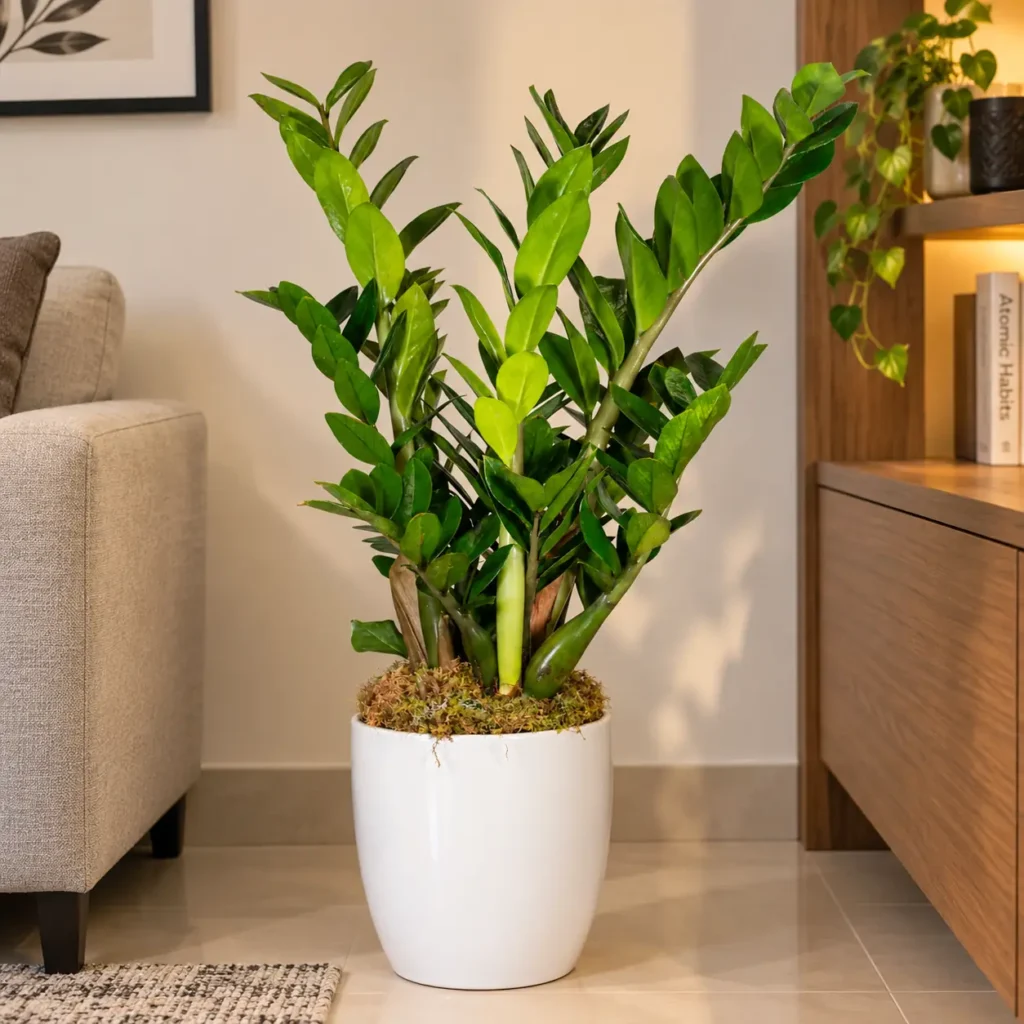
ZZ plants store water in their underground rhizomes, so they do not need frequent watering. Too much water is a bigger concern than letting the soil dry for a while.
3. Pothos (Epipremnum aureum)
Pothos is a trailing evergreen houseplant with heart-shaped leaves. Green varieties can tolerate lower light, while variegated types generally show their best color with brighter indirect light.
- Light: Low to bright indirect light
- Water: Water when the upper part of the potting mix has dried
- Size: Trailing stems can grow several feet long indoors
- Difficulty: Easy
- Best for: Shelves, hanging baskets, bookcases, and small apartments
Pothos is easy to propagate from stem cuttings, which makes it a simple plant to multiply once the parent plant is growing well.
4. Spider Plant (Chlorophytum comosum)
Spider plants form a fountain of narrow leaves and often produce long stems carrying small plantlets. Green and variegated forms are commonly grown indoors.
- Light: Bright indirect light is ideal, but it can tolerate lower light
- Water: Keep the soil lightly moist but allow the surface to dry between waterings
- Size: Usually compact, with leaves arching outward
- Difficulty: Easy
- Best for: Desks, shelves, bedrooms, and hanging baskets
The small plantlets produced on mature stems can be rooted to grow new spider plants. Brown leaf tips can appear when watering is inconsistent or the plant is exposed to dry indoor air.
5. Peace Lily (Spathiphyllum)
Peace lilies have broad green leaves and distinctive white flower-like structures called spathes. They can grow well indoors but generally need more consistent moisture than snake plants or ZZ plants.
- Light: Low to medium indirect light
- Water: Water when the upper layer of soil begins to dry
- Size: Small to medium depending on the variety
- Difficulty: Moderate
- Best for: Living rooms, bedrooms, and humid rooms
A peace lily may droop noticeably when it becomes too dry, although repeated severe wilting can stress the plant. Avoid keeping the soil permanently saturated.
Pet note: Peace lilies are not considered pet-safe. Keep them away from cats and dogs that may chew the leaves.

6. Rubber Plant (Ficus elastica)
Rubber plants bring large, glossy leaves to an indoor space and can eventually develop into substantial floor plants. Green and burgundy-leaved varieties are available.
- Light: Bright indirect light
- Water: Allow the upper part of the soil to dry before watering again
- Size: Can become a large indoor plant with time
- Difficulty: Moderate
- Best for: Living rooms and other bright spaces
Give a rubber plant enough light to support strong, compact growth. Rotate the pot occasionally if one side of the plant is receiving much more light than the other.
Pet note: Rubber plants can be irritating or toxic if chewed by pets, so place them where animals cannot reach them.
7. Heartleaf Philodendron (Philodendron hederaceum)
Heartleaf philodendron has soft, heart-shaped leaves on long trailing stems. It works particularly well when you want foliage to spill over a shelf or hanging planter.
- Light: Low to bright indirect light
- Water: Allow the upper layer of soil to dry before watering
- Size: Stems can become several feet long
- Difficulty: Easy
- Best for: Shelves, hanging baskets, bookcases, and offices
Trim the stems when they become too long or sparse. Regular pruning encourages a fuller appearance and gives you cuttings that can be propagated.
Pet note: Philodendrons are toxic if chewed by cats or dogs, so keep them out of reach.
8. Parlor Palm (Chamaedorea elegans)
Parlor palm has fine, arching fronds that give an indoor room a softer, more tropical appearance. It grows slowly and generally stays manageable indoors.
- Light: Low to medium indirect light
- Water: Water when the upper part of the soil starts to dry
- Size: Usually a manageable floor or table plant indoors
- Difficulty: Easy to moderate
- Best for: Living rooms, bedrooms, offices, and corners
Avoid placing a parlor palm directly beside a strong heat source or air conditioner. Consistent conditions and moderate humidity can help keep the foliage looking fresh.
9. Bird’s Nest Fern (Asplenium nidus)
Bird’s nest fern produces broad, undivided fronds that grow from a central rosette. Its fresh green foliage makes it a good choice for rooms where humidity is reasonably high.
- Light: Medium to bright indirect light
- Water: Keep the potting mix lightly and consistently moist without leaving the roots in standing water
- Size: Medium-sized indoors
- Difficulty: Moderate
- Best for: Bathrooms, kitchens, and humid rooms with suitable natural light
Avoid pouring water directly into the center of the plant. Water the soil around the plant instead, and give it good air circulation to reduce the risk of problems with the crown.
10. Chinese Evergreen (Aglaonema)
Chinese evergreen, also called Aglaonema, is one of the most useful evergreen houseplants for rooms that do not receive strong direct sunlight. Depending on the variety, its leaves may be deep green, silver-green, or patterned with different shades.
- Light: Low to medium indirect light
- Water: Allow the upper layer of soil to dry before watering again
- Size: Usually a compact to medium-sized indoor plant
- Difficulty: Easy
- Best for: Bedrooms, offices, living rooms, and lower-light areas
Variegated Aglaonema varieties generally benefit from brighter indirect light than solid green types. Avoid keeping the roots constantly wet, as poor drainage can lead to root problems.
Pet note: Aglaonema is toxic if chewed by cats or dogs, so keep it away from pets.
If you’re new to houseplants, beginner-friendly indoor plants are often the easiest place to start because they tolerate occasional watering mistakes and changing indoor conditions.
Best Evergreen Indoor Plants for Low Light
Not every room has a bright window, but that does not mean you have to give up on houseplants. Several evergreen plants can tolerate lower indoor light, although growth is usually slower when light levels are low.
Good choices include:
- Snake plant: Handles lower light and needs little water.
- ZZ plant: Slow-growing and tolerant of low light.
- Chinese evergreen: A good option for rooms with limited indirect light.
- Pothos: Adapts to a range of indoor light conditions.
- Heartleaf philodendron: Can grow in lower light, although growth may become less dense.
Low light does not mean no light. A completely dark room is not suitable for a living plant. If there is little natural light, a suitable grow light can provide the additional light the plant needs.
Best Evergreen Indoor Plants for Every Room
The best plant depends partly on the conditions in the room. Before choosing one, look at the available light and how much space you have.
Living Room
Rubber plants, pothos, ZZ plants, and parlor palms can work well in living rooms. Use a larger rubber plant or parlor palm when you want to fill an empty corner, or choose pothos for shelves and hanging planters.
Bedroom
Snake plants, pothos, and Chinese evergreen can work well in bedrooms with suitable indirect light. Choose a plant that fits the available space rather than placing a large plant in a cramped area.
Bathroom
Peace lilies and bird’s nest ferns can appreciate the higher humidity found in some bathrooms. They still need adequate natural light, so a windowless bathroom may require a grow light.
Home Office
ZZ plants, snake plants, pothos, and Chinese evergreen are useful choices for desks, shelves, or corners. Their size and light tolerance make them easy to fit around a workspace.
Small Apartments
Pothos and heartleaf philodendron are useful when floor space is limited because their stems can trail from shelves or hanging containers. Smaller snake plant varieties are another option when you want an upright plant with a small footprint.
Evergreen Indoor Plant Care Guide
Evergreen houseplants do not all need the same care. A snake plant can tolerate much drier soil than a bird’s nest fern, while a jade plant needs considerably more light than a Chinese evergreen. Use the following guidelines as a starting point and adjust them to the plant you are growing.
Light
Check the light requirements of each plant before choosing its location. Low-light plants can survive farther from a window, but growth may slow down. Plants that need bright light should be placed closer to a suitable window while avoiding sudden exposure to intense direct sunlight.
Water
Check the soil before watering instead of following a fixed weekly schedule. Many indoor plants are damaged by watering too frequently. Let the soil dry to the degree appropriate for the particular plant, then water thoroughly and allow excess water to drain away.
Soil
Use a quality indoor potting mix suited to the plant. Succulents such as jade need a faster-draining mix, while tropical foliage plants generally prefer a mix that holds some moisture without staying saturated.
Pots and Drainage
Choose a container with drainage holes. The pot should have enough room for the roots without being excessively large. A very large pot can hold moisture for too long after watering.
Humidity
Some evergreen plants, especially ferns and tropical foliage plants, appreciate moderate humidity. If indoor air is dry, grouping plants together or using a humidifier can help. Good air circulation is also important.
Fertilizer
Most houseplants need more nutrients during active growth than during the darker months of winter. Use a balanced houseplant fertilizer according to its label rather than applying a stronger dose in an attempt to make the plant grow faster.
Cleaning the Leaves
Large leaves collect dust over time. Wipe them gently with a clean, damp cloth when needed. Avoid using household cleaning products or leaf-shine products that can damage foliage.
Pruning
Remove dead or badly damaged leaves with clean scissors. Trailing plants such as pothos and philodendron can also be trimmed to control their length and encourage a fuller appearance.
Pests
Check the undersides of leaves and new growth for insects, webbing, sticky residue, or other signs of pests. Finding a problem early makes it much easier to manage.
How to Keep Evergreen Indoor Plants Green All Year
Keeping a houseplant green throughout the year is mostly about maintaining suitable growing conditions rather than following a complicated routine.
Give It Enough Light
Insufficient light is a common reason indoor plants become weak, pale, or stretched. Move the plant closer to an appropriate window if its growth is becoming thin or the foliage is losing its normal color.
Avoid Constantly Wet Soil
Watering too often can damage roots and eventually cause leaf yellowing or loss. Check the soil before watering and make sure excess water can escape through the drainage holes.
Adjust Watering With the Seasons
Plants often use less water during periods of slow growth and lower indoor light. Do not continue a summer watering routine automatically through winter.
Feed During Active Growth
Most indoor plants benefit from occasional feeding while actively growing. Follow the fertilizer instructions and avoid excessive applications.
Watch for Pests
Inspect plants regularly, especially after bringing a new plant into your home. Treating a small pest problem is easier than dealing with a heavily infested plant.
Give Plants Enough Space
Crowded plants have less air movement around their foliage. Leave enough room between plants for air to circulate and for each plant to grow naturally.
Common Evergreen Houseplant Problems
Yellow Leaves
Yellow leaves can have several causes, including excessive watering, poor drainage, insufficient light, or normal aging. Look at the soil and the condition of the rest of the plant before changing your watering routine.
Brown Leaf Tips
Brown tips can develop when the soil becomes too dry, indoor air is very dry, watering is inconsistent, or fertilizer salts build up in the soil. The cause is not always the same, so check the plant’s growing conditions.
Drooping Leaves
A drooping plant may need water, but watering immediately is not always the answer. Check the soil first. Roots damaged by excessive moisture can also cause wilting.
Long, Weak Growth
If stems become unusually long with large gaps between leaves, the plant may not be receiving enough light. Move it gradually toward a brighter location suitable for that species.
Pests
Spider mites, mealybugs, scale, and other pests can affect indoor plants. Inspect leaves, stems, and leaf joints regularly. Isolate an affected plant from your other houseplants while you deal with the problem.
How to Start Your Evergreen Plant Collection
Begin small. Choose one or two easy plants, like a snake plant or a pothos. Put them in a sunny spot and follow the care instructions. Watch them for a few weeks. If you like caring for them, add one more plant every few months.
Planty Bloom recommends keeping a small notebook. Note when you water and how the plant looks. This will help you learn and avoid mistakes over time.
Conclusion
Evergreen indoor plants are one of the best investments you can make in your living space. They look good year round, most of them ask very little in return, and a few well-chosen plants can completely change how a room feels. Start with one or two from this list, get comfortable with their needs, and add more as your confidence grows. A home with healthy plants is always a work in progress, and that is exactly what makes it worth it.
Frequently Asked Questions About Evergreen Indoor Plants
What are the best evergreen indoor plants?
Snake plant, ZZ plant, pothos, spider plant, Chinese evergreen, rubber plant, heartleaf philodendron, parlor palm, peace lily, and bird’s nest fern are all useful choices. The best one depends on your light, available space, watering habits, and room conditions.
Which indoor plants stay green all year?
Many foliage houseplants can maintain green leaves throughout the year when they receive appropriate care. Snake plant, ZZ plant, pothos, Chinese evergreen, rubber plant, and heartleaf philodendron are common examples.
How often should evergreen indoor plants be watered?
There isn’t a single schedule that suits every plant. Check the soil first and water only when the top inch feels dry. Plants usually need more water during spring and summer than in winter.
Can evergreen indoor plants survive in low light?
Several evergreen plants, including Snake Plant, ZZ Plant, and Heartleaf Philodendron, tolerate low-light conditions. However, even low-light plants grow best with some indirect natural light.
Why are my evergreen plant’s leaves turning yellow?
Yellow leaves are commonly caused by overwatering, poor drainage, insufficient light, or natural aging of older leaves. Check the soil moisture and growing conditions before making changes.
What are the best evergreen indoor plants for a living room?
Rubber plant and parlor palm work well as larger floor plants, while pothos and ZZ plants are useful for smaller spaces. The right choice depends on the amount of natural light available.


