Inside the Blog
Calatheas are admired for their striking patterned leaves, but they quickly show signs of stress when their growing conditions are off. Curled leaves, brown edges, and fading colors are usually caused by a few common issues such as inconsistent watering, low humidity, poor water quality, or too much direct sunlight. Once you identify the cause, most problems are straightforward to correct.
Why Leaves Curl
Leaf curling in Calathea is almost always a survival mechanism to prevent moisture loss. When the plant feels water stress, it rolls its leaves inward to minimize the surface area exposed to the air. The two most common triggers are:
- Tap Water Quality: This is the cause most people overlook first. Calatheas are incredibly sensitive to the fluoride, chlorine, and heavy mineral salts found in municipal tap water. Over time, these compounds build up in the delicate leaf tissue, causing the edges to crisp and the leaves to curl tight. Switching to filtered water, distilled water, or collected rainwater often resolves chronic curling when nothing else works.
- Underwatering or Uneven Watering: Calathea soil should stay consistently damp like a wrung-out sponge but never muddy. If you let the soil dry out completely until the pot feels weightless, the roots stall, and the leaves curl up in self-defense.
Recovery Timeline: Curling caused by dry soil usually resolves within a few hours of a deep, thorough watering. However, curling caused by poor water quality improves more slowly over several weeks as new, unblemished leaves emerge.
Will Curled Leaves Recover?
Leaves that curl because the soil became too dry often return to their normal shape within a few hours after thorough watering. However, leaves damaged by mineral buildup or prolonged stress may never fully recover. Focus on improving future care so that new growth emerges healthy and properly shaped.
Why Leaf Edges Turn Brown
Crispy, brown margins are the ultimate sign of a dry environment. Calatheas naturally grow on the humid jungle floor, thriving in 50 to 60 percent humidity. Most heated or air-conditioned homes drop down to 30 or 40 percent humidity, which pulls moisture right out of the leaf edges faster than the roots can replace it.
A small, dedicated humidifier placed close to your plant grouping makes the absolute biggest practical difference.
Alternatively, grouping your Calathea with other moisture-loving varieties like the Lemon Lime prayer plant creates a shared microclimate where the collective transpiration (moisture released by the leaves) keeps the ambient air naturally more humid.
Light: The Canopy Rule
Because Calatheas grow under the dense forest canopy in the wild, they are adapted to filtered, lower-intensity light rather than harsh, direct sun.
- Too Much Light: Direct sunlight will quickly bleach the rich colors out of the leaf patterning and cause permanent, dry scorch marks.
- Too Little Light: While they tolerate lower light better than many colorful plants, dark corners will cause new leaves to grow smaller, leggy, and lose their distinct high-contrast markings.
A spot placed three to five feet back from a bright window or centered in a room that gets reliable, bright indirect daylight hits the ideal balance.
Watering Correctly
Consistency is your absolute best tool when addressing calathea care. A plant that is drowned heavily one week and then left to bone-dry for the next two weeks will suffer from constant leaf damage.
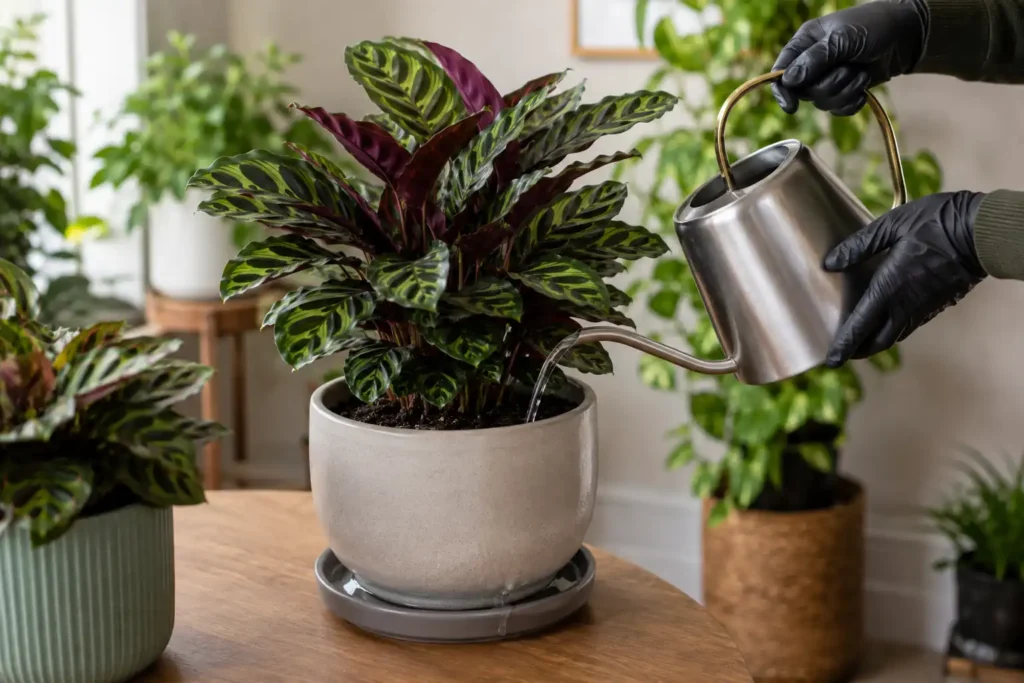
Water whenever the top inch of the soil feels like it has lost its dampness. Pour room-temperature water evenly over the soil until it runs freely out of the bottom drainage holes. Always empty the collection saucer after 15 minutes leaving a Calathea sitting in stagnant water keeps the lower roots suffocated and quickly introduces root rot.
Avoid watering on a fixed calendar. Instead, check the soil before every watering. Seasonal changes in temperature, light, and humidity all affect how quickly the potting mix dries.
Soil and Repotting
Calatheas possess a relatively shallow, spreading root system that prefers a loose, well-aerated potting medium that holds moisture without packing down tight. A mix composed of standard indoor potting soil, coco coir, and a generous handful of perlite works beautifully.
Plan to refresh the soil or step up the pot size every one to two years. Even if the plant hasn’t completely outgrown the container, replacing old soil helps flush away accumulated mineral salts from past waterings. For a smooth transition, check out our step-by-step guide on how to repot a plant without causing stress to keep the roots safe during the move.
Use a container with drainage holes to prevent excess water from collecting around the roots. Plastic pots retain moisture longer, while terracotta pots dry out more quickly and may require more frequent watering in warm homes.
Common Varieties to Try
- Calathea orbifolia: Highly sought after for its massive, round leaves accented with distinct silver stripes. It has slightly tougher leaves, making it one of the more forgiving options.
- Calathea ornata (Pinstripe Calathea): Showcases striking, dark green leaves that look like they’ve been hand-painted with delicate pink or white pinstripes. This variety is highly expressive and requires strict humidity monitoring.
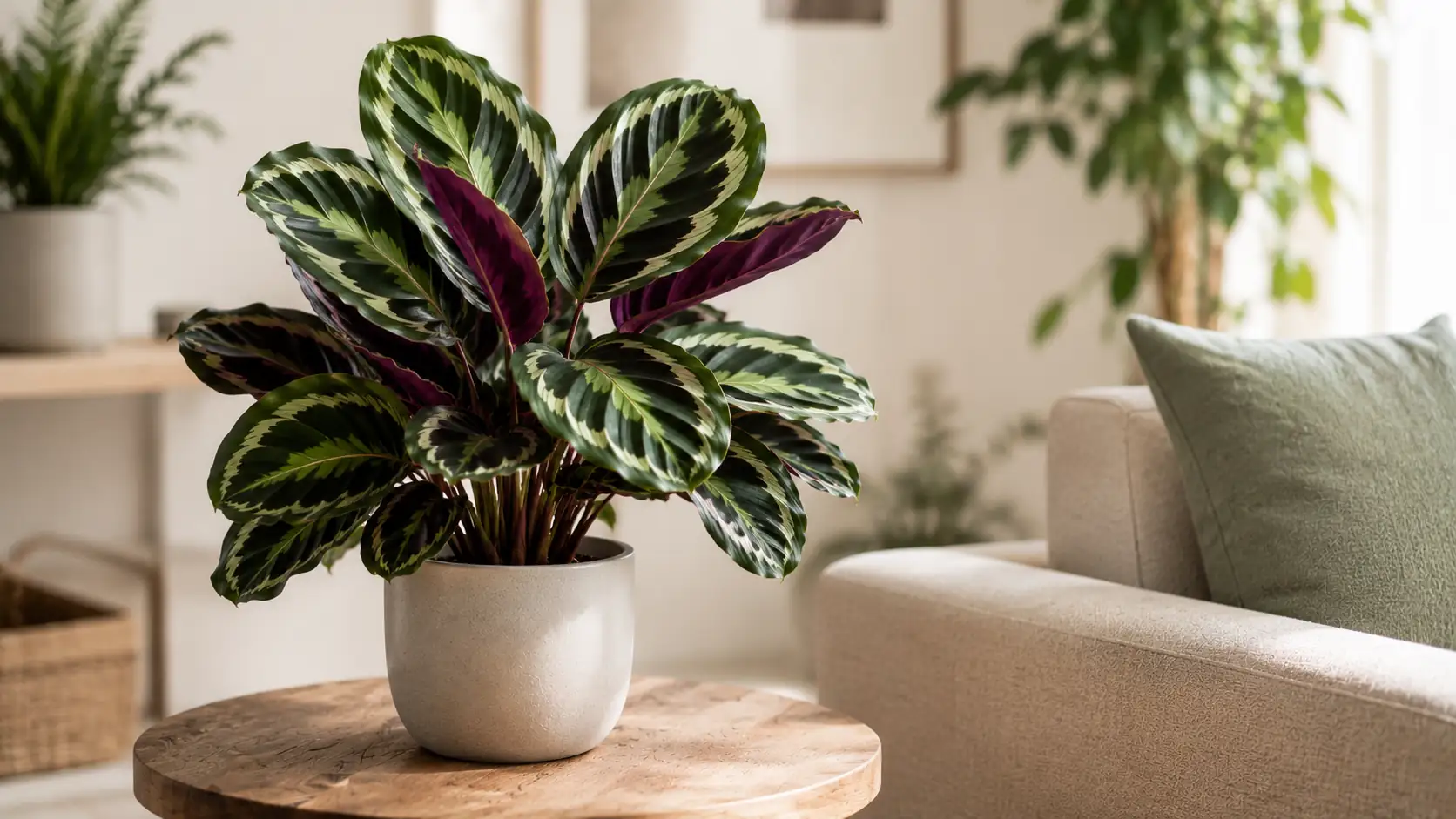
- Calathea medallion: Features large, oval leaves with a patterned dark green top and a rich, deep purple underside. It is widely available and a wonderful middle-ground choice for beginners.
If you are buying your first Calathea, choose a healthy plant with firm leaves, vibrant patterns, and no yellowing or crispy edges. Avoid plants sitting in waterlogged nursery pots or showing signs of pest damage.
Quick FAQ
How often should I water a Calathea?
Water whenever the top inch of the soil begins to dry. The exact frequency depends on your home’s temperature, humidity, and the time of year.
Why does my Calathea look completely different in the morning compared to the night?
This is a perfectly natural process called nyctinasty (the circadian movement of leaves in response to light). The plant uses small joints at the base of the leaves to fold them upward at night like hands in prayer, and lowers them during the day to capture light. It’s a sign of a healthy, active plant.
Why are the colors on my new leaves looking washed out?
If the new growth looks pale or lacks distinct variegation, the plant is likely getting too much direct light, which actively breaks down the rich pigments in the leaves. Try shifting the pot a few feet further back from the window.
Can I trim the brown edges off Calathea leaves?
Yes. Use sharp, clean scissors and trim just inside the brown line, leaving a tiny margin of brown so you don’t cut directly into the healthy, active green tissue. While this instantly cleans up the plant’s appearance, you must fix the underlying humidity or water quality issue to prevent new tips from turning brown.
What is the best water for Calathea plants?
Filtered, distilled, or collected rainwater is the best choice because it reduces mineral buildup that can damage the leaves.
Can Calatheas grow in low light?
Yes. Calatheas tolerate low light, but they grow best in bright, indirect light where their leaf patterns remain vibrant.
Should I mist my Calathea?
Occasional misting provides only temporary humidity. A humidifier or grouping plants together is a more effective way to maintain consistent moisture in the air.
What is the ideal humidity level for a Calathea?
Aim for 50% to 60% relative humidity to encourage healthy growth and reduce the risk of brown leaf edges and curling leaves.