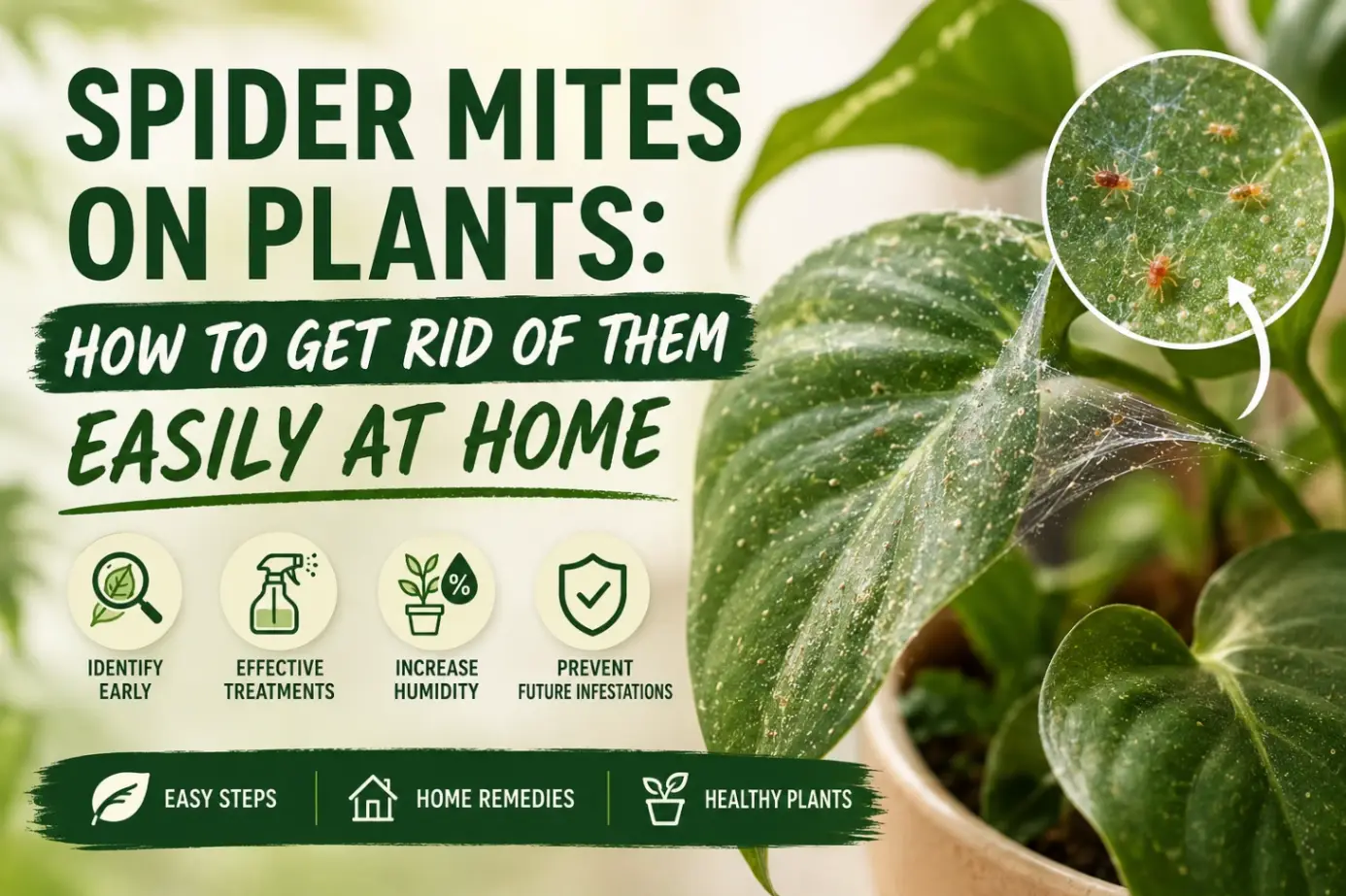
The first time I had spider mites I genuinely had no idea what was happening. My calathea started looking dull and a little pale, like the colour was draining out of it slowly. I checked the soil, adjusted my watering, moved it closer to the window, and still it kept looking worse. It was only when I turned a leaf over and saw the fine webbing, like someone had stretched a tiny piece of clingfilm across the underside of the leaf, that I finally understood what I was dealing with. By that point the mites had already spread to the plant sitting next to it. That spread happened in less than two weeks, which tells you everything you need to know about how quickly spider mites move if you do not catch them early.
Spider mites are not insects. They are arachnids, related to spiders and ticks, and they are tiny enough that most people never see individual mites with the naked eye. What you see instead is the damage they cause: stippled, pale, or bronze-looking patches on leaves, and in more advanced infestations, the characteristic webbing across leaf surfaces and between stems. They thrive in warm, dry conditions, which makes the average centrally heated home in winter close to ideal for them.
What Does Spider Mite Damage Look Like?
The earliest sign is a slight dulling or speckling on the upper surface of leaves, as if someone has lightly sandpapered the surface. Individual leaves start to look faded or stippled with tiny pale dots. These are the feeding punctures where mites have pierced the leaf surface to extract cell contents.
As the infestation grows, leaves yellow and drop, new growth looks distorted, and the webbing becomes visible first on the undersides of leaves, then spreading across the whole plant. By the webbing stage, the population is already substantial. The best time to act is before you see webbing at all, which means turning leaves over and checking the undersides regularly even on healthy-looking plants.
How to Check Plants for Spider Mites?
Hold a piece of white paper under a suspect plant and shake the foliage gently. If tiny moving dots fall onto the paper, you have mites. The dots will be so small they look like specks of pepper, but if you look closely you will see them moving. This test works even before visible damage appears on the leaves and is the most reliable early detection method I have found.
Check undersides of leaves especially where the leaf meets the stem, since mites tend to cluster in those sheltered spots. Plants that are stressed, underwatered, or in hot dry spots are most vulnerable.
Why Do Spider Mites Thrive in Dry Consitions?
Spider mites reproduce extremely fast in low humidity and high temperatures. A female can lay hundreds of eggs in her lifespan, and at warm room temperatures a new generation can hatch and reach reproductive maturity in as little as a week. This is why infestations can go from barely noticeable to severe so quickly during winter when central heating dries out indoor air significantly.
Raising the humidity around your plants genuinely slows mite reproduction. Our guide on choosing the right humidifier for plants explains what to look for and what size works for a plant shelf or room. It is not just beneficial for your mite-prone plants. It makes the whole indoor environment less hospitable to mites as a baseline.
How to Get Rid of Spider Mites on Plants?
Start with the simplest treatment first. Take the affected plant to the shower or outside and spray the entire plant, particularly the undersides of leaves, with a strong stream of water. This physically dislodges mites and eggs and makes an immediate dent in the population. Do this every two to three days for the first week.
Follow up with neem oil or insecticidal soap. Mix neem oil with a small amount of dish soap and water according to the bottle instructions, then spray every surface of the plant including stem junctions and undersides. Neem works by disrupting the mite life cycle rather than just killing adults, so it handles eggs and juveniles that contact sprays can miss. Apply every five to seven days for at least three weeks. Stopping early is the most common reason infestations come back.
For severe infestations where webbing is widespread, consider removing the most heavily affected leaves before treating, since dense webbing physically protects mites from spray coverage.
Why You Should Isolate Plants With Spider Mites?
The moment you confirm spider mites, move that plant away from your other plants. Mites spread by crawling from plant to plant when leaves touch, and in some conditions they can even drift through air on silk threads. I learned this the hard way when my calathea spread mites to the prayer plant sitting beside it before I even finished treating the first one.
Keep the affected plant isolated until you have completed the full treatment course and seen no new signs of mites for at least two weeks. Our calathea care guide mentions spider mites as a recurring risk for that plant specifically since they are prime targets due to their thin leaves and the dry conditions many homes provide.
How to Prevent Spider Mites From Coming Back?
The two most effective prevention habits are regular leaf inspections and maintaining reasonable humidity. Once a week, turn a few leaves over on each of your plants and look at the undersides. It takes about thirty seconds per plant and is the only reliable way to catch mites before they establish.
Avoid placing plants in hot, dry spots near radiators or heating vents. Plants that are healthy and well-watered are more resistant to mite damage even when exposed, since stressed plants are significantly more vulnerable. Our post on the most common plant care mistakes beginners make covers the stress factors that make plants more susceptible to pests as a general principle.
Which Houseplants Are Most Susceptible to Spider Mites?
Spider mites affect a wide range of plants but tend to target those with thin leaves and those kept in drier conditions. Monstera, fiddle leaf fig, calathea, and most succulents are frequently affected. If you have a monstera and want to know what healthy leaves should look like so you can spot early mite damage, our monstera deliciosa care guide describes the leaf characteristics worth watching.
How Long Does It Take to Get Rid of Spider Mites?
Spider mites are beatable. The reason people struggle with them is stopping treatment too early or missing the undersides of leaves when spraying. Three weeks of consistent neem oil treatment, combined with raised humidity and regular inspections, clears most infestations completely. The plants come back stronger once the pressure is removed.
Give it the full treatment window, keep the plant isolated until you are certain, and add a quick weekly leaf check to your routine going forward. That is really the heart of dealing with spider mites on plants. Everything else falls into place from there.
Frequently Asked Questions About Spider Mites on Plants
What do spider mites look like on plants?
Individual spider mites are tiny, roughly the size of a pinhead, and difficult to see with the naked eye. You are more likely to notice the damage they cause first: pale stippling on leaf surfaces, a dull or faded appearance, and eventually fine webbing on the undersides of leaves and between stems. Shaking foliage over white paper and looking for moving dots is the most reliable way to confirm their presence.
How do spider mites spread from plant to plant?
Spider mites spread mainly by crawling between plants when leaves or branches touch. In some conditions they can drift through air on thin silk threads, which is why even plants that do not touch can sometimes be affected if they are nearby. Isolating an infested plant immediately is the most important step to prevent the spread.
Can spider mites kill a plant?
A severe, untreated infestation can eventually kill a plant by destroying enough leaf surface area to prevent photosynthesis, but this takes time. Most plants recover fully once treatment begins. Early detection and consistent treatment over several weeks gives plants the best chance of full recovery without significant permanent damage.
Is neem oil safe for all houseplants?
Neem oil is safe for most common houseplants when diluted correctly. Test on a small leaf area first and wait 24 hours before treating the whole plant, since some plants can be sensitive to the oil at higher concentrations. Avoid applying in direct sunlight, which can cause leaf burn when the oil sits on the surface.
How long does it take to get rid of spider mites completely?
Expect three to four weeks of consistent treatment, applying neem oil or insecticidal soap every five to seven days. The egg stage is the hardest to eliminate, and new juveniles hatch in cycles, which is why multiple applications over several weeks are needed rather than a single treatment.
Why do spider mites keep coming back even after treatment?
The most common reasons are stopping treatment too early before all eggs have hatched and been addressed, not treating the undersides of leaves thoroughly, or not raising ambient humidity to slow reproduction. Low humidity is the underlying condition that makes most homes so hospitable to mites, so addressing that alongside treatment makes a lasting difference.