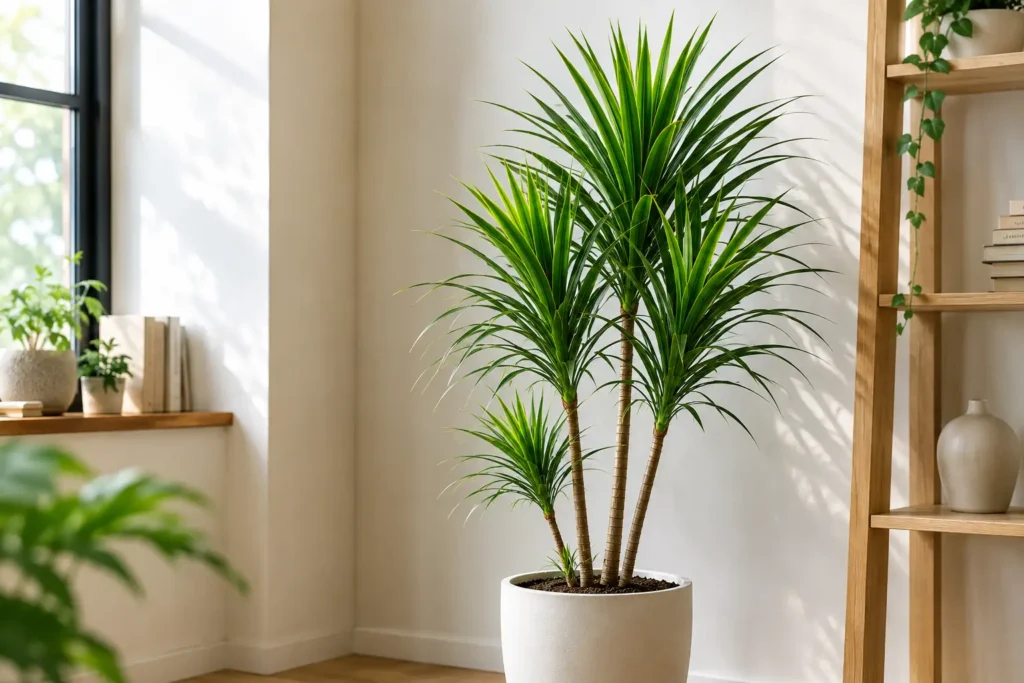
My dracaena marginata survived an entire summer in a flat I was subletting where the blinds were broken and permanently half-closed, and my watering was generous at best. It sat in that dimly lit room, got watered on an irregular schedule, lost a few lower leaves along the way, and still looked presentable when I collected it in September. That experience made me a convert. I have kept dracaenas ever since, and they are consistently the plants in my home that ask the least while delivering the most visual presence in return.
Dracaena is a large genus with over 100 species, native primarily to Africa and parts of southern Asia. The most widely sold varieties for indoor growing include Dracaena marginata, the dragon tree with its slender red-edged leaves on bare woody canes; Dracaena fragrans, also called the corn plant, with its broad, arching green and yellow-striped leaves; and Dracaena trifasciata, though most people know this one as the snake plant. All of them share similar care preferences and a genuine tolerance for the imperfect conditions most homes actually provide.
How Much Light Does a Dracaena Need?
Dracaenas are adaptable to a range of light conditions, from low to bright indirect light, which is part of why they work so well indoors. In low light, growth slows and the leaf colouring on variegated varieties becomes less vivid. In bright indirect light the plant grows faster and the stripe or edge colours on marginata and fragrans are noticeably more defined.
Direct sun is the one condition to avoid. The thin or broad leaves of most dracaena varieties scorch easily in direct sunlight, developing bleached patches that do not reverse. A position near a bright window with the plant set back a foot or two, or directly in front of a north-facing window with good ambient light, works well for most varieties. Dracaenas are one of the plants I would confidently recommend for offices and rooms without exceptional natural light.
How Often Should You Water a Dracaena Plant?
Overwatering is the most consistent way to shorten a dracaena’s life, and it is more common than under-watering because these plants look tropically lush and seem like they should need regular moisture. They do not. Let the top half of the soil dry out before watering, then water thoroughly and let it drain completely.
In practice, most dracaenas in typical indoor conditions need watering every ten to fourteen days in summer and every three weeks or longer in winter. The specific frequency depends on pot size, soil type, and how warm and bright the location is, but the principle is always the same: check before you water, and wait if there is any doubt. Soft, yellowing lower leaves on a dracaena almost always trace back to overwatering rather than anything else.
Why Are My Dracaena Leaves Turining Brown?
Brown tips on dracaena leaves are one of the most frequently searched plant problems, and the cause is almost always one of two things. The first is fluoride sensitivity. Dracaenas are genuinely sensitive to the fluoride added to municipal tap water in the US, and over time it accumulates in the leaf tissue and causes the characteristic brown, dry tip damage. Switching to filtered, distilled, or rainwater usually stops new browning within a few months as fresh leaves emerge without the fluoride exposure.
The second cause is inconsistent watering, either letting the plant dry out too severely between waterings or allowing salt buildup in the soil from repeated fertilising without occasional flushing. Both cause the same brown tip pattern. Our guide on yellow leaves and other houseplant symptoms covers how to read leaf damage patterns on dracaenas and other common indoor plants.
What is the Best Soil for Dracaena Plants?
A standard indoor potting mix with good drainage properties works well. Dracaenas do not need anything particularly specialised, but a dense, moisture-retaining mix that stays wet for a long time after watering works against them. Adding perlite to a standard mix improves drainage and reduces the risk of root rot in overwatered plants.
Dracaenas are slow growers and do not need repotting often. Every two to three years is usually sufficient, or when you can see roots emerging clearly from the drainage holes. Move up one pot size at a time and use fresh potting mix each time. Our step-by-step repotting guide walks through the process in full if you want a detailed walkthrough before tackling a larger specimen.
Dracaena Temperature and Humidity Requirements
Dracaenas prefer temperatures between 60 and 80°F (15 to 27°C) and do not tolerate cold drafts or sudden temperature drops. Keep them away from exterior doors that are regularly opened in winter, air conditioning vents, and cold windowpanes in freezing weather. A sudden cold exposure causes rapid leaf yellowing and drop in a plant that would otherwise be perfectly healthy.
Average household humidity is fine for most dracaena varieties. They are not humidity-demanding plants in the way that calatheas or ferns are, which makes them practical for rooms with drier air. If you do run a humidifier for other plants, the dracaena will benefit from the improved air quality, but it is not a necessity the way it is for some of the plants in our calathea care guide.
How to Fertilize Dracaena Plants?
A balanced liquid fertiliser applied once a month from spring through summer gives dracaenas the nutrition they need to support new growth. Dilute to half strength rather than the full label rate, since dracaenas are sensitive to salt buildup from over-fertilising. Stop feeding completely from October through February.
Signs that a dracaena is nutrient deficient include pale new leaves and noticeably slower growth during the growing season despite good light. A couple of monthly feeds during spring usually corrects this within six to eight weeks. Do not try to compensate for months of no feeding by applying a heavy dose all at once, since this causes more harm than a steady, gentle routine.
How to Prune a Dracaena Plant?
Dracaenas can be pruned at any point on the main cane without damaging the plant. Cut the cane cleanly with sterilised pruning shears and the plant will produce new growth from just below the cut, branching outward rather than continuing straight up. This is how the multi-headed, bushier forms of marginata and fragrans that you see in garden centres are created.
The cut section of cane can be used as a propagation cutting if it includes at least one or two nodes. Allow the cut end to dry for a day, then plant into moist potting mix and keep it warm and bright while roots develop. It is a slow process but a reliable one.
Can Dracaena Plants Grow in Low Light?
Dracaena is one of the genuinely good low-light options for indoor spaces, alongside the plants covered in our best indoor plants for beginners guide and our evergreen indoor plants post. In genuinely low-light conditions, the plant will survive but grow slowly, and variegated varieties may lose some colour definition as the plant reduces pigment production in the lower light.
For rooms with truly poor light and you want to keep a dracaena looking its best, our guide on grow lamps and UV light for plants covers the supplemental lighting options that can fill the gap when natural light falls short.
Is Dracaena Toxic to Cats and Dogs?
Yes. Dracaena is toxic to cats and dogs. Ingestion causes vomiting, excessive drooling, weakness, and in cats specifically, dilated pupils. The toxic compounds are saponins, which are present throughout the plant. Keep dracaenas out of reach of pets, particularly cats that are inclined to chew on the long strap-like leaves of varieties like marginata.
Dracaena Plant Care: Key Takeaways?
Dracaena delivers architectural presence and year-round foliage with minimal fuss. Once established in the right spot with a sensible watering routine and the switch to filtered water to protect against fluoride damage, it grows steadily and reliably for years. It is one of those plants that makes a room look considered without demanding anything dramatic in return.
Use filtered water, let the soil dry out between waterings, and give it reasonable indirect light. That is the heart of dracaena plant care. Everything else falls into place from there.
Frequently Asked Questions About Dracaena Plant Care
Why are the tips of my dracaena turning brown?
Brown tips are almost always caused by fluoride sensitivity from tap water or salt buildup from fertilising. Switch to filtered or distilled water and see whether new growth comes in without the brown tips over the following months. If you fertilise regularly, flush the soil with several thorough waterings to clear accumulated salts.
How often should I water a dracaena plant?
Let the top half of the soil dry out between waterings. In most homes that works out to every ten to fourteen days in summer and every three weeks or more in winter. Always check the soil before watering rather than following a fixed schedule, since watering needs change with the seasons and with pot size.
Can dracaena grow in low light?
Yes, it is one of the better low-light tolerant indoor plants available. Growth will be slower in dim conditions and variegated varieties may lose some colour definition, but the plant will survive and hold its form much better than most other houseplants in genuinely low-light rooms.
How tall does a dracaena plant get indoors?
Dracaena marginata and fragrans can reach six to eight feet or more indoors given time, though growth is slow enough that they take many years to get there. You can control height by pruning the main cane, which prompts branching rather than continued upward growth.
Why is my dracaena dropping lower leaves?
Losing occasional lower leaves as the plant matures is normal. The cane becomes bare from the base upward as the plant grows taller, which is a natural growth habit rather than a problem. If leaves are dropping rapidly across multiple levels of the plant, overwatering or root rot is a more likely cause and worth investigating.
Is dracaena an outdoor plant or indoor plant?
Dracaena is primarily grown as a houseplant across most of the US, since it only survives outdoors year-round in frost-free climates of zone 10 and above. It can be moved outside to a shaded spot during warm summers but must come back indoors before temperatures drop in autumn.
Have questions about your dracaena plant? Drop them in the comments below. I read every one and love talking about this stuff.