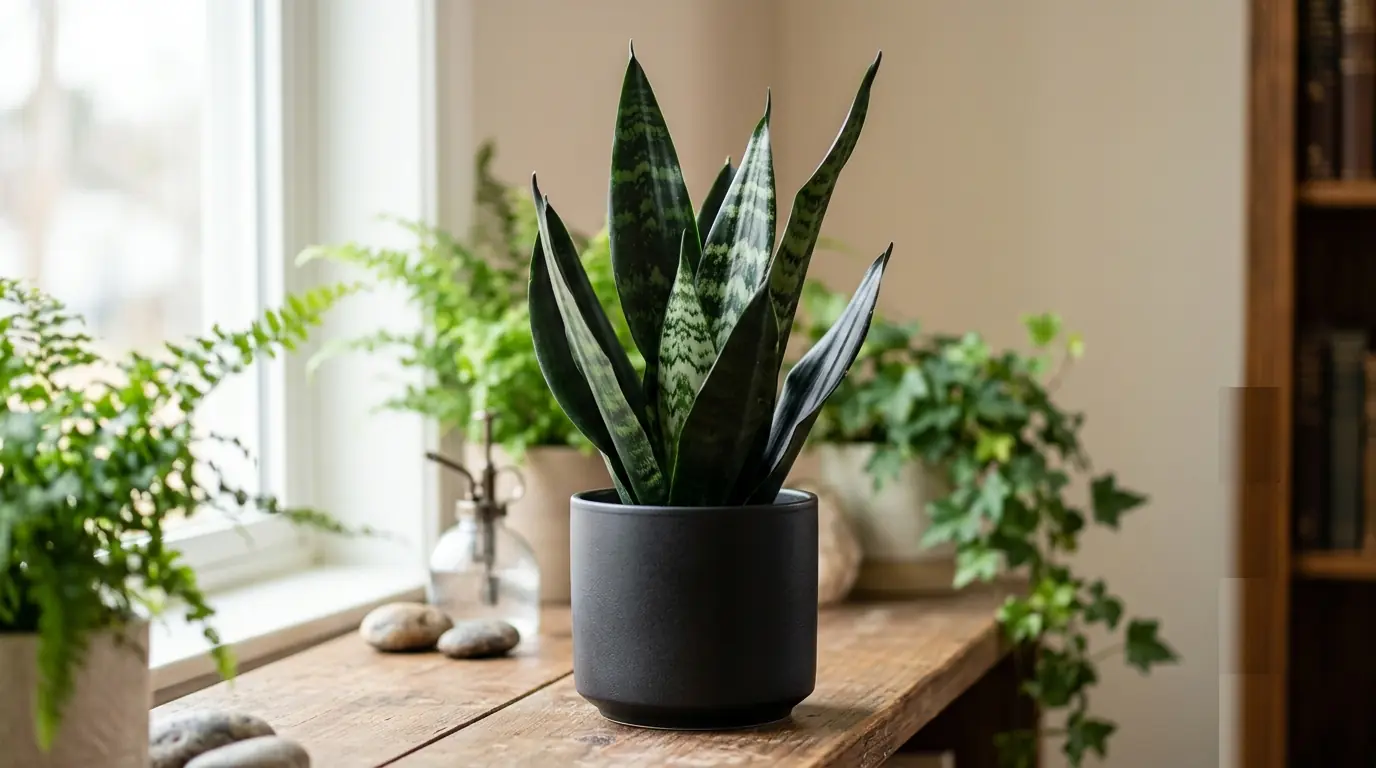
The Black Coral snake plant (Dracaena trifasciata ‘Black Coral’) is a low-maintenance indoor plant known for its dark green, sword-shaped leaves with silvery-green variegation. It grows best in bright, indirect light but can also tolerate low-light conditions. Water it only when the soil has dried out completely, use a well-draining cactus or succulent potting mix, and always plant it in a container with drainage holes to prevent root rot. With proper care, Black Coral snake plants are drought-tolerant, beginner-friendly, and can thrive indoors for many years.
How Much Light Does a Black Coral Snake Plant Need?
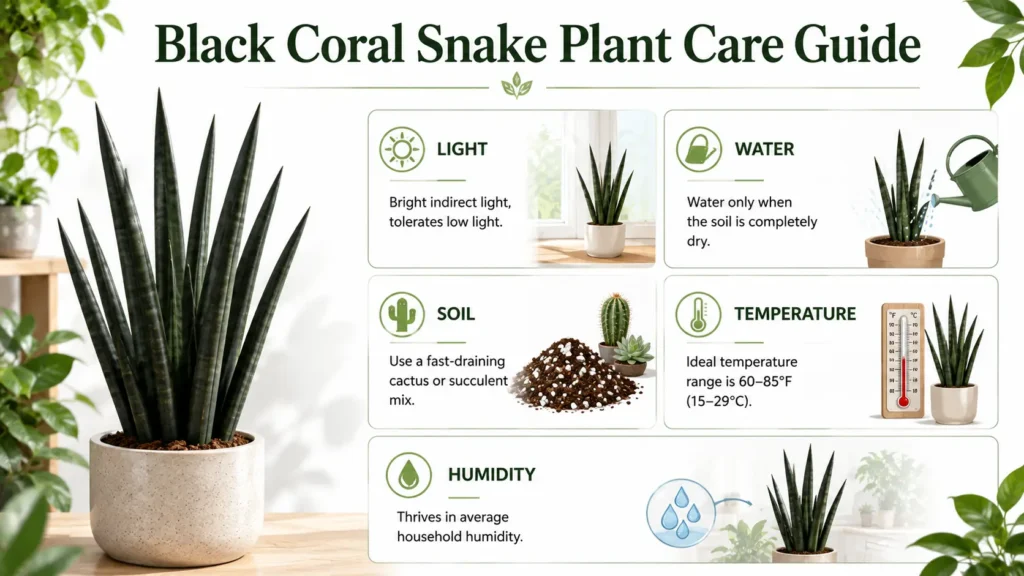
One of the reasons the Black Coral snake plant is a staple in offices, hallways, and apartment corners is its incredible tolerance for low-light conditions. It will happily sit in a dim corner for months without complaining.
However, there is a difference between surviving and thriving:
- The Sweet Spot: To get the fastest growth and the deepest, architectural dark-green color contrast, place your Black Coral in bright, indirect light.
- What to Avoid: Keep it out of intense, harsh direct sunlight for extended blocks of time. Too much baking sun will bleach the rich, dark patterns and scorch the crisp leaf surfaces.
How Often to Water a Black Coral Snake Plant
Overwatering is the most common reason snake plants fail indoors. Learning to recognize dry soil before watering helps prevent root rot and many of the common houseplant problems that affect beginners.
Snake plants store water in their thick, fleshy leaves and rhizomes. They want their soil to dry out 100% completely from the top of the pot down to the very bottom before you even think about picking up your watering can.
- The Routine: In most typical homes, this means watering roughly once every 2 to 4 weeks. In the winter, when the days are shorter and the plant’s growth slows to a crawl, you can easily stretch this to once every 6 to 8 weeks.
- The Soil Test: If you aren’t sure, push a wooden chopstick or a moisture meter all the way to the bottom of the pot. If any soil sticks to the chopstick or it feels even slightly damp, walk away.
How to Tell if Your Black Coral Snake Plant Needs Water
Overwatering
- Soft or mushy leaves
- Yellowing at the base
- Dark, rotting patches
- Soil remains wet for days
Underwatering
- Slightly wrinkled leaves
- Firm but thinner foliage
- Slow growth
- Plant quickly recovers after watering
Best Soil and Pot for a Black Coral Snake Plant
Because stagnant moisture is your snake plant’s worst enemy, the dirt and container you choose matter immensely.
- The Soil: Never use heavy, dense standard potting soil straight out of the bag. Use a loose, fast-draining cactus or succulent mix, or modify regular potting soil by blending in 30% to 40% coarse perlite or pumice to maximize drainage.
- The Pot: A drainage hole at the bottom of the container is absolutely non-negotiable. Without one, water pools at the bottom, creating a stagnant swamp that will rot the root system within weeks—no matter how carefully you water.
Temperature and Humidity: The Ultimate House Guest
Unlike tropical ferns or finicky aroids, the Black Coral snake plant loves the dry air inside modern homes. It is perfectly content in average household humidity and handles dry winter heating systems like a champ. Keep the ambient temperature between 60°F and 85°F (15°C to 29°C) and ensure it doesn’t get blasted by sub-zero winter drafts from nearby windows or doors.
How to Propagate More Black Corals
When your plant gets happy, it will start sending up new shoots (called “pups”) from the soil. You have two ways to multiply your collection:
- Division (The Best Way): Pop the plant out of its pot in the spring and gently pull or cut the rhizome (the thick underground root) separating a pup from the parent plant. Ensure the pup has its own roots attached. This method ensures the new plant looks exactly like the dark, moody parent.
- Leaf Cuttings: You can snip a leaf into 3-inch sections and root them in water or damp soil. Note: While this works, it takes months, and occasionally the new growth can revert to a plain green without the signature dark contrast of the Black Coral cultivar.
Is the Black Coral Snake Plant Toxic to Pets?
Snake plants contain natural chemical compounds called saponins. If your cat or dog decides to use the sword-like leaves as a chew toy, these compounds can cause mild mouth irritation, drooling, or stomach upset. While it isn’t highly dangerous or lethal, it’s best kept on a higher plant stand or shelf away from curious pets.
Where to Place a Black Coral Snake Plant Indoors
Because the Black Coral snake plant can handle lower light levels, it is a brilliant candidate for darker interior spaces, offices, or bedrooms. Because Black Coral snake plants tolerate lower light better than most houseplants, they work beautifully in offices, bedrooms, and shaded living rooms. If you’re creating an indoor plant collection, pairing them with other evergreen indoor plants provides year-round greenery while keeping maintenance simple.
For an eye-catching visual display, pair the dark, rigid vertical lines of the Black Coral with something soft, colorful, and cascading.
For contrast, pair the upright, architectural foliage of a Black Coral snake plant with the colorful leaves of a Lemon Lime Prayer Plant. Growing them in separate pots allows each plant to receive the different watering and humidity levels it prefers.
Common Black Coral Snake Plant Problems
Yellow Leaves
Yellow leaves usually indicate overwatering or poor drainage. Let the soil dry completely before watering again, and always grow the plant in a pot with drainage holes.
Soft or Mushy Leaves
Soft, collapsing leaves are an early sign of root rot caused by consistently wet soil. Remove damaged roots, repot into fresh succulent soil, and reduce watering.
Wrinkled Leaves
Wrinkled leaves usually mean the plant has used the water stored in its foliage. Give it a deep watering, then allow the soil to dry completely before watering again.
Brown Leaf Tips
Brown tips are commonly caused by physical damage, underwatering, or prolonged exposure to cold drafts. Move the plant away from cold windows and maintain a consistent watering routine.
FAQ
How often should I water a Black Coral snake plant?
Roughly every two to four weeks in the spring and summer, and even less during the winter. Only water when the soil is completely bone-dry all the way through the pot.
Why are the leaves on my snake plant turning yellow?
Yellowing leaves, particularly when they start looking pale or mushy near the soil line, are a classic indicator of overwatering and root rot. Stop watering immediately, cut away any mushy stems, and let the soil dry out entirely.
Can Black Coral snake plants survive in a room with no windows?
They can survive under standard office fluorescent lights or in a windowless room for a surprising amount of time, but their growth will stall completely and the leaves may slowly lose their intense dark coloration. Moving it near a window for a few weeks out of the year or adding a basic grow light will keep it healthy over the long haul.
How fast does a Black Coral snake plant grow?
Black Coral snake plants grow slowly to moderately, producing the most new leaves during spring and summer. Under bright indirect light and proper watering, a healthy plant typically develops several new leaves each growing season.