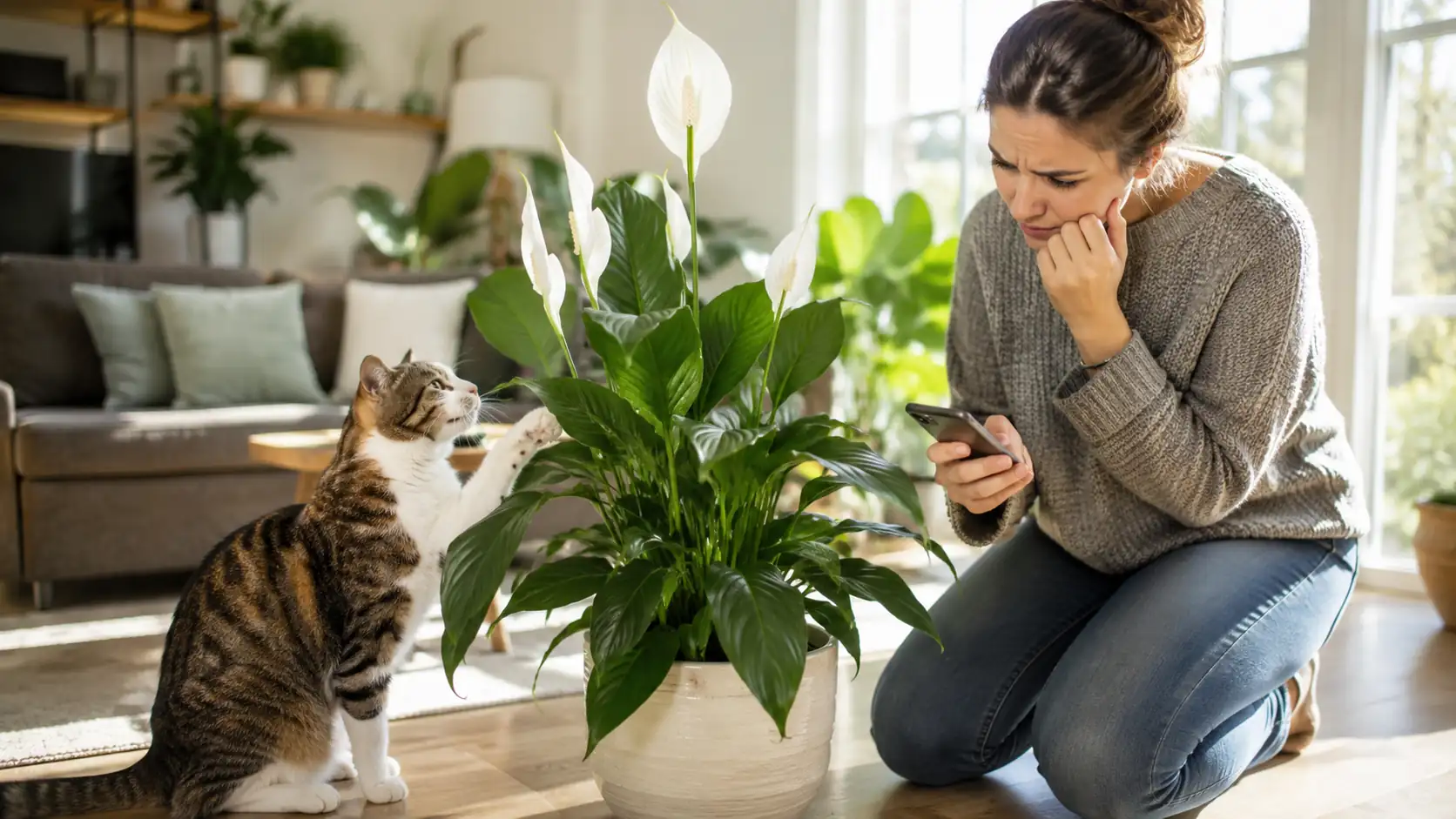
Yes, peace lilies are toxic to cats. If a cat chews on or swallows any part of a peace lily, they will experience immediate pain, oral irritation, and swelling.
However, it is vital to know that peace lilies are not true lilies such as Easter lilies or Stargazer lilies.
While true lilies cause rapid, fatal kidney failure in felines, peace lilies contain insoluble calcium oxalate crystals that cause localized physical irritation rather than organ failure. While peace lily toxicity to cats requires prompt attention, it is rarely life-threatening.
Many cat owners searching “are peace lilies toxic to cats” fear the worst after reading warnings about lilies causing kidney failure. In reality, peace lilies belong to a different plant family and affect cats differently.
If your cat has chewed a peace lily, understanding the symptoms to watch for, when to contact a veterinarian, and whether you need to remove the plant from your home can help you make informed decisions without unnecessary panic.
Peace lilies remain one of the most popular Indoor Plants because of their elegant appearance and low-maintenance nature. For households with cats, though, knowing how to manage the risks is just as important as appreciating their beauty.
Are Peace Lilies Toxic to Cats? The Medical Explanation
Yes, are peace lilies toxic to cats? They are.
Peace lilies contain microscopic structures called calcium oxalate crystals. When a cat bites into the plant, these needle-like crystals are released and irritate the mouth, tongue, throat, and digestive tract.
While this sounds concerning, peace lilies are not true lilies. This distinction matters because true lilies can cause severe kidney failure in cats, whereas peace lily toxicity typically results in painful irritation rather than life-threatening organ damage.
This means that although a peace lily toxic to cats situation should never be ignored, it is generally less dangerous than exposure to true lilies.
Peace Lily vs True Lilies
The widespread panic around this topic stems from a confusing naming convention. The common peace lily (Spathiphyllum) belongs to the Araceae family and behaves very differently from a true lily (Lilium or Hemerocallis species).
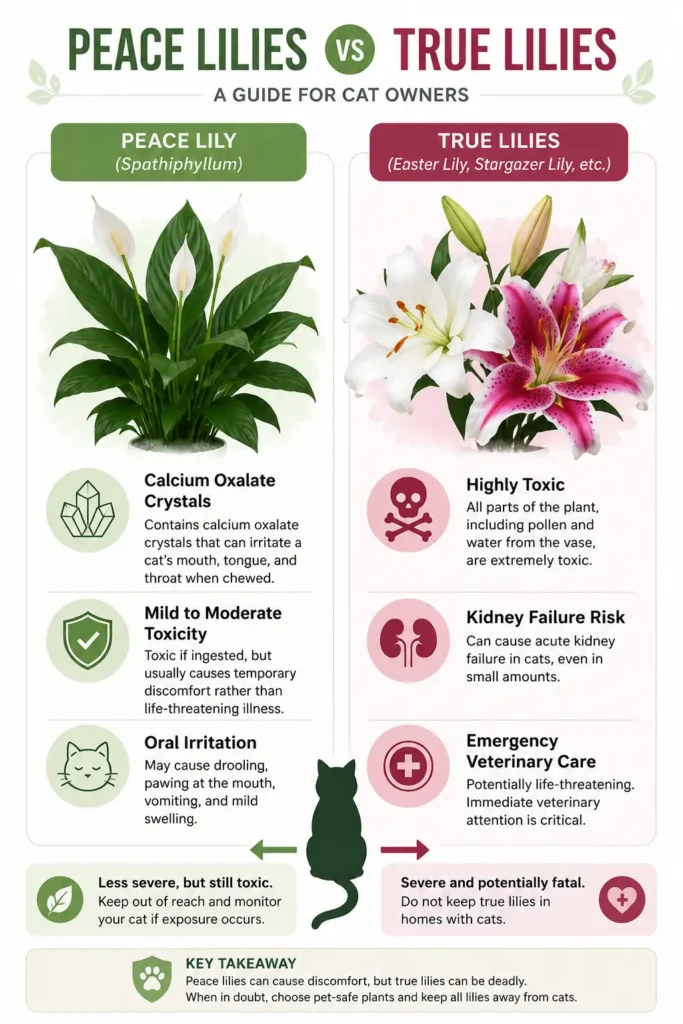
True lilies, such as Easter lilies and Stargazer lilies, are highly lethal to cats. Ingesting even a single grain of true lily pollen can cause irreversible, acute kidney failure within days. A peace lily does not affect the kidneys.
| Plant Type | Common Examples | Primary Toxin | Risk Level & Impact |
| Peace Lily (Spathiphyllum) | Peace Lily, Mauna Loa Lily | Insoluble calcium oxalate crystals | Moderate: Intense oral pain, drooling, and vomiting. Rarely fatal. |
| True Lilies (Lilium / Hemerocallis) | Easter Lily, Stargazer Lily, Tiger Lily | Unknown systemic toxin | Extreme: Lethal dose is microscopic. Causes rapid kidney failure. |
What Happens If a Cat Eats a Peace Lily?
After chewing on a peace lily, symptoms often develop quickly.
Within minutes, many cats begin showing signs of discomfort because the calcium oxalate crystals immediately irritate the tissues in the mouth.
You may notice your cat:
- Shaking its head
- Drooling excessively
- Pawing at its mouth
- Refusing food
- Acting distressed
Over the next few hours, mild vomiting or reduced appetite can occur. Fortunately, most cats recover well with supportive care and prompt attention.
The severity often depends on how much plant material was chewed and how sensitive the individual cat is.
Symptoms of Peace Lily Poisoning in Cats
If your pet has interacted with this plant, you will typically observe several distinct peace lily toxic to cats symptoms:
- Heavy Drooling or Foaming: A direct response to the intense burning sensation in the mouth.
- Pawing at the Face: Cats will rub their muzzle or paw at their mouth to try and remove the painful crystals.
- Vomiting: Occurs if the cat swallows the plant material, which then irritates the stomach lining.
- Reduced Appetite: The soreness in the mouth makes eating hard or wet food painful for 24 to 48 hours.
- Lethargy: The pain and stress of the irritation can make your cat withdrawn or quiet.
- Visible Swelling: Mild inflammation of the lips, tongue, or gums.
- Difficulty Swallowing: In rare cases involving heavy ingestion, the throat may swell, making swallowing difficult.
What Should You Do If Your Cat Eats a Peace Lily?
If you suspect or witness your cat eating a peace lily, follow this step-by-step action plan to minimize the discomfort:
- Clear the Mouth: Safely remove any visible green leaf fragments or stems from your cat’s mouth or fur.
- Flush with Liquid: Offer a small amount of water, tuna juice, or low-sodium chicken broth to help flush out the loose crystals. Do not force liquids down their throat if they resist.
- Neutralize the Crystals: A small lick of plain yogurt or milk can help. The calcium in dairy binds to the loose oxalate crystals, reducing the stinging sensation.
- Monitor the Animal: Keep a close eye on your cat’s breathing and behavior over the next two hours.
- Seek Medical Advice: Contact your veterinarian or a pet poison control hotline immediately. If you notice severe facial swelling, persistent vomiting, or any signs of breathing distress, take your cat to an emergency veterinary clinic right away.
Should You Get Rid of Your Peace Lily?
Deciding whether to keep or remove a peace lily depends heavily on your specific living situation and your cat’s personality. Many owners have a strong sentimental attachment to these plants, as they are frequently gifted at major life events.
If you have an aggressive plant-chewer or a highly active jumper, the safest choice is to remove the plant from your home completely. The risk of accidental exposure is simply too high.
However, if your cat generally ignores greenery, you can safely keep the plant by using strict environmental barriers. Consider placing the peace lily in a high hanging basket far from any landing platforms, or keeping it inside a dedicated room or greenhouse cabinet where your cat is strictly forbidden from entering.
Why Do Cats Chew on Houseplants?
Preventing future incidents requires understanding why cats target Indoor Plants in the first place. This behavior is rarely random and is usually driven by specific triggers:
- Texture Attraction: The long, moving leaves of plants mimic prey or offer an appealing texture to crunch on.
- Boredom and Curiosity: Indoor cats without enough mental stimulation will look for novel objects to interact with.
- Dietary Instincts: Felines occasionally eat plant matter in the wild to aid digestion or help regurgitate hairballs.
To protect your home garden, provide safe alternatives like fresh cat grass or catnip trays. Pair this with interactive toys and puzzle feeders to keep their minds occupied.
Safe Alternatives to Peace Lilies
If you decide to replace your peace lily with a completely non-toxic option, there are several highly rated choices that look just as beautiful.
When searching for the Best Indoor Plants for a cat-friendly home, look for these varieties:
- Spider Plant: Safe, hardy, and features arching green leaves that add great visual structure.
- Calathea: Offers bold, intricate leaf patterns that are 100% safe for pets.
- Areca Palm: A brilliant choice if you want to maintain a lush, tropical aesthetic without the hazard.
- Prayer Plant: Known for moving its leaves up at night, this plant is entirely pet-friendly.
- Boston Fern: A classic, safe option that looks fantastic in hanging baskets out of reach.
Frequently Asked Questions
Are peace lilies toxic to cats according to ASPCA?
Yes. The ASPCA specifically classifies the peace lily (Spathiphyllum) as toxic to both dogs and cats due to its insoluble calcium oxalate content.
How much peace lily is toxic to cats?
A single nibble is enough to trigger painful symptoms. However, because the pain is immediate, it is rare for a cat to consume a large enough quantity to cause severe systemic issues.
Is peace lily pollen toxic to cats?
The pollen can cause mild, localized irritation if it gets on a cat’s nose or paws and is licked off. It does not, however, carry the lethal kidney toxicity found in true lily pollen.
Can cats recover from peace lily poisoning?
Yes. Most cats make a full recovery within 24 to 48 hours once the initial oral inflammation subsides, often requiring only minor supportive care.
Are peace lilies toxic to dogs too?
Yes, dogs experience the identical mechanical irritation, heavy drooling, and vomiting if they bite into a peace lily.
Conclusion
While the answer to “are peace lilies toxic to cats” is undeniably yes, understanding the specific mechanics of the plant removes a lot of the initial panic. Because they are not true lilies, a quick response and basic first aid are usually all it takes to keep your cat safe and comfortable. By choosing safe alternatives or securing your existing plants properly, you can maintain a beautiful indoor environment without compromising your pet’s health.