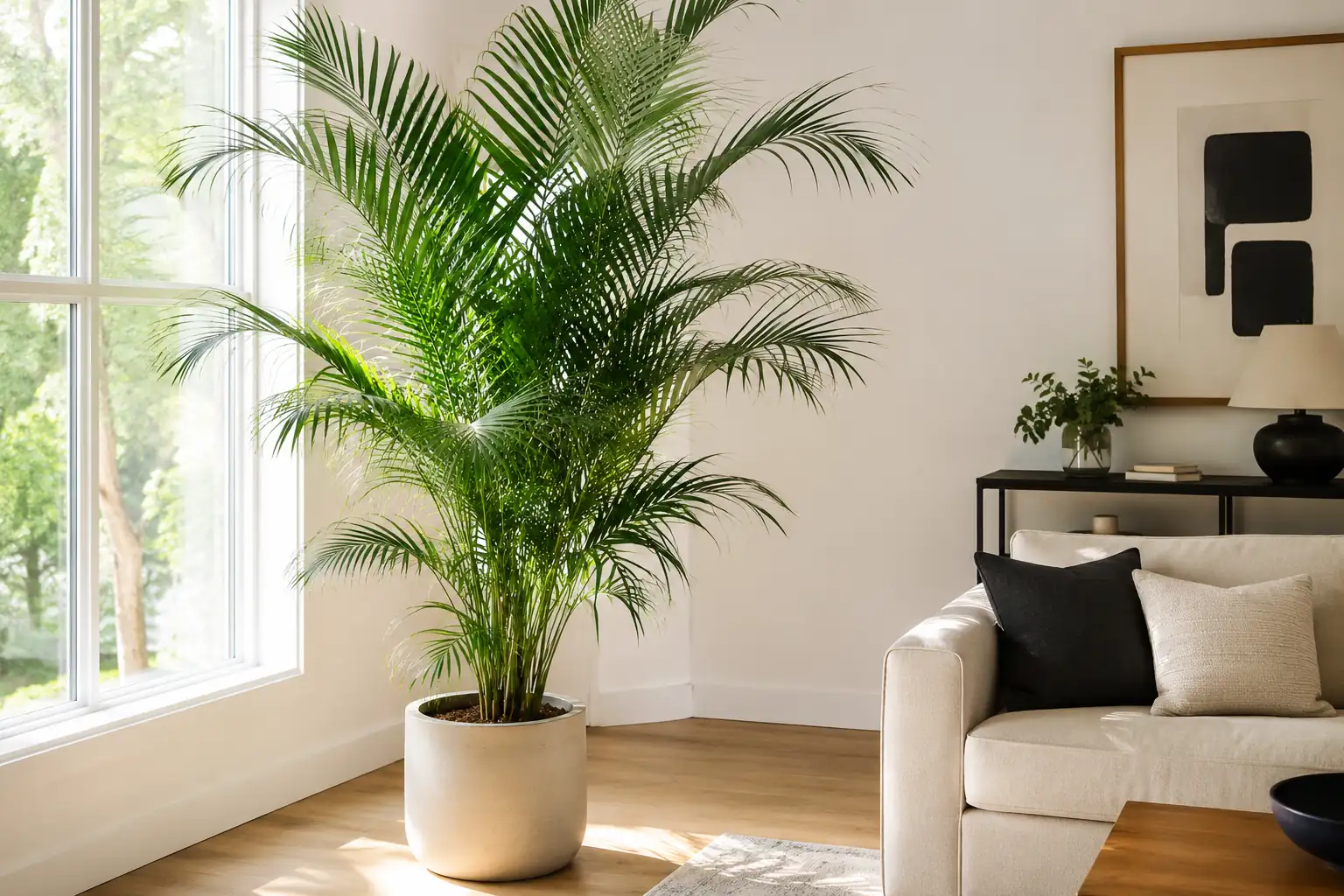
I still remember the day I brought home my first majesty palm. It was a small, slightly sad-looking thing from a nursery clearance shelf, and honestly, I almost talked myself out of buying it. The fronds were a little yellow on the tips, the roots were stuffed into a pot way too small for it, and I had no idea what I was doing. That was three years ago. Today, that same plant brushes the ceiling in my living room and gets more compliments than any other piece of furniture I own.
If you have a majesty palm at home, or you are thinking about getting one, this guide is everything I wish I had read before I started. No fluff, no filler — just real, straightforward care advice that actually works.
What Is a Majesty Palm, Anyway?
The majesty palm, or Ravenea rivularis, is native to Madagascar. In the wild, it grows along riverbanks and can reach up to 80 feet tall. Inside your home, it is a much more manageable 5 to 10 feet over several years, which makes it one of the most popular indoor palm trees in the United States.
People love majesty palms because they bring that lush, tropical look into a space without needing a greenhouse to maintain. But they do have a reputation for being a little tricky, and I will be honest with you — that reputation is partly deserved. Once you understand what this plant actually needs, though, it becomes a lot more forgiving than people say.
Light: The Single Biggest Factor
If I had to point to one thing that will make or break your majesty palm care routine, it is light. This plant wants as much bright, indirect light as you can give it. A spot near a south or west-facing window is ideal. If you can get a few hours of gentle direct morning sun on it, even better.
When my palm started showing yellow fronds early on, my first instinct was to water it more. That was wrong. I moved it closer to a window, and within a few weeks, the new growth came in greener and fuller than I had ever seen.
Low light will slowly weaken the plant over time. You will notice the fronds losing their deep green color, and new growth will be sparse and pale. If your home does not get a lot of natural light, a grow light placed a few feet above the plant for 12 to 14 hours a day can genuinely save it.
Watering a Majesty Palm: Finding the Right Balance
Majesty palms like consistent moisture, but they absolutely cannot sit in soggy soil. Root rot is the number one killer of indoor palms, and overwatering is almost always the cause.
The approach that works best for me is to check the top inch or two of soil before watering. If it still feels damp, I leave it alone. If it is dry to the touch, I water thoroughly until it drains from the bottom of the pot, then let the excess drain completely before putting it back in its spot.
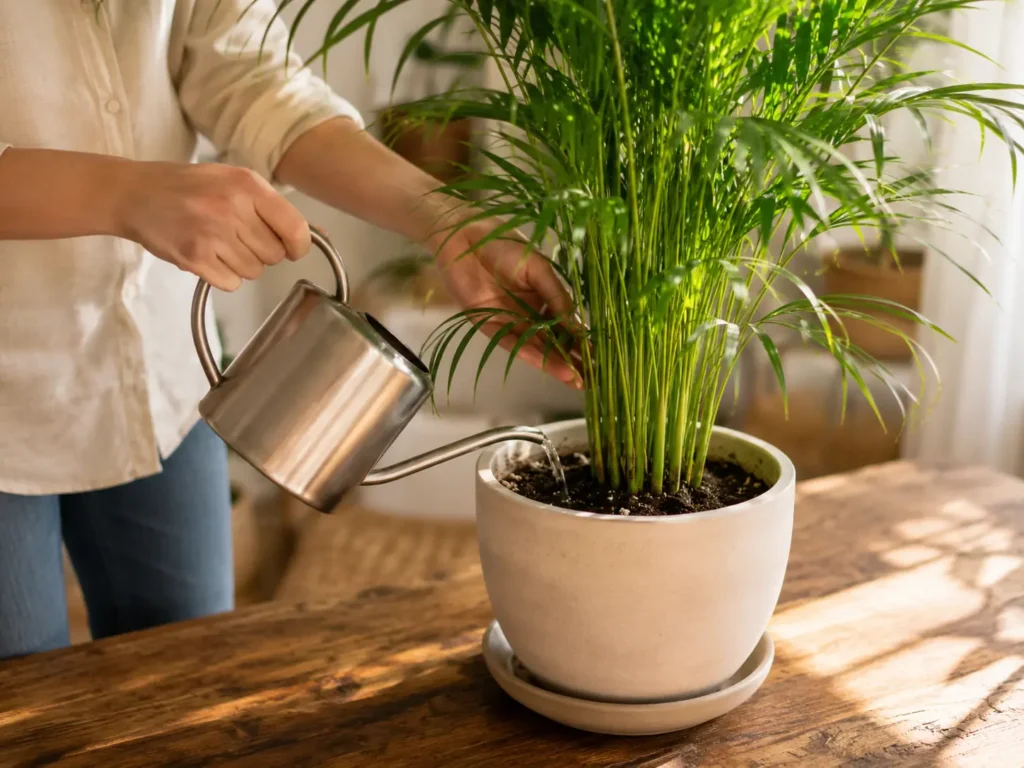
During the warmer months, I typically water mine every 7 to 10 days. In winter, I stretch that out to every 12 to 14 days because the plant’s growth slows down. The exact schedule will depend on your home’s temperature and humidity, so always go by the soil rather than the calendar.
One thing I learned the hard way: majesty palms are sensitive to fluoride and salt buildup in tap water. If your tap water is heavily treated, try switching to filtered water or letting tap water sit out overnight before using it. That small change cleared up the brown tips on my palm faster than anything else I tried.
Humidity: This One Really Matters
This is where most people fall short with majesty palm indoor care, especially in the United States where forced air heating dries out homes significantly during winter.
Majesty palms prefer humidity levels between 40 and 60 percent. The average American home sits closer to 20 to 30 percent in winter. That gap is why your palm’s fronds get crispy brown tips even when you are doing everything else right.
The most effective solution I have found is a humidifier placed near the plant. Running it for a few hours each day makes a visible difference. You can also group your tropical plants together, since they naturally release moisture and create a slightly more humid microenvironment around each other. Misting the leaves occasionally helps too, but it is more of a short-term fix than a real solution.
Soil and Potting
Majesty palms do best in a well-draining potting mix. A regular quality potting soil with some added perlite works well. The perlite improves drainage and keeps the roots from sitting in water for too long.
When choosing a pot, always go with one that has drainage holes. I cannot stress this enough. No drainage hole means no way for excess water to escape, and that is a direct path to root rot.
As for pot size, you do not need to rush repotting. Majesty palms are slow to moderate growers, and they actually do fine when slightly root-bound. I repot mine every two years or so, moving up just one pot size at a time. Going too big too fast means more soil, more moisture retained, and a higher risk of overwatering.
Feeding Your Majesty Palm
During the growing season, which runs roughly from spring through early fall, I feed my majesty palm once a month with a liquid fertilizer made for palm trees. These are formulated with the right balance of nutrients, including magnesium and potassium, which palms need more of than most houseplants.
In fall and winter, I stop fertilizing entirely. The plant is not actively growing, so feeding it then can lead to salt buildup in the soil without any real benefit to the plant.
If your palm’s older fronds start turning yellow-orange, it is often a sign of a magnesium deficiency. A dose of Epsom salt dissolved in water, applied monthly, can help correct this over time.
How Fast Does a Majesty Palm Grow Indoors?
This is one of the most common questions I get, and the honest answer is: slowly. Indoors, you can expect maybe one or two new fronds every few months during the growing season. The plant puts most of its energy into the root system, especially in its first couple of years.
Do not be discouraged by slow above-ground growth. If your palm is pushing out new fronds regularly, even slowly, it is healthy and happy. That is all you are really looking for.
Trimming and Pruning
Only remove fronds that are fully brown and dead. Yellow-tipped fronds or fronds that are mostly green should stay on the plant, since they are still photosynthesizing and contributing to the plant’s energy.
When I trim dead fronds, I cut as close to the trunk as possible without cutting into it. Clean, sharp scissors or pruning shears make this easier and cause less stress to the plant.
Never cut the top growing tip of a majesty palm. That central point, called the crown, is where all new growth comes from. Damage it and the plant cannot produce new fronds.
Common Problems and What They Mean
Brown tips are almost always a humidity or water quality issue. Adjust your humidity levels and try filtered water before assuming anything more serious is wrong.
Yellow fronds can mean overwatering, poor drainage, lack of light, or a nutrient deficiency. Work through each one systematically rather than changing everything at once.
Spider mites love dry, warm conditions, which is basically a description of most American homes in winter. Check the undersides of fronds regularly. A good rinse with water and a neem oil treatment takes care of most infestations if you catch them early.
The Honest Truth About Majesty Palms
Majesty palms are not low-maintenance plants. They need attention, good light, proper humidity, and consistent care. But here is what I can tell you after three years of growing one: the payoff is worth it. There is something about a healthy, full majesty palm in a living space that no other houseplant quite replicates.
Get the light right, do not overwater, and give it some humidity. That is really the heart of it. Everything else falls into place from there.
Conclusion
Growing a majesty palm indoors is one of those things that feels intimidating at first and completely natural once you get the hang of it. It took me a few months of trial and error before I stopped second-guessing every yellowing frond and started actually enjoying the process. Now it is genuinely one of my favorite parts of my home.
If your palm is struggling right now, do not give up on it. Go back to basics — light, water, humidity. Fix those three things and you will be surprised how quickly it responds. These plants are more resilient than they get credit for, and there is something really satisfying about watching a plant you almost killed turn into something beautiful.
Give your majesty palm what it needs, and it will reward you with years of lush, tropical greenery that no other houseplant quite delivers.
Frequently Asked Questions About Majesty Palm Care
Are majesty palms easy to care for indoors?
Honestly, they sit somewhere in the middle. They are not as forgiving as a pothos or a snake plant, but they are far from the most difficult houseplant out there either. The learning curve mostly comes down to getting the light and watering right. Once you nail those two things, the rest of the care routine is pretty manageable. I struggled with mine for the first few months, but once I moved it to a brighter spot and stopped overwatering, it really took off.
How often should I water my majesty palm indoors?
There is no single answer because it depends on your home’s temperature, humidity, and how much light the plant gets. As a general rule, check the top inch or two of soil. Water when that feels dry, and hold off when it still feels moist. For most homes in the U.S., that works out to roughly every 7 to 10 days in summer and every 12 to 14 days in winter. Always let the water drain fully from the pot after watering.
Why are the tips of my majesty palm turning brown?
Brown tips are one of the most common complaints with this plant, and in my experience, low humidity and tap water quality are the two most likely reasons. Majesty palms want humidity levels around 40 to 60 percent, which is higher than most American homes offer, especially during winter. If your air is dry, a small humidifier near the plant makes a real difference. Also try switching to filtered water or letting tap water sit uncovered overnight before using it on the plant.
How tall will a majesty palm grow indoors?
Most majesty palms grown as houseplants reach somewhere between 5 and 10 feet tall over several years. Growth indoors is noticeably slower than in the wild, where the tree can eventually reach 80 feet. You will typically see one or two new fronds every few months during the growing season, so it is a gradual process. Good light and consistent care during the spring and summer months will keep the growth as steady as possible.
Can a majesty palm survive in low light?
It can survive, but it will not thrive. In low light, growth slows down significantly, the fronds tend to lose their rich green color, and the plant becomes more susceptible to overwatering because the soil stays wet longer. If your space does not get much natural light, a full-spectrum grow light running 12 to 14 hours a day is a much better option than hoping the plant will adapt. My palm was noticeably struggling near a north-facing window until I supplemented with a grow light, and the difference was clear within a month.