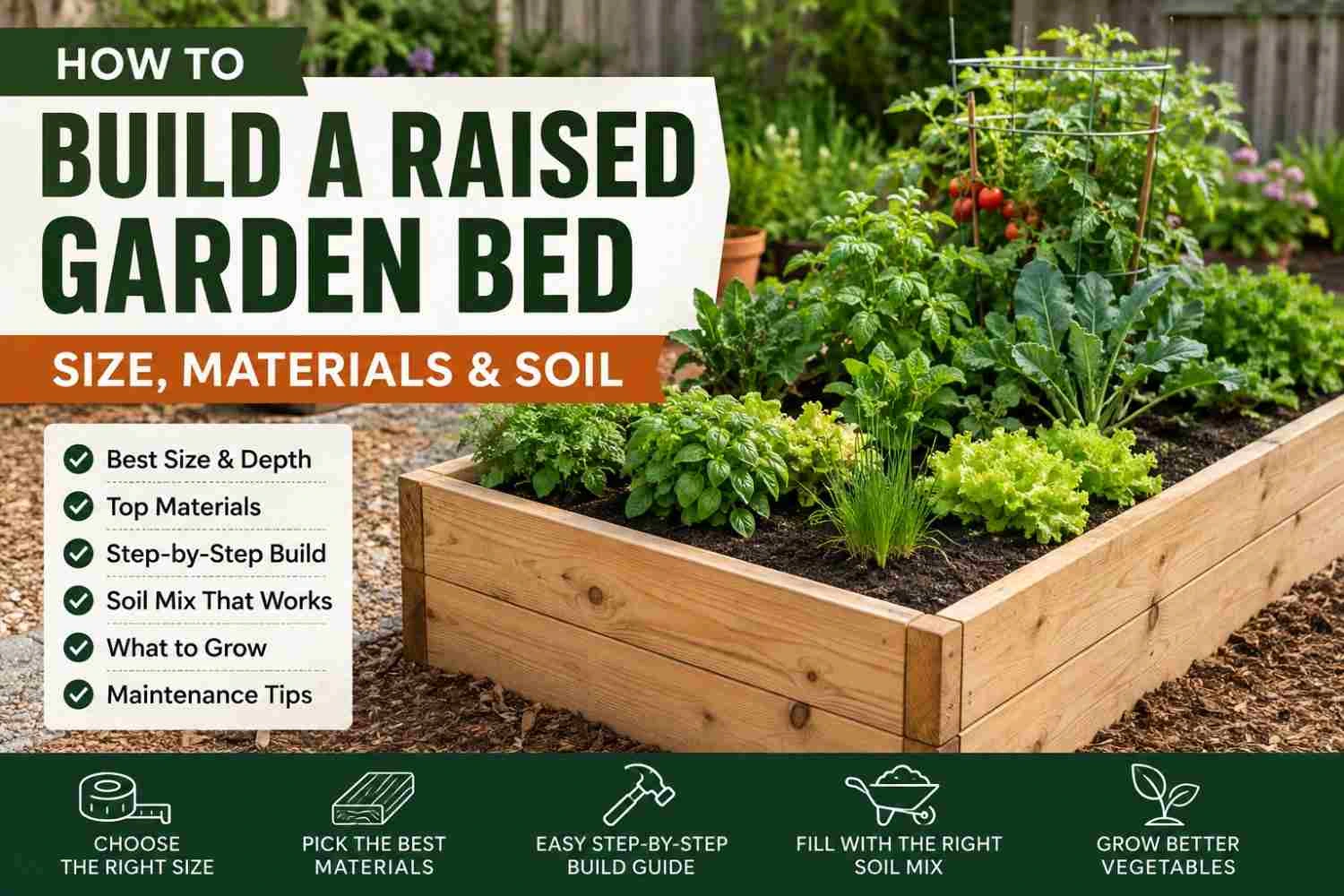
My first raised bed was made from decking boards I found stacked at the back of a house I was renting, which the landlord said I could use. I cut them to length with a handsaw, screwed them together at the corners with basic outdoor screws, filled it with a mix of topsoil and compost, and planted tomatoes and courgettes in it that same afternoon.
It was not beautiful, but it produced vegetables that summer that I was genuinely proud of. What I did not know at the time was that decking boards are often pressure-treated with chemicals I probably should not have grown edibles in, and my dimensions were slightly off in a way that made reaching the centre difficult. I learned both lessons by doing and then fixed them on the second bed. This guide covers what I wish I had known before building the first one.
A raised garden bed is simply a frame that sits on the ground, filled with good soil, and gives you complete control over the growing environment from the first season. You are not improving your native soil over years. You are starting fresh with exactly the conditions your plants need. That is why raised beds produce better results faster than in-ground planting in most situations, particularly for gardeners dealing with poor, compacted, or clay-heavy soil.
How to Choose the Best Size for a Raised Garden Bed?
Width is the measurement that matters most, and the rule is simple. Build no wider than you can comfortably reach the centre from either side without stepping into the bed. For most people, that is four feet. Two feet on each side from the edge gives you full access to the middle without compacting the soil by stepping on it. Stepping on raised bed soil defeats the purpose of building one, since compacted soil loses the loose, aerated structure that makes raised beds so productive.
Length is flexible and can be whatever your space allows. Common lengths are four feet, six feet, and eight feet, with eight-foot sections being particularly practical because standard lumber comes in eight-foot lengths and you can build an eight-foot by four-foot bed without any waste cuts. Height should be at least six inches for annual vegetables and flowers, and ten to twelve inches if you want to grow root vegetables like carrots or if you are placing the bed on very poor or compacted ground that you want to keep roots well above.
What Materials Are Best for a Raised Garden Bed?
Cedar and redwood are the two best choices for wooden raised beds that will come into contact with soil. Both naturally resist rot and insects without any chemical treatment, and a well-built cedar bed can last eight to fifteen years before the wood deteriorates significantly. That lifespan makes the higher upfront cost worth it compared to cheaper softwoods that rot within two to three seasons in wet climates.
Pine and other untreated softwoods are cheaper and work as a starting point if budget is a constraint, but plan for replacement within a few years rather than a long-term solution. The wood in contact with moist soil degrades fastest.
Avoid pressure-treated lumber for beds where you will grow edibles. Older pressure-treated wood used arsenic-based preservatives. Modern formulations use copper compounds that are considered safer, but there is still ongoing debate about copper leaching into soil over time. For a bed growing herbs, salads, or vegetables that will be eaten, untreated cedar is the cleaner choice.
Corrugated metal raised beds have become increasingly popular and hold up extremely well to weather.
They can transfer heat to the soil in full sun, which benefits warm-season crops like tomatoes but can stress cool-season crops. Our post on corten steel planters covers how metal containers handle heat in outdoor growing situations, which applies directly to metal raised beds.
How to Choose the Best Location for a Raised Garden Bed?
Most vegetables and flowering plants need a minimum of six hours of direct sun per day. Choose the sunniest spot available in your garden, ideally with morning sun and some afternoon shade in very hot climates where summer heat can stress plants during the hottest hours. South-facing beds in the northern US get the most sun exposure through the growing season.
Avoid placing a raised bed under large trees. Overhanging branches reduce light and tree roots extend horizontally well beyond the canopy, competing aggressively with the bed’s root system for water and nutrients. Even roots from trees several feet away can find their way through the bottom of a raised bed within a season or two.
Level ground makes construction simpler, but a modest slope is workable. If you are placing the bed on a slope, the uphill side will sit lower than the downhill side unless you level the frame before filling.
How to Build a Raised Garden Bed Step by Step?
Cut your boards to length if needed. For a standard eight by four foot bed using two-by-six lumber, you need two eight-foot boards for the long sides and two four-foot boards for the short sides. Join the corners by screwing the short end boards into the end grain of the long side boards using three-inch exterior screws at each corner, at least two screws per joint. Predrill the holes first to prevent the wood splitting, particularly in dry lumber.
For beds taller than six inches, stack two layers of boards and offset the corner joins so they are not directly above each other, which makes the structure significantly stronger. For beds eight feet or longer, add a centre support stake on each long side to prevent the boards from bowing outward under the weight of the soil.
If you are building on grass or compacted ground, lay cardboard directly inside the frame before filling. One layer of overlapping cardboard suppresses the grass underneath without the need for landscape fabric, breaks down naturally within one season, and does not interfere with roots growing downward.
How to Fill a Raised Garden Bed With Soil?
This is where most people underestimate the cost and quantity of material needed. A four by eight by twelve-inch bed holds roughly twenty cubic feet of fill, which is more than most people visualise. The best fill for most raised beds is a mixture of topsoil, compost, and a coarse drainage material like perlite or horticultural grit.
A mix of roughly sixty percent quality topsoil, thirty percent compost, and ten percent perlite or coarse drainage material gives you a blend that holds moisture without waterlogging, provides nutrients for the first season, and has the loose, friable texture that plant roots thrive in. Avoid filling entirely with bagged compost, which compacts significantly when wet and can become dense and airless after a season.
If your native soil is workable, you can save cost by filling the lower half of a deep bed with your garden soil improved with generous compost additions, reserving the quality topsoil and compost mix for the upper eight to ten inches where most root activity happens. Our post on how to improve clay soil covers how to make native soil suitable for use as the base layer in a deep bed.
What to Grow in a Raised Garden Bed?
Almost anything grows well in a raised bed, but the crops that benefit most from the controlled conditions are tomatoes, peppers, salad greens, carrots, beans, courgettes, herbs, and cut flowers. Our guide to growing tomatoes in containerscovers variety selection and feeding routines that apply equally to raised bed growing.
For companion planting in your raised bed, including which plants grow better together and which should be kept apart, our how to attract pollinators guide covers the flowering plants worth adding alongside your vegetables to improve pollination and bring in beneficial insects.
How to Maintain a Raised Garden Bed Season to Season?
Top up the bed with a two to three inch layer of compost each spring before planting. The soil level will drop by several inches each season as organic matter breaks down, and annual topping up replaces what is lost while refreshing the nutrient supply without the need for heavy fertilising.
Avoid digging the bed over deeply each season. The loose soil structure that makes raised beds so productive develops a network of channels and microorganism activity that deep digging destroys. Scratch the surface lightly to remove old plant matter and weeds, top up with compost, and plant directly into it. This no-dig approach produces better results each successive year as the soil biology matures.
Frequently Asked Questions About Raised Garden Bed
How deep should a raised garden bed be?
Six inches is the practical minimum for most annuals, herbs, and salad crops. Ten to twelve inches gives you better options including root vegetables and means the bed sits high enough above poor native soil that roots stay in the quality fill throughout the season. Twelve inches is a comfortable working height and the depth most experienced raised bed growers settle on.
What wood should I use to build a raised garden bed?
Cedar is the best overall choice for longevity and safety around edibles. It resists rot naturally without chemical treatment and lasts eight to fifteen years in most climates. Untreated pine works at lower cost but needs replacing every two to four years in wet conditions. Avoid pressure-treated lumber for beds growing food.
Do I need to put anything on the ground before filling a raised garden bed?
Cardboard is the most practical option. A single overlapping layer of plain cardboard inside the frame before filling suppresses grass and weeds beneath the bed without blocking drainage or root growth downward. It breaks down naturally within one growing season. Landscape fabric does the same job but does not break down and can interfere with deeper root growth over time.
How much soil do I need to fill a raised garden bed?
Multiply the length by the width by the height in feet to get the cubic feet needed. A four by eight by one foot bed needs thirty-two cubic feet of fill. Bagged soil is sold in cubic feet on the label, which makes the calculation straightforward. For large beds, buying by the cubic yard from a local landscape supplier is significantly cheaper than bags.
Can I build a raised garden bed on a concrete or paved surface?
Yes, with some adjustments. On an impermeable surface, drainage becomes critical since water cannot drain downward through the ground. Make the bed at least twelve inches deep to give roots enough room, use a very free-draining soil mix, and consider drilling drainage holes in the base if you are building an enclosed box rather than an open-bottom frame.
How long does a raised garden bed last?
A cedar raised bed typically lasts ten to fifteen years before the wood at soil level deteriorates enough to need replacing. You can extend the life by replacing only the most affected boards rather than the whole structure. Pine beds last two to five years depending on climate and how wet the soil stays through the season.