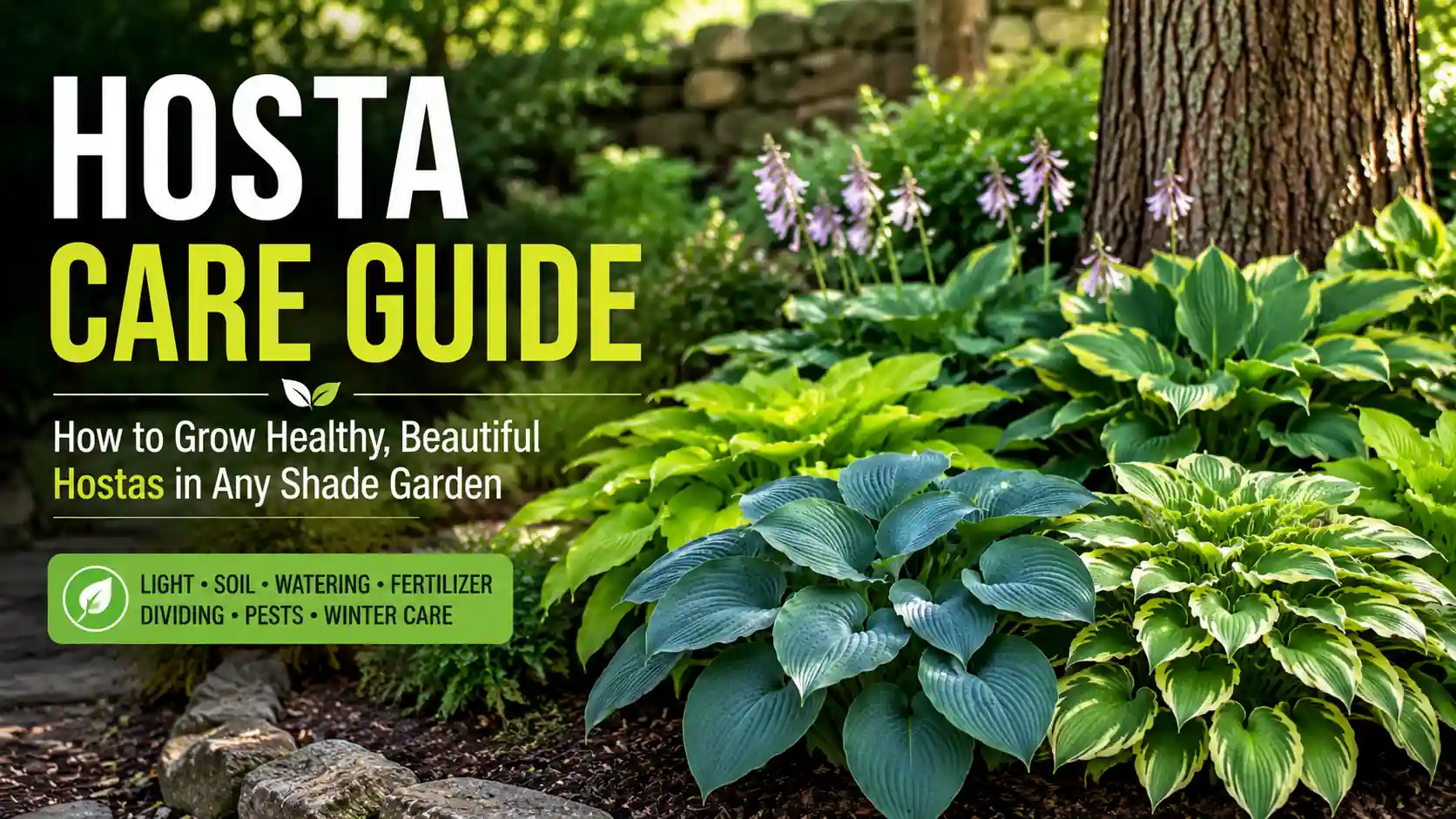
Inside the Blog
My first hosta was planted in a spot that killed everything else I tried there. Deep shade under a large maple tree, roots everywhere, dry soil most of the summer because the tree canopy intercepted nearly all the rain. I planted it expecting it to struggle. Instead it came back the following spring noticeably bigger, spread into a satisfying clump by year three, and has asked almost nothing of me since. That experience taught me more about hosta care than any advice I had read before planting it.
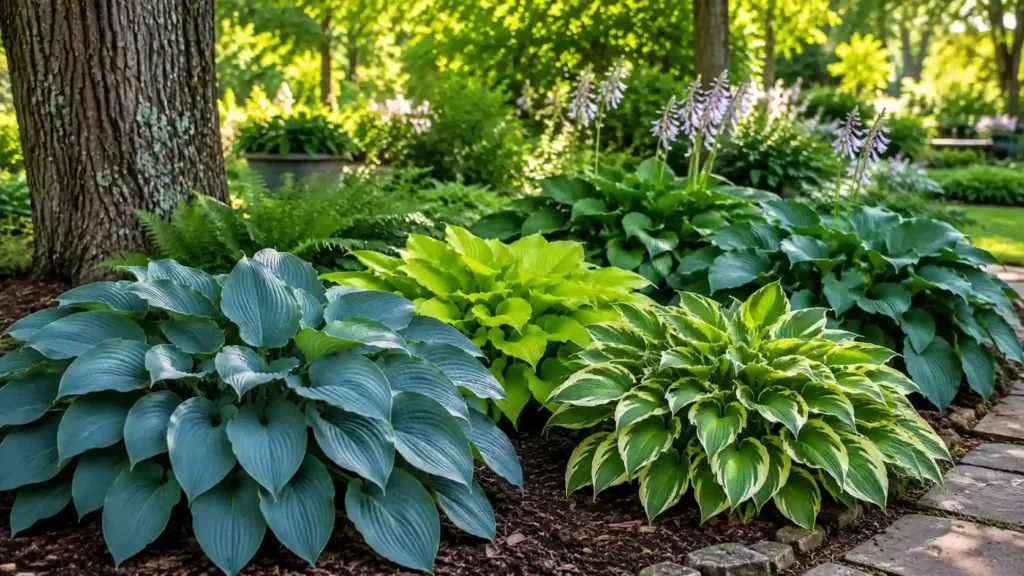
Hostas are native to northeast Asia, primarily Japan, Korea, and China, where they grow in woodland understory conditions. They evolved to handle low light, competition from tree roots, and soil that is alternately moist and dry depending on rainfall. Every aspect of caring for them at home makes more sense once you understand they are woodland survivors by nature, not delicate ornamentals that need constant attention.
Where to Plant Hostas: Light and Sun Requirements
Hostas are the most reliable choice for shaded garden areas in most of the US, handling everything from dappled light to fairly deep shade. That said, they are not completely indifferent to light. Varieties with yellow or gold coloured leaves tend to need some morning sun to hold their colour. Solid green and blue varieties tolerate the deepest shade and are the better choice under dense tree canopy.
Too much sun, particularly intense afternoon sun, scorches the leaves and causes the edges to turn brown and papery. If you are trying to grow hostas and they are consistently looking burned, the most likely cause is too much direct sun rather than any care issue.
Best Soil for Hostas: Drainage and Organic Matter
Hostas prefer rich, well-draining soil with plenty of organic matter. They do reasonably well in clay as long as it is not waterlogged for extended periods, which makes them useful in many garden situations where other plants fail. If your soil is heavy clay and drains poorly, working in compost before planting helps significantly. Our guide on how to improve clay soil before planting covers the preparation steps in detail.
Under trees, where competing roots dry the soil quickly, mulching generously around the base of hostas helps retain the moisture the shallow hosta roots need. A layer of two to three inches of bark mulch pulled slightly away from the crown of the plant keeps conditions more consistent through dry spells.
How to Water Hostas: How Much and How Often
Hostas are fairly tolerant of irregular watering once established, but they do best with consistent moisture, particularly in summer when they are actively growing. A deep watering once or twice a week during dry periods, soaking the soil several inches down, is more effective than light frequent watering that only wets the surface.
Newly planted hostas need more regular attention in their first season while the root system establishes. After that they are remarkably self-sufficient in most US climates. During the summer heat of July and August, particularly in the South or Midwest, look for the leaves wilting slightly in the afternoon. This is not necessarily a problem if they recover overnight, but if they stay wilted by morning, the plant needs more water.
How to Fertilize Hostas for Healthy Growth
A slow-release balanced granular fertiliser applied once in early spring as new growth emerges gives hostas everything they need for the growing season. This is my preferred approach because it requires nothing further and the plant gets a steady, gentle feed as the granules break down over the months.
If you prefer liquid feeding, a balanced fertiliser applied once a month from spring through midsummer works equally well. Stop feeding by late summer so the plant can begin to harden off naturally before frost rather than putting energy into soft new growth that the cold will damage.
How to Divide Hostas: When and How to Split Them
Hostas can stay in the same spot for many years, but dividing them every three to five years keeps them producing their best foliage and prevents the centre from dying out. Division is also the easiest way to get more plants for free.
Divide in early spring when the new shoots are just emerging, or in early autumn while the soil is still warm. Dig the whole clump up, divide it into sections with a sharp spade, making sure each section has several growing points and a reasonable root mass, and replant immediately. The divisions establish quickly and usually look as full as the original plant by mid-season.
Hosta Pests: How to Control Slugs and Deer
The most reliable predator of hostas, particularly varieties with thin, delicate leaves, is slugs. They feed at night and leave irregular holes across the leaf surface that look ragged rather than clean. Hostas with thicker, heavily textured leaves are naturally more slug-resistant.
Slug pellets, copper tape around individual plants, diatomaceous earth around the crown, or simply going out at night with a torch and removing slugs by hand are all effective approaches. Deer are also a significant hosta problem in many rural and suburban areas.
Hosta Winter Care: How to Prepare Hostas for Cold Weather
Hostas are herbaceous perennials. They die back completely to ground level in autumn and disappear over winter, which always seems alarming to people who are new to growing them. The plant is not dead. It is dormant, and the crown and root system are perfectly fine underground through even severe winters.
Most hosta varieties are cold hardy to zone 3 or 4, which means they handle the coldest winters across most of the continental US without any protection. For zone 5 gardeners specifically, our best plants for zone 5 gardens guide covers hostas alongside other reliably cold-hardy perennials that stay in the ground year round.
How to Grow Hostas Successfully: Essential Care Tips
Hostas are low drama in the best possible way. They handle situations that defeat other plants, they multiply over time without any work from you, and they are available in such a range of sizes and colours that they work in almost every garden situation from ground cover to specimen plants. If you have a shady patch and want something that will genuinely thrive there rather than just survive, hostas are consistently the right answer.
Get them in good soil, give them some water in their first season, divide them every few years, and manage the slugs. That is really the heart of hosta care. Everything else falls into place from there.
Hosta Care FAQs: Common Question
How much sun do hostas need?
Most hostas prefer dappled shade to full shade. Varieties with blue or green leaves tolerate the deepest shade, while gold and yellow varieties generally want a couple of hours of morning sun to hold their colour. Direct afternoon sun for extended periods scorches the leaves regardless of variety.
Why are my hosta leaves turning yellow?
In autumn, yellowing is normal and signals the plant going dormant for winter. During the growing season, yellowing usually points to too much direct sun, inconsistent watering, or natural aging of the oldest outer leaves. Check the sun exposure first since this is the most common cause of in-season yellowing in hostas.
Do hostas spread on their own?
Yes, hostas slowly expand into larger clumps over several years. They do not spread aggressively by runners or seeds in the way some perennials do, so they are generally easy to manage. Division every three to five years keeps the clump vigorous and gives you additional plants.
Can hostas grow in full sun?
A few varieties marketed specifically as sun tolerant can handle more direct light than most, but even these do better with shade during the hottest part of the afternoon. Most hostas in full sun develop scorched, brown-edged leaves and fail to produce the lush, full appearance they are known for.
When is the best time to divide hostas?
Early spring, just as the new growth tips are emerging, is the ideal time since the plant re-establishes quickly with the whole growing season ahead. Early autumn is also workable while the soil is still warm. Avoid dividing in midsummer heat, which stresses the plant at its peak activity period.
How deep should I plant hostas?
Plant the crown of the hosta, the point where the leaves emerge from the root system, at soil level or just slightly below. Planting too deep can cause crown rot, particularly in heavy soils that hold moisture. The root system should sit firmly in the soil with the growing points at or near the surface.
Have questions about your hostas or shady garden spots? Drop them in the comments below. I read every one and love talking about this stuff.