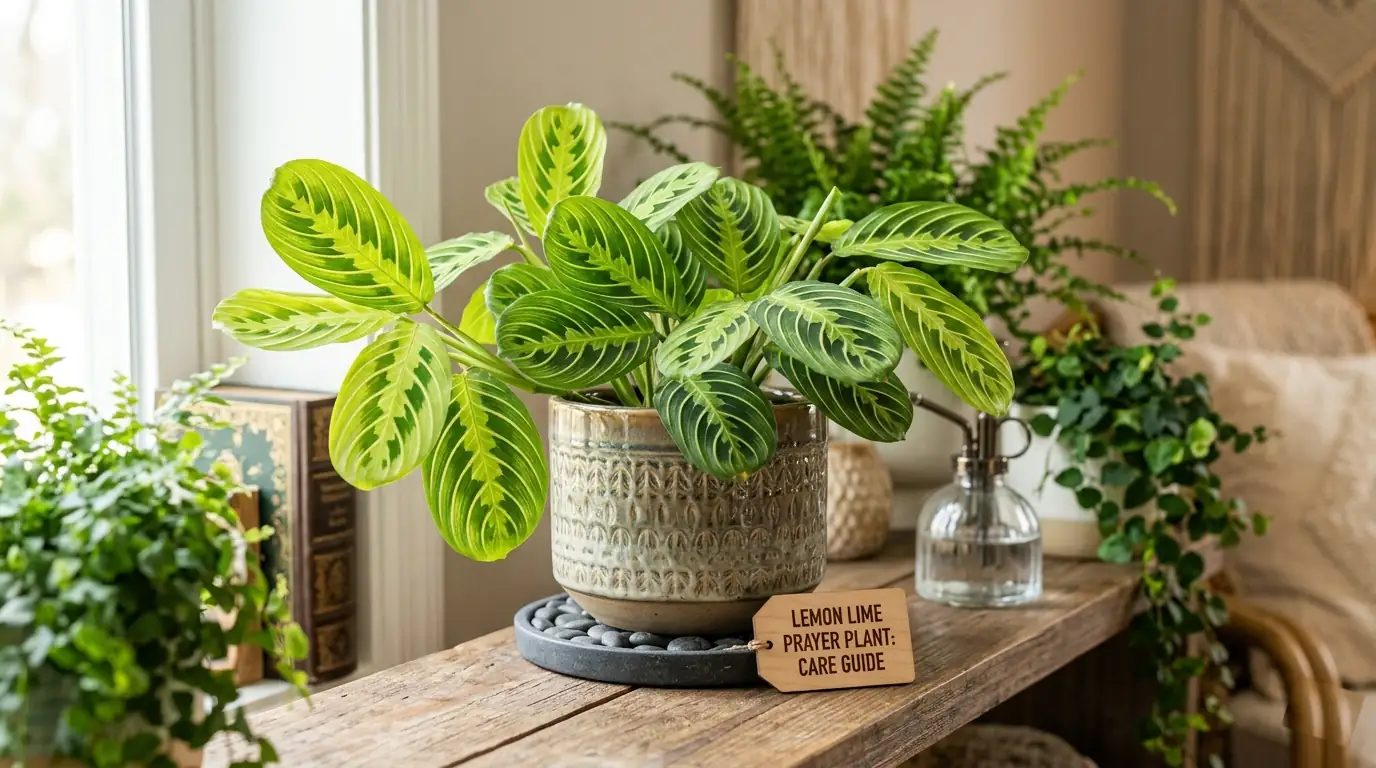
The Lemon Lime prayer plant (Maranta leuconeura) is a certified showstopper. With its neon-chartreuse veins slicing through deep green leaves, it looks like something out of a sci-fi movie.
But let’s be real: it’s also a bit of a diva. While it isn’t quite as dramatic as a Calathea, it will throw a tantrum if you ignore its humidity and water preferences. Get those two specific factors right, though, and this plant actually becomes incredibly rewarding and fast-growing. Here is how to keep those striking leaves vibrant without losing your mind.
Why Do Lemon Lime Prayer Plant Leaves Fold at Night?
If you walk into your living room at night and notice your plant looks completely different, don’t panic. It isn’t dying.
Prayer plants get their name from a fascinating daily movement called nyctinasty. In response to light shifts, the leaves fold straight upward in the evening like hands closed in prayer, then drop back down to catch the sun in the morning. If your plant is actively moving up and down every day, congratulations—it means your plant is healthy and vibing with its environment.

How to Care for a Lemon Lime Prayer Plant
1. Light Requirements for a Lemon Lime Prayer Plant
Think of the prayer plant as a forest-floor species. It lives under the shade of massive trees, so it hates harsh, direct sunlight.
- The Sweet Spot: Bright, indirect light near an east-facing window, or set a few feet back from a bright south or west window.
- The Warning Sign: If the neon-green patterns start fading into a washed-out, dull gray-green, or if you notice crisp brown scorch marks, it’s getting roasted. Move it further into the room.
2. How Often to Water a Lemon Lime Prayer Plant
Prayer plants want their soil to stay consistently moist, like a wrung-out sponge. Never let it dry out to the point of bone-dry dust, but don’t let it sit in a muddy swamp either. Check the top inch of soil; when it feels dry, water thoroughly until it runs out the bottom.
The Big Gotcha: Regular tap water is packed with chlorine, fluoride, and hard mineral salts. Prayer plants absolutely hate them. If you use straight tap water, the edges of your gorgeous leaves will turn crisp and brown.
The Fix: Switch to distilled water, rainwater, or filtered water. If tap is your only option, let it sit out in an open pitcher for 24 hours before watering to let the chlorine dissipate.
Consistently moist soil is important, but constantly wet soil quickly leads to root problems. Following proper repotting techniques also helps improve drainage and keeps the root system healthy over the long term.
3. Humidity Requirements for a Lemon Lime Prayer Plant
If your home drops below 40% humidity (especially in the winter when the heater kicks on), your prayer plant will suffer. Crisp, curling leaf edges are almost always a cry for humidity before they are a watering problem.
- Don’t bother misting: Misting leaves only raises humidity for a few minutes and can encourage fungal spots.
- Do this instead: Run a small humidifier nearby, sit the pot on a tray filled with pebbles and water (making sure the bottom of the pot isn’t touching the water), or crowd it tightly together with other plants to create a humid microclimate.
Prayer plants naturally thrive alongside other humidity-loving houseplants. Grouping them with similar evergreen indoor plants creates a more stable indoor environment while reducing moisture loss from the leaves.
Best Soil, Temperature, and Repotting for a Lemon Lime Prayer Plant
| Care Factor | Ideal Range | What to Avoid |
|---|---|---|
| Temperature | 65°F to 80°F (18°C to 27°C) | Cold drafts, AC vents, and frosty window glass. |
| Soil Mix | Rich but loose. Standard potting soil mixed with 30% perlite for aeration. | Heavy garden soil or pure peat that holds water like a sponge. |
| Repotting | Every 1 to 2 years in spring. | Moving into a massive pot. They have shallow roots and prefer snug spaces. |
How to Propagate a Lemon Lime Prayer Plant
Don’t mess around with complicated leaf cuttings. The absolute easiest way to make more Lemon Lime prayer plants is by stem cuttings in water.
Find a stem that has a clear “node” (the little joint or bump where the leaves meet the main stem). Snip just below that node, pluck off the bottom leaf, and drop it into a jar of clean water. Change the water weekly. In a few weeks, you’ll see roots shooting out. Once those roots are an inch long, pot them up in fresh soil!
Where to Place a Lemon Lime Prayer Plant Indoors
Because prayer plants are sensitive to humidity changes, one of the easiest ways to help them thrive is by placing them near other houseplants. Grouping plants together creates a naturally more humid environment and can help maintain the moisture levels they prefer.
If you are new to indoor gardening, starting with plants that enjoy similar conditions can make care much easier. You can also add a taller houseplant nearby to create visual contrast with the prayer plant’s low-growing, spreading foliage and cascading leaves.
Like many tropical plants, prayer plants can struggle when their basic needs are overlooked. Paying attention to common care mistakes, such as overwatering, poor lighting, or low humidity, will help you create a healthier growing environment and avoid problems before they start.
Quick FAQ
Why are the leaves on my prayer plant turning brown at the tips?
It’s a classic sign of low humidity or chemical buildup from your tap water. Fix the humidity first by grouping plants or adding a pebble tray, and immediately switch to filtered or distilled water.
Is the Lemon Lime prayer plant toxic to pets?
Nope! Unlike many exotic houseplants, the entire Maranta family is completely non-toxic to cats and dogs. It’s 100% safe to leave on a low shelf where curious pets might sniff it.
Why are my prayer plant leaves drooping and refusing to lift at night?
If the leaves stop moving entirely, check the temperature and the soil. Extreme cold drafts or bone-dry soil will shock the plant, causing it to go limp and stop its daily “praying” routine.
How often should I water a Lemon Lime prayer plant?
Water your Lemon Lime prayer plant whenever the top inch of soil begins to dry out. Keep the soil consistently moist but never soggy, and always use filtered, distilled, or rainwater whenever possible.