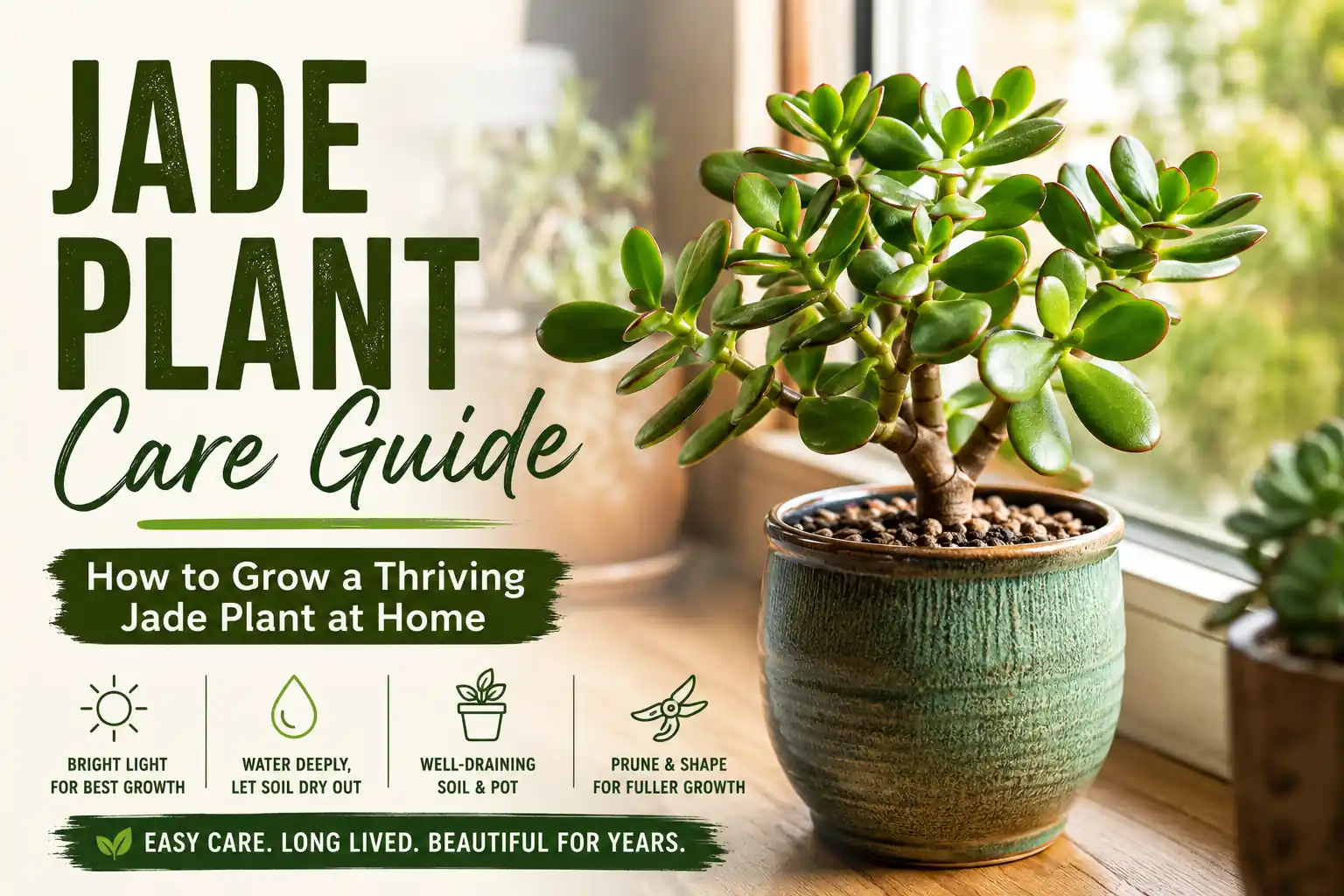
Inside the Blog
The jade plant on my kitchen windowsill came from a cutting that my grandmother gave me about fifteen years ago. She had kept the original plant for thirty years before that, which means the lineage of that small cutting stretches back nearly half a century. It is not a remarkable looking plant right now. It is compact, somewhat woody at the base, and the leaves are a deep green that catches the morning light nicely. But the fact that it has been alive in my home through three moves, a renovation, and a year where I was honestly not paying much attention to anything tells you what you need to know about jade plant care: done right, these plants outlast almost everything else in your home.
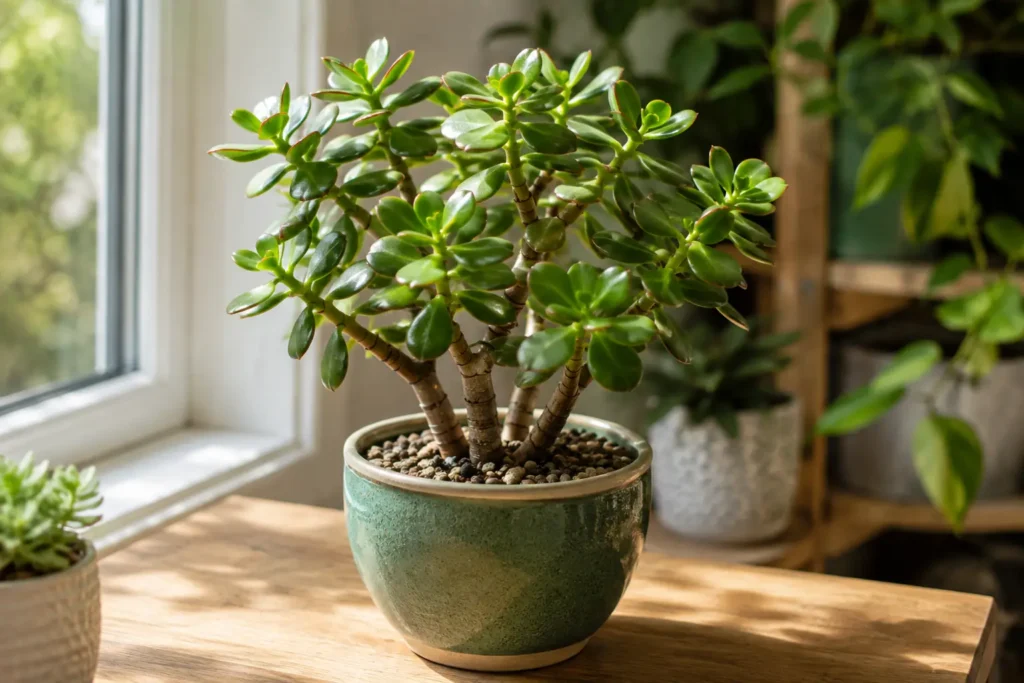
Crassula ovata, the jade plant, is a succulent native to South Africa where it grows in rocky, well-draining conditions with long dry seasons. The thick, oval leaves store water, the woody stems strengthen over time into something resembling a miniature tree, and the plant can live for decades in the right conditions. Learning how to care for a jade plant is largely about resisting the urge to do too much.
Jade Plant Light Requirements: How Much Sun Does It Need?
Jade plants need more light than most indoor succulents receive, which is why so many of them look leggy and pale rather than compact and deeply coloured. A south-facing windowsill with direct sun for several hours a day produces the healthiest, most robust plants. East or west-facing windows with a few hours of direct sun also work well.
In lower light, jade plants grow slowly, stretch toward the light source, and produce pale, smaller leaves with less of the red tinge around the edges that sunlight encourages. Moving an established jade plant gradually into brighter conditions brings out the colour and encourages the compact, branching growth that makes them look their best. Do it gradually over several weeks to avoid sunburn on leaves that have been in lower light for a long time.
Jade Plant Watering: How Often and How Much to Water
This is where jade plants are most frequently lost. Let the soil dry out completely between waterings, then water thoroughly. In summer, that might be every two to three weeks. In winter, once a month or even less, particularly if the plant is in a cooler room with lower light.
Soft, yellowing leaves that feel mushy rather than firm are overwatering. Thin, shrivelled leaves on a plant with dry soil are underwatering. Both are easy to read once you know what you are looking for. The fleshy leaves give you a visual indicator: healthy jade leaves are plump and firm, not soft or wrinkled. I check the leaves as much as the soil when deciding whether mine needs water.
Best Soil and Pots for Jade Plants
Cactus or succulent potting mix is the correct choice. Standard indoor potting soil holds too much moisture for the dry conditions jade plants need between waterings, and the consistently damp environment this creates invites root rot that kills slowly from the roots upward. Adding extra perlite or coarse grit to a cactus mix further improves drainage.
Terracotta pots are excellent for jade plants because the porous material allows moisture to evaporate from the sides of the pot, which helps the soil dry faster between waterings. A pot with drainage holes is non-negotiable. Jade plants kept in pots without drainage are on a slow path to root rot regardless of how carefully you water.
Jade Plant Temperature and Humidity Requirements
Jade plants prefer temperatures between 65 and 75°F (18 to 24°C) during the growing season and can tolerate cooler temperatures in winter, down to around 50°F (10°C), which actually encourages flowering in mature plants. They do not tolerate frost and should not be left near cold windows or exterior doors in freezing weather.
They prefer dry conditions and handle low household humidity without complaint. The dry air from central heating in winter that causes problems for tropical houseplants suits jade plants perfectly. No humidifier, pebble tray, or misting is needed. This is one of the features that makes jade plants particularly practical for centrally heated homes.
How to Fertilize a Jade Plant: When and How Much
A balanced succulent fertiliser or diluted general-purpose liquid fertiliser applied once in spring and once in early summer gives jade plants the nutrients they need for the growing season. Half the strength shown on the label is plenty. More frequent feeding or higher concentrations cause soft, stretched growth and salt buildup in the soil.
Stop feeding entirely from autumn through winter. Jade plants slow their growth during the lower light months and do not need or use the additional nutrients. A mature jade plant in good soil that was repotted relatively recently may need no fertilising at all and will still grow steadily through the season.
How to Prune and Shape a Jade Plant
Jade plants can be shaped by pruning, which is one of the things that makes them interesting to grow long term. Cutting just above a leaf node, the point where a leaf meets the stem, encourages the plant to branch from that point and become bushier and more tree-like over time. Unpruned jade plants tend to develop one or two dominant stems that become heavy with leaf clusters at the tips.
Prune in spring using clean, sharp scissors. The cuttings can be rooted to create new plants. Allow cut ends to dry for a day or two, then plant into dry cactus mix and wait. New roots typically develop within a few weeks and the cutting begins growing as an independent plant. This is similar to the propagation approach described for other succulents in our succulent planting guide.
Jade Plant Growth, Lifespan, and Long Term Care
Jade plants are one of the few houseplants that genuinely improve with age. A fifteen-year-old jade plant with a thickened woody trunk and a full branching canopy is a genuinely beautiful object, and unlike most decorative items in a home it grows rather than ages. They appear in our best feng shui plants guide for the symbolic associations they carry in many traditions, but their value as a long-lived, characterful houseplant stands entirely independent of that.
Give it strong light, dry soil between waterings, and the patience to let it develop its character slowly. That is the heart of how to care for a jade plant. Everything else falls into place from there.
Jade Plant Care FAQs
How often should I water a jade plant?
Let the soil dry out completely all the way through the pot before watering again. In most homes that means every two to three weeks in summer and once a month or less in winter. Check the firmness of the leaves as well as the soil. Plump, firm leaves mean the plant has adequate water reserves. Slightly wrinkled leaves on a plant with dry soil mean it is time to water.
Why are my jade plant leaves falling off?
Leaf drop is usually caused by overwatering, particularly when combined with poor drainage. Leaves will also drop if the plant is moved from a bright spot to a dark one suddenly, or if it is exposed to cold temperatures. Check the watering routine and drainage first since these are the most common causes.
Why is my jade plant leggy and stretching?
Leggy growth with long, bare stems and small leaves at the tips is a classic sign of insufficient light. Move the plant to a brighter spot with more direct sun and new growth will be more compact. Existing leggy stems can be pruned back to encourage bushier growth.
Can jade plants grow outdoors?
In zones 10 and 11, jade plants can grow outdoors year round and become substantial shrubs. In cooler zones they can go outside for the warm summer months but must come indoors before temperatures drop below 50°F (10°C). Summer outdoor growing in a sunny spot often produces the most robust, compact growth and sometimes triggers flowering.
How long does a jade plant live?
With appropriate care, jade plants can live for decades. Plants kept for fifty years or more are not unusual among dedicated jade plant growers, and the plant continues to develop and improve in character over that time. They are one of the genuinely long-lived houseplant investments worth making.
Why is my jade plant not growing?
Slow or stalled growth in the growing season is usually linked to insufficient light or being rootbound. Check the pot for circling roots, move the plant to brighter conditions, and consider whether it has been repotted recently. A monthly balanced fertiliser from spring through summer also helps if growth has been stagnant for a full season.
Have questions about your jade plant? Drop them in the comments below. I read every one and love talking about this stuff.