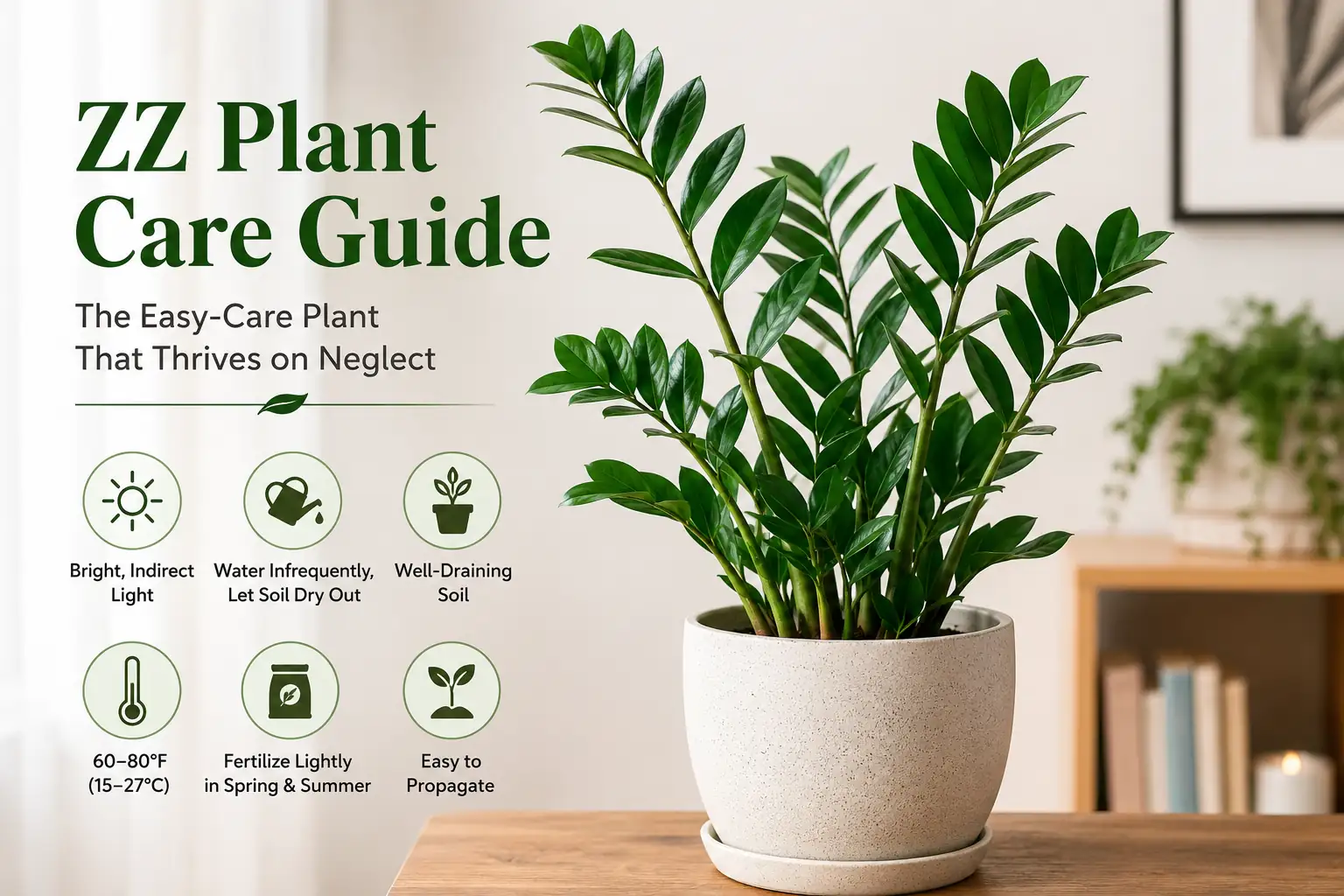
Inside the Blog
I bought a ZZ plant during a period when I was travelling for work every other week and I needed something that would not die every time I was away for ten days. My neighbour was watering my other plants but I did not want to push my luck by adding more to her list. The ZZ sat on a shelf in a room that got decent but not great light, got watered whenever I remembered, and looked completely unbothered by all of it. I came home from a two week trip once to find it had pushed out three new stems while I was gone. That is when I understood what ZZ plant care is really about: providing the basics and then getting out of the way.
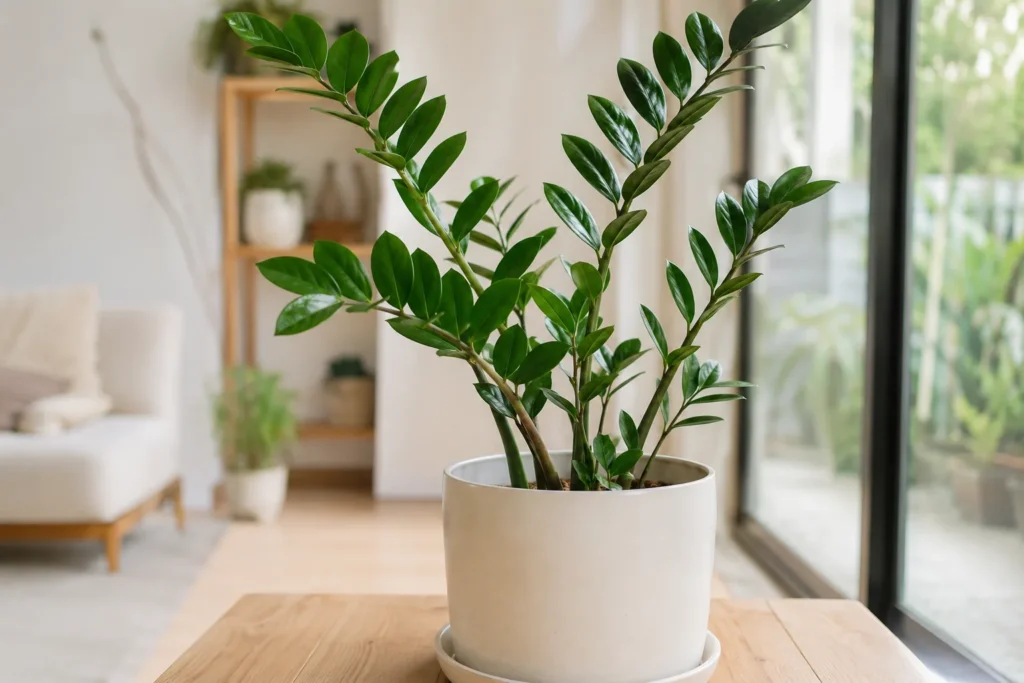
Zamioculcas zamiifolia, the ZZ plant, is native to eastern Africa, where it grows in conditions that range from dry woodland to grassland and experiences long dry seasons as a matter of course. It stores water in thick, fleshy underground rhizomes that look like small potatoes, which is how it survives extended dry periods. Those rhizomes are also why the plant recovers from periods of neglect that would finish off most other houseplants.
Light: Flexible but Not Unlimited
ZZ plants handle a wider light range than almost any other common houseplant. They grow in low light, medium light, and bright indirect light, and the main difference between those conditions is growth rate rather than survival. In low light the plant grows very slowly. In bright indirect light it grows noticeably faster and the new leaves are a slightly deeper, glossier green.
The one condition ZZ does not tolerate is prolonged direct sun through an unfiltered window, which causes the leaves to yellow and eventually scorch. A spot in a well-lit room without direct sun, or a few feet back from a bright window, is the sweet spot. This flexibility is genuinely useful for filling spots in your home where other plants have failed.
The Watering Rule That Changes Everything
Water infrequently and let the soil dry out completely between waterings. That is the whole principle, and sticking to it is what keeps ZZ plants alive indefinitely. In most homes during summer, watering every two to three weeks is appropriate. In winter, once a month or even less depending on how cool and low-light your home is.
The mistake that kills ZZ plants is watering on a schedule regardless of what the soil is actually doing. If you watered two weeks ago and the soil still feels slightly damp when you push your finger in, wait. The rhizomes store enough water to carry the plant for weeks without any impact on its appearance. Soft, yellowing leaves starting at the base are almost always overwatering damage, and by the time it is visible, root rot may already be developing. Our guide on yellow leaves on houseplants covers how to tell the difference between overwatering and other causes.
Soil and Potting
A well-draining potting mix is important for ZZ, more so than for many other common houseplants because of how sensitive the rhizomes are to sitting in wet soil. A cactus mix works well, or a standard indoor potting mix with a generous amount of perlite added. The soil should feel loose and gritty rather than dense and moisture-retaining.
Use a pot with drainage holes without exception. The rhizomes grow slowly and ZZ plants are happy being slightly pot-bound, so there is no rush to repot. When you do repot, moving up one pot size at a time is all that is needed. If you want to walk through the repotting process, our guide to repotting a plant without causing stress covers the timing and method.
Temperature and Humidity
ZZ plants are comfortable in normal household temperatures between 60 and 80°F (15 to 27°C) and are one of the few plants that actually prefer low to average humidity. The dry air that most centrally heated homes produce in winter, which causes problems for calatheas and prayer plants, suits ZZ perfectly. This makes it a particularly sensible choice for rooms where humidity is naturally lower.
Keep it away from cold drafts and air conditioning vents that blast cold air directly, since sudden cold exposure can cause leaf yellowing and drop. Stable, warm indoor conditions are all it needs.
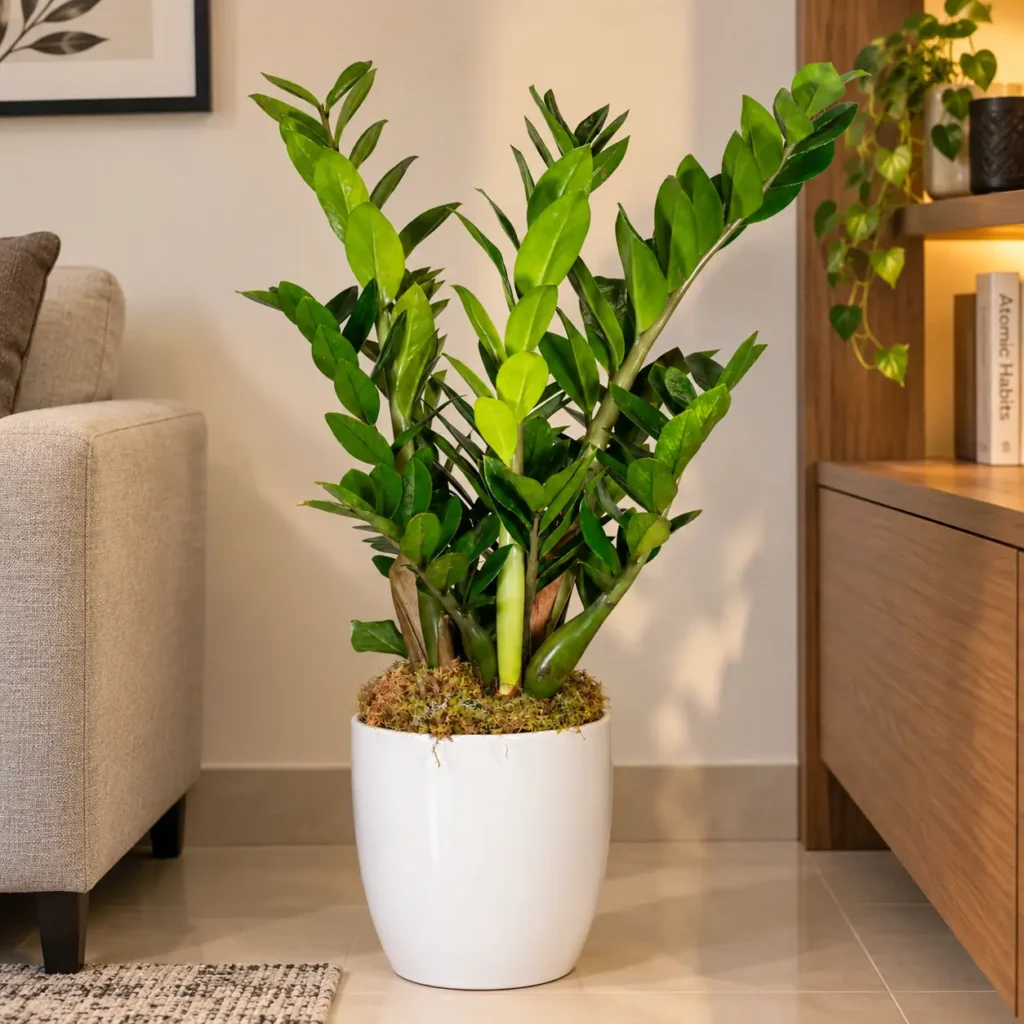
Fertilising: Light and Occasional
ZZ plants are slow growers and light feeders. A balanced liquid fertiliser applied once in spring and once in midsummer is genuinely enough. More frequent feeding leads to soft, stretched growth rather than the compact, upright habit that makes ZZ plants look so striking.
Stop feeding entirely in autumn and winter. The plant is not actively growing during the lower light and cooler months of the year and cannot use the nutrients, which build up as salt deposits in the soil and can eventually cause root damage.
Propagation: Patience Required
ZZ plants propagate from leaf cuttings or stem cuttings, both of which produce new rhizomes and eventually new plants. The process is slow, sometimes taking several months before a new rhizome forms and growth begins, but it does work reliably. Place a single leaf or a stem section in a well-draining potting mix, keep it barely moist, and wait. Do not assume it has failed just because nothing visible is happening at the surface.
Division at repotting time is faster. Separate sections of the rhizome that already have their own stems, replant each section immediately, and growth continues without a long waiting period.
Is ZZ Plant Toxic?
Yes. ZZ plants contain calcium oxalate crystals and are toxic to cats, dogs, and humans if ingested. The sap can also cause skin and eye irritation on contact, so washing hands after handling is a sensible habit. Keep it out of reach of pets and children in your home.
A Plant Worth Taking Seriously
ZZ plants get underestimated because they are associated with neglect-friendly care, which sometimes leads people to put them in genuinely unsuitable spots and wonder why they are not thriving. Providing decent indirect light, well-draining soil, and infrequent watering is not neglect. It is the right care for this specific plant. Get those basics right and the ZZ plant rewards you with glossy, architectural foliage that holds up season after season. It belongs on the same shelf as the plants in our evergreen indoor plants guide for consistent, year-round visual impact.
Water less than you think you need to, give it reasonable light, and let the rhizomes do the rest. That is the heart of ZZ plant care. Everything else falls into place from there.
Frequently Asked Questions About ZZ Plant Care
How often should I water a ZZ plant?
Every two to three weeks in summer and once a month or less in winter is a reasonable starting point. The more accurate guide is the soil itself. Water only when it has dried out completely all the way through the pot, not just at the surface. Checking with your finger every few days tells you more than any fixed schedule.
Why are my ZZ plant leaves turning yellow?
Yellow leaves are almost always a sign of overwatering or soil that stays wet too long. Check whether the soil has been consistently damp between waterings and adjust your frequency accordingly. Occasional yellowing of a single lower leaf on an otherwise healthy plant can be natural aging rather than a care problem.
Can a ZZ plant survive in a room with no windows?
It can survive for a while in very low light but it will grow extremely slowly and may eventually decline. It is one of the most low-light tolerant houseplants available, but all plants need some light to sustain themselves long term. A room with at least some ambient natural light during the day is workable.
How fast does a ZZ plant grow?
ZZ plants are naturally slow growers. In good light conditions you might see several new stems in a growing season. In lower light the growth rate slows considerably. Do not judge the plant’s health by fast growth since slow, steady progress is entirely normal for this species.
Is a ZZ plant good for bedrooms?
Yes. Its low light tolerance makes it a practical bedroom plant, and it does not need the high humidity some other tropical plants require. Place it near a window for the best results rather than in a completely dark corner, and it will grow slowly and steadily without any complaints.
Can I put a ZZ plant outside in summer?
A ZZ plant can go outside in a warm, shaded spot during summer, but it should never be placed in direct outdoor sun. Outside conditions also dry the soil faster, so check moisture levels more frequently than you would indoors.
Have questions about your ZZ plant? Drop them in the comments below. I read every one and love talking about this stuff.