Inside the Blog
A bare patch of garden soil is an open invitation for weeds. Uncovered earth quickly fills with dandelions, crabgrass, and chickweed as dormant seeds take advantage of sunlight and rainfall. While thick layers of wood mulch help, replacing exposed dirt with living ground covers creates a permanent, self-sustaining barrier that stops weeds before they start.
Ground cover plants work by creating a dense green canopy that blocks sunlight from hitting the soil surface. Without light, weed seeds cannot germinate. Below ground, the thick root systems of established ground covers drink up water and nutrients, outcompeting unwanted weeds. Once established, these living mulches dramatically cut down on weekend weeding and keep your landscape looking polished year after year.
Why Living Ground Covers Beat Synthetic Weed Barriers
Many homeowners default to laying down black plastic or non-woven landscape fabric to stop weeds. While landscape fabric works in the short term, it creates long-term headaches in American gardens:
- Degradation and Pollution: Over time, plastic landscape fabrics break down into microplastics, leaving frayed black edges popping up through your mulch.
- Root Suffocation: Dirt and blowing organic matter settle on top of the fabric. Weed seeds blow in and root directly into the fabric, making them even harder to pull.
- Restricted Spreading: Synthetic barriers prevent healthy creeping perennials from spreading their stems and taking root, which starves the surrounding soil of organic matter.
Switching to a living ground cover builds healthy soil biology. The roots aerate heavy ground naturally, while falling foliage breaks down into rich organic matter.
For Sunny, Heat-Tolerant Areas
Sunny yards, especially across USDA Hardiness Zones 5 through 9, demand resilient plants that handle baking summer heat without wilting.
Creeping Thyme (Thymus serpyllum)
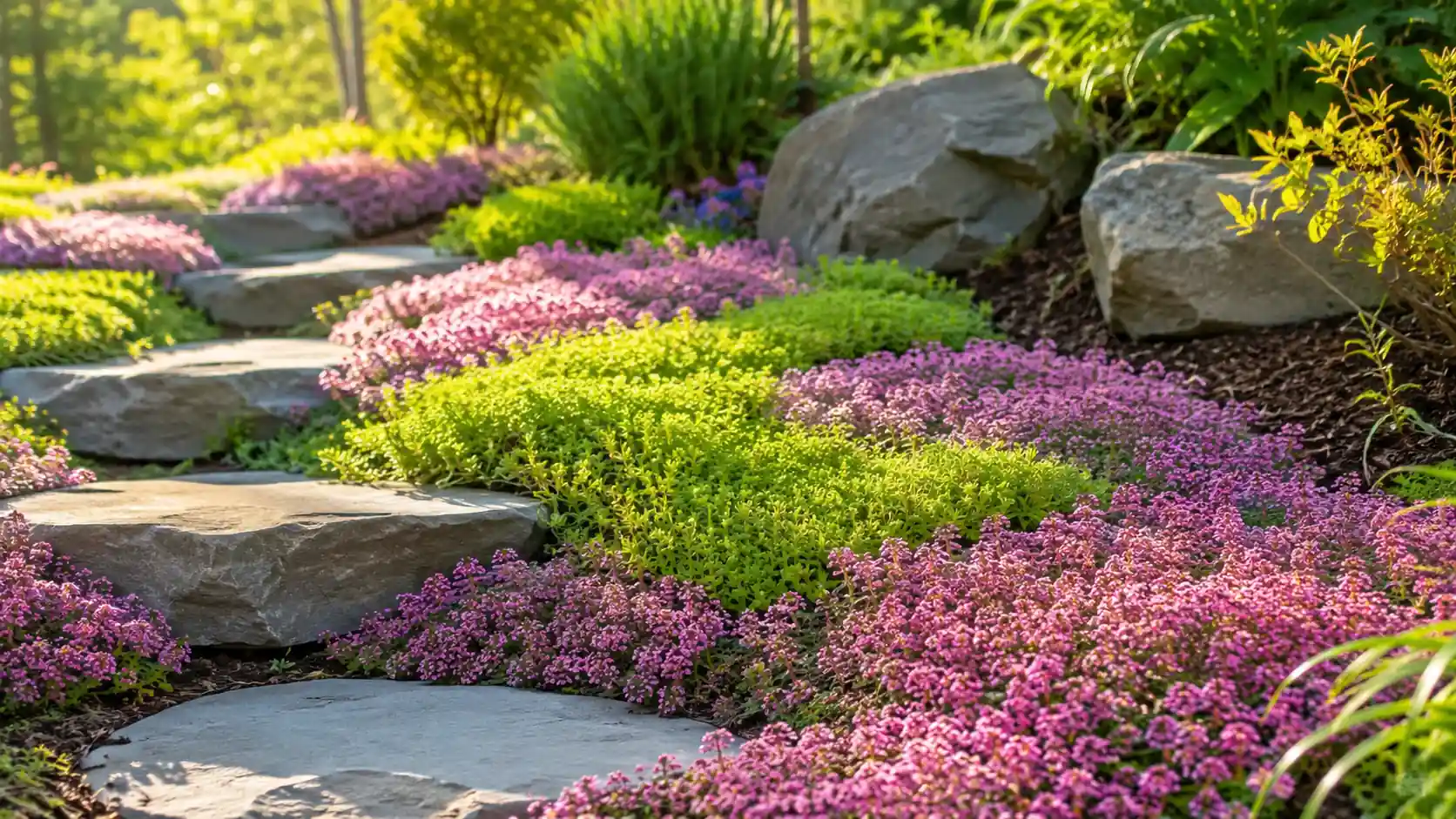
Creeping thyme is one of the hardest-working low-profile perennials you can grow. Staying under 3 inches tall, it spreads steadily to form a dense, aromatic carpet. In late spring and early summer, it bursts into masses of pink and purple blooms that attract native bees and butterflies.
It handles dry, rocky soil effortlessly once established and tolerates light foot traffic, making it ideal between stone flagstones or along garden borders.
Low-Growing Sedum (Stonecrop)
For hot, dry, south-facing slopes or sandy soil where turf grass dies off, low-growing sedums like Sedum acre or Sedum spurium offer an bulletproof solution. These fleshy succulents store water in their leaves, surviving long dry spells without supplemental irrigation. They carpet the ground in vibrant greens, bronzes, and yellows, suppressing weeds in thin soil where little else survives.
Catmint (Nepeta)
If you need a fast spreader for larger sunny borders, low-growing catmint varieties like ‘Kitten Midori’ or ‘Junior Walker’ form broad mounds of aromatic, gray-green foliage. Catmint blooms continuously from late spring through early fall with lavender-blue flowers. It is strongly deer and rabbit resistant, making it a reliable pick for suburban and rural yards facing high pest pressure.
For Shaded Spaces Under Trees and Eaves
Shady areas under mature maple or oak trees present a double challenge: lack of sunlight and intense competition for soil moisture from tree roots. Turf grass usually fails here, leaving bare dirt open to weed invasion.
| Plant Species | Best Light Exposure | Growth Rate | Foot Traffic Tolerance |
| Creeping Thyme | Full Sun | Moderate | Light to Moderate |
| Sedum | Full Sun | Fast | Very Light |
| Pachysandra | Full Shade to Partial Shade | Slow initially, then steady | None |
| Sweet Woodruff | Partial to Deep Shade | Moderate | None |
| Ajuga (Bugleweed) | Partial Shade to Full Sun | Very Fast | Light |
| Creeping Juniper | Full Sun | Moderate | None |
Japanese Pachysandra (Pachysandra terminalis)
Pachysandra is a classic choice for deep shade across USDA Zones 4 through 8. While it takes a season or two to settle in, established pachysandra forms an evergreen carpet 6 to 8 inches deep. The leathery, whorled leaves shade the soil so completely that weeds rarely penetrate the canopy. It handles dry shade better than most shade perennials once rooted.
Sweet Woodruff (Galium odoratum)
Sweet woodruff excels in moist, dappled shade under deciduous trees. It features whorled, star-like foliage and tiny, fragrant white flowers in spring. Spreading through underground runners, it creates a lush green mat that emits a sweet hay scent when crushed. It dies back during harsh winters but shoots up vigorously every spring.
Ajuga (Bugleweed)
Ajuga forms a flat rosette of glossy leaves that come in rich shades of dark green, bronze, and deep purple. In mid-spring, it throws up striking spikes of blue flowers. Ajuga grows rapidly, filling in tricky gaps along pathways and under trees. Because it spreads so aggressively via runners, install a root barrier edge if you want to keep it out of adjacent lawn spaces.
For Slopes and Erosion Control
Steep banks and erosion-prone slopes are notoriously difficult to mow and weed safely. Installing deep-rooting ground covers stabilizes loose soil while shading out invasive brush.
Creeping Juniper (Juniperus horizontalis)
Creeping juniper is a tough evergreen conifer that hugs the ground, spreading 6 to 8 feet wide while staying under 18 inches tall. Varieties like ‘Blue Chip’ and ‘Wiltonii’ feature blue-green needles that take on a purple cast in winter. As the branches spread across banks, they root into the dirt, anchoring the hillside against heavy rains.
For additional structure along retainment walls and slopes, explore our recommendations for easy-to-grow woody plants for small gardens.
Rose of Sharon Ground Cover (Hypericum calycinum)
Also known as Creeping St. John’s Wort, this semi-evergreen sub-shrub forms a woody network of roots that grips loose soil on sunny or partially shaded banks. In mid-summer, it produces large, bright yellow flowers with prominent stamens. It handles poor clay soils, urban pollution, and dry spells without missing a beat.
Options That Handle Foot Traffic
Most soft perennial foliage crushes under heavy boots, but a few low-profile ground covers tolerate stepping feet, making them perfect for flagstone paths and garden walkways.
Corsican Mint (Mentha requienii)
Corsican mint forms a micro-thin, bright green lawn that stays under a quarter-inch tall. When stepped on, it releases a crisp peppermint aroma into the air. It prefers partial shade and consistent moisture, thriving in the microclimates created between cool stepping stones.
Lawn Chamomile (Chamaemelum nobile)
Non-flowering cultivars like ‘Treneague’ form a dense, feathery green carpet that holds up under occasional foot traffic. Walking on chamomile releases a soothing apple fragrance. It acts as an excellent turf grass alternative for small, low-traffic courtyards in sunny locations.
Planting and Establishing Ground Covers for Maximum Density
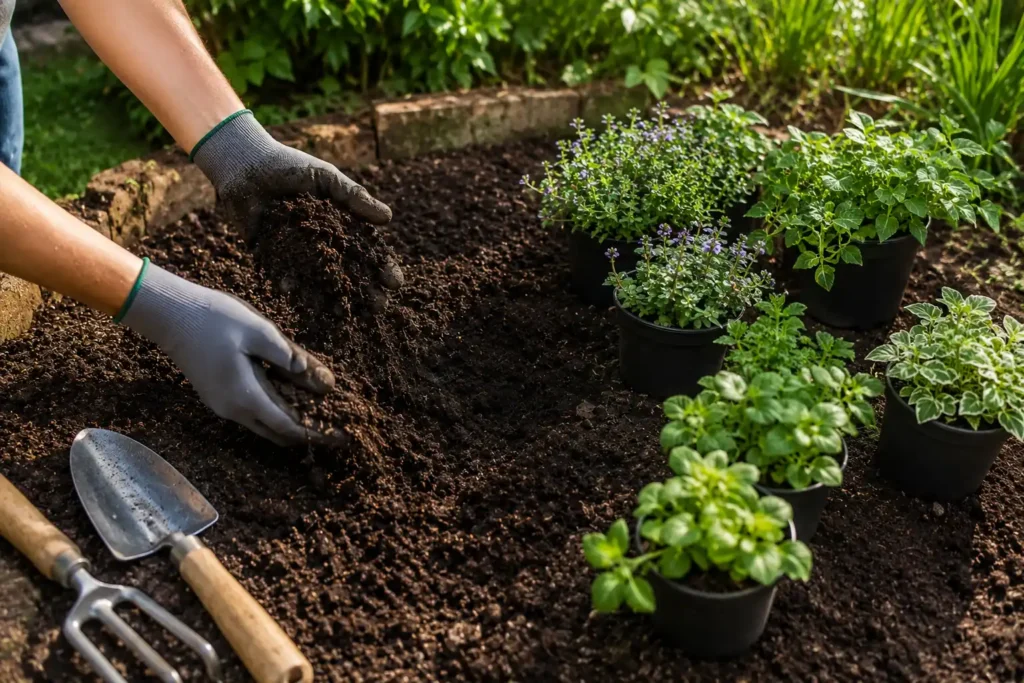
Getting your ground cover to fill in quickly requires proper soil prep during the first growing season. Until the foliage forms a solid canopy, weed seeds will try to take advantage of the open space.
1. Amend and Prep the Soil
Clear the area of all existing weeds, roots, and debris before planting. If you are dealing with compacted, nutrient-poor, or sticky ground, follow our practical guide on how to improve clay soil before planting to loosen the root zone and ensure good drainage.
2. Mulch Between Young Transplants
Space your young starters according to their mature spread. Instead of laying down synthetic weed fabric, spread a 2-inch layer of organic mulch or shredded bark around the new plants. This suppresses weeds while keeping soil moist. As the ground cover spreads, it will naturally swallow up and replace the mulch layer.
3. Smart Winter Protection
Ensure you select species hardy enough for your specific winter conditions. If you garden in colder northern regions, check our carefully curated list of the best plants for zone 5 gardens to choose varieties that survive freezing winter temperatures without dying back to the root.
To safeguard your new ground cover plot during its first few seasons, review our essential guide on 5 common plant care mistakes beginners must avoid so you do not accidentally overwater or under-fertilize during establishment.
Frequently Asked Questions
How long does it take ground cover plants to completely smother weeds?
Fast-spreading perennials like ajuga, creeping thyme, and sedum can cover open ground in one to two growing seasons when planted on 12-inch centers. Slower-growing evergreen varieties like pachysandra or creeping juniper typically require two to three years to form an impenetrable mat.
Will ground cover spread into my lawn?
Aggressive spreaders that run along surface stolons, such as ajuga and vinca minor, can creep into nearby lawn turf if left unchecked. To keep them contained, install a 4-inch deep plastic, metal, or stone edging border between your garden beds and lawn areas.
Can I plant ground cover over existing weeds?
No. Ground covers suppress new weeds from germinating by blocking sunlight, but established perennial weeds like dandelions, thistle, and bindweed will grow right through young ground cover plants. Always clear the soil of deep weed roots before planting your ground cover.