Inside the Blog
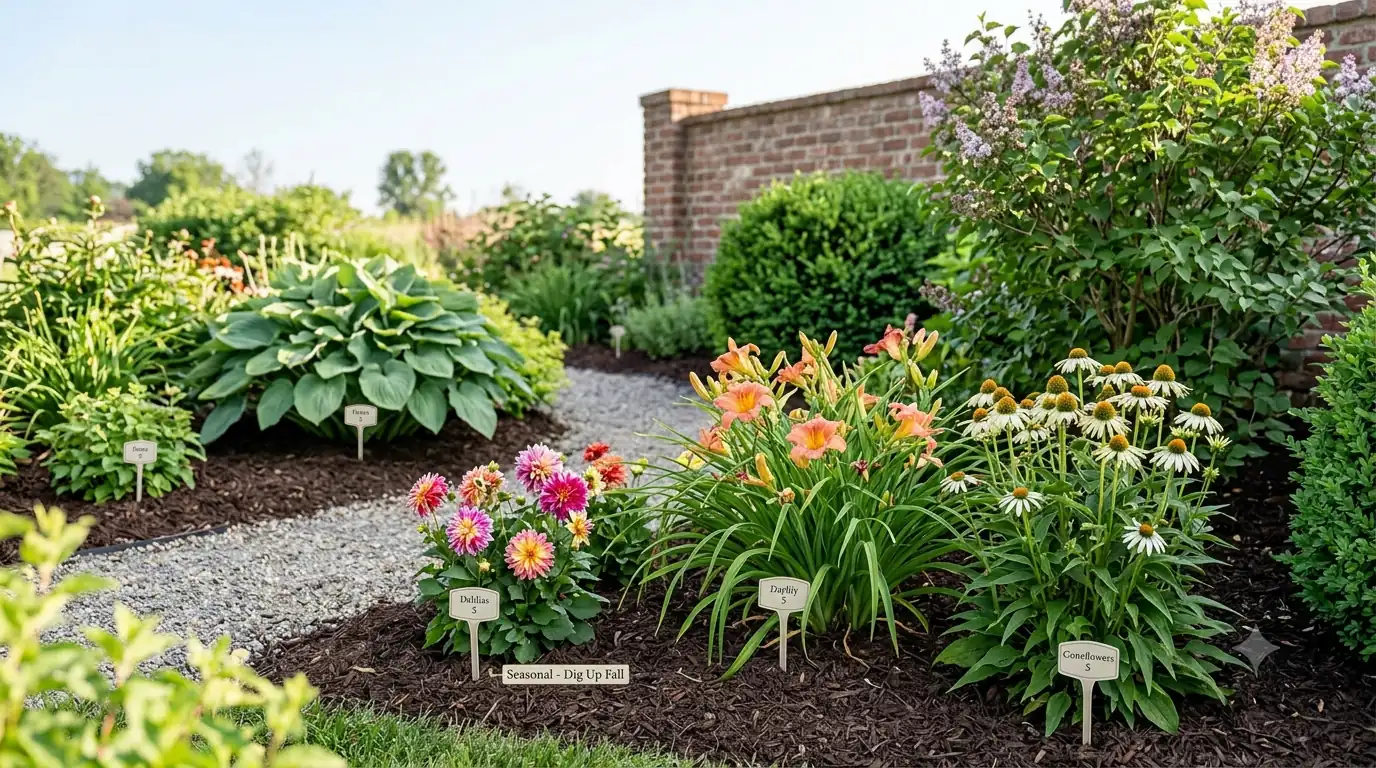
To successfully grow zone 5 plants, choose reliable hardy perennials like Hostas, Daylilies, Peonies, Coneflowers, and Sedum, or tough shrubs like Lilacs and Green Velvet Boxwoods that can naturally withstand average winter lows between -10°F and -20°F (-23.3°C to -28.9°C). USDA hardiness zone 5 spans a massive territory across the upper Midwest, parts of the Northeast, and intermountain western regions. Gardening in this climate means your landscape choices must possess the cellular resilience to freeze solid in the winter and bounce back vigorously every spring without requiring artificial winter protection. While true zone 5 plants handle these brutal conditions effortlessly, incorporating borderline hardy varieties simply requires a basic understanding of seasonal digging, protective mulching, and yard microclimates.
Best Perennial Plants for USDA Zone 5 Gardens
True perennials are the permanent structural backbone of your garden beds. Once planted, these varieties establish deep root systems that remain safely dormant beneath the frost line, returning reliably year after year without needing to be dug up or heavily blanketed.
1. Hostas (Shade Protectors)
Hostas are the undisputed royalty of the zone 5 shade garden. They offer incredible structural diversity with leaf colors ranging from deep chartreuse to cool variegated blues. Because they thrive in dappled or full shade, they are highly dependable for planting beneath tree canopies where other perennials suffer.
2. Daylilies (Hemerocallis)
Daylilies are virtually indestructible. They tolerate poor soil, salt spray near sidewalks, and periods of summer drought while still throwing up a massive succession of bright blooms. They handle full sun to light shade effortlessly, making them an excellent choice for low-maintenance border beds.
3. Peonies (Paeonia)
Unlike tropical plants that flee from the cold, peonies actually require a prolonged winter chill to properly set their flower buds. This environmental constraint makes zone 5 one of the premier climates in the world for growing massive, fragrant peony blooms every spring.
4. Coneflowers (Echinacea) & Black-Eyed Susans (Rudbeckia)
These native prairie powerhouses are built for the climate extremes of the Midwest. Both varieties feature deep taproots that make them highly drought-tolerant once established. Additionally, their rigid seed heads provide a critical winter food source for local bird populations if left standing.
5. Upright Sedum (Stonecrop)
Sedum is a hardy succulent that stores moisture in its fleshy leaves, allowing it to bake in the intense mid-summer sun without flagging. In late summer and autumn, they produce large, broccoli-like flower heads that transition from light pink to a deep rust color, adding beautiful late-season texture to the garden.
6. Siberian Iris & Astilbe
While Siberian Iris thrives in standard to moist garden soils with striking vertical blade-like foliage, Astilbe is the perfect companion for shadier, damp spots. Astilbe pushes out feathery, plume-like blossoms in areas where soil moisture remains high and many other perennials risk root rot.
Best Cold-Hardy Shrubs for Zone 5
An enduring zone 5 garden layout requires woody shrubs to anchor the landscape, providing visual structure even when the ground is covered in snow.
- Lilacs (Syringa): A timeless classic, the common lilac is exceptionally cold-hardy. It frequently outlives the gardeners who planted it, returning every spring with heavily scented purple or white panicles.
- Boxwoods (Buxus): Boxwoods provide year-round evergreen structure, making them a dependable choice for hedges, foundation plantings, and formal borders in zone 5 gardens. Selecting a cold-hardy cultivar is important because not every boxwood performs equally well in freezing winters. Green Velvet Boxwood is one of the most reliable options for colder climates thanks to its excellent winter hardiness, dense growth habit, and reduced risk of winter bronzing.
Plants That Need Winter Protection in Zone 5
Not every flower you want to feature in your garden is naturally equipped to survive a freezing winter in the ground. Recognizing which plants are sensitive prevents costly losses.
The Autumn Bulb Digging Routine
Dahlias provide unmatched color and geometric perfection in the summer garden, but their fleshy tubers are completely frost-tender. They cannot survive a zone 5 winter underground.
To keep them alive, dig up the tubers in autumn after the first hard frost kills the foliage, shake off the excess soil, and store them in a cool, dark, frost-free location such as a basement or crawlspace until spring. This storage period is an important part of the growing cycle because healthy tubers need to be replanted at the right time the following season. Knowing when to plant dahlia bulbs helps ensure they break dormancy successfully and produce vigorous summer blooms.
The Hydrangea Dilemma
Hydrangeas are a frequent source of frustration for northern gardeners because different species handle cold in entirely different ways:
- Panicle (PeeGee) and Smooth (Annabelle) Hydrangeas: These varieties are exceptionally cold-hardy. They bloom on new wood grown in the current spring, meaning even if winter freezes them to the ground, they will still flower perfectly.
- Bigleaf Hydrangeas (Hydrangea macrophylla): These are the classic blue and pink varieties. They set their flower buds on old wood during the previous autumn. A harsh zone 5 winter will frequently kill these exposed buds right off the stems, leaving you with a lush green bush that completely fails to bloom.
How Garden Microclimates Influence Plant Survival
USDA hardiness zones provide average winter temperature ranges, but every garden contains smaller areas called microclimates that can be slightly warmer or colder than the rest of your property.
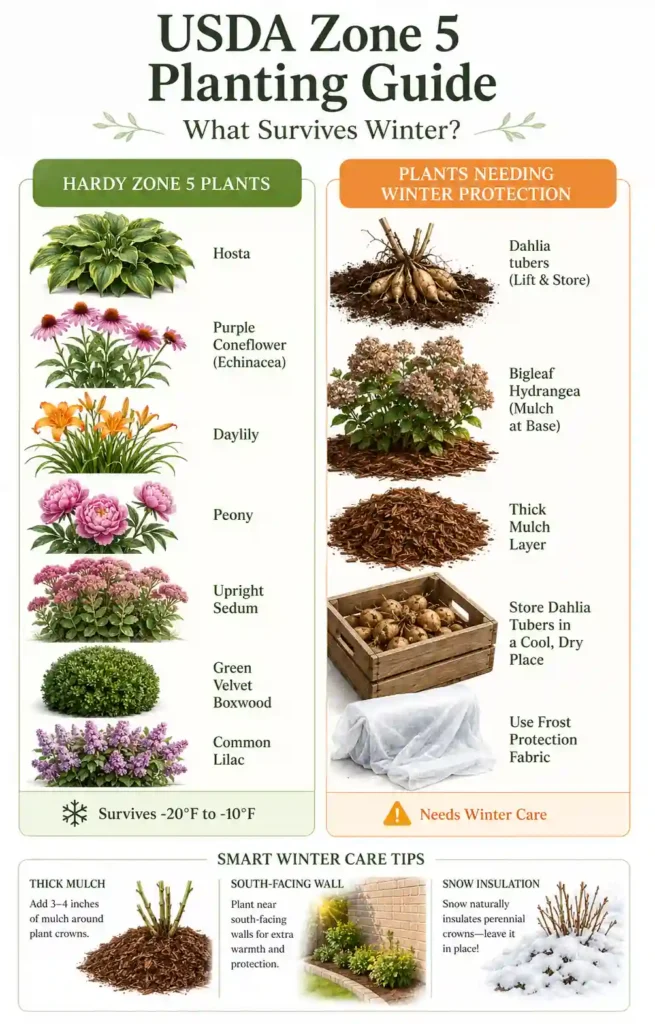
For example, a planting bed beside a south-facing brick wall absorbs and reflects heat throughout the day, creating a warmer environment that may help borderline hardy plants survive winter more successfully. In contrast, exposed areas facing strong north winds or open hilltops experience colder temperatures and greater winter stress, making them better suited to the toughest zone 5 plants.
Before replacing a plant that struggles through winter, consider whether relocating it to a more sheltered part of your garden could improve its long-term performance
How to Design a Beautiful Zone 5 Garden Bed
A practical, professional landscape plan balances winter-tough structural elements with pops of high-maintenance summer color. Use reliable true perennials and woody shrubs to establish the permanent boundaries and year-round architecture of your garden space.
If you are looking for compact structural options to anchor a smaller yard layout, our curated look at the top easy-to-grow woody plants for small gardens offers great choices that integrate cleanly alongside the perennials featured here. Once your structural framework is planted, leave open pockets in the front and middle zones of the bed to drop in high-impact accent flowers—like dahlias or annuals—that you can rotate or dig up when the cold weather rolls back in.
Quick FAQ
What is the lowest temperature zone 5 plants must survive?
USDA Zone 5 is defined by average annual winter minimums reaching down to -20°F (-28.9°C). Any plant explicitly rated for Zone 5 or lower is biologically adapted to survive these deep freezes without needing any wrapping, burlap covers, or heavy intervention.
Can I grow Zone 6 or Zone 7 plants in a Zone 5 garden?
Yes, but it comes with risk. You can pull off slightly warmer varieties by planting them inside highly sheltered microclimates, burying the crown under a thick 4-inch layer of insulating autumn mulch, or using winter frost blankets. However, a historic winter cold snap can still break through these defenses and kill the plant.
Do zone 5 perennials need to be cut down before winter hits?
Many gardeners prefer to tidy up their beds by cutting dead foliage back to 2 inches above the soil line after the first killing frost. However, leaving structural plants like Coneflowers, Sedum, and ornamental grasses standing through the winter adds great visual contrast against the snow, provides shelter for beneficial insects, and offers a natural seed buffet for wintering songbirds. You can simply cut them back in early spring before new growth emerges.
Can I grow roses in Zone 5?
Yes. Many shrub roses and hardy landscape roses perform well in Zone 5, especially when planted in full sun with well-drained soil.
When should I plant perennials in Zone 5?
Spring and early fall are the best planting times, giving roots enough time to establish before extreme summer heat or winter freezes.
Should I mulch plants before winter?
Yes. A 2 to 4-inch layer of organic mulch helps regulate soil temperature, conserves moisture, and protects roots during repeated freeze-thaw cycles.