Inside the Blog
Few houseplants are as easy to love as the Pilea peperomioides. The flat, coin-shaped leaves float on slender stalks like tiny green umbrellas, and a happy plant keeps sending up little offshoots that you can pot up and hand to friends. That sharing habit is how it picked up so many nicknames: Chinese money plant, pancake plant, UFO plant, missionary plant and friendship plant.
Pilea plant care is not demanding, but this plant is particular about three things: how it is lit, how often it is watered, and how crowded its roots are. Get those right and it grows into a tidy, symmetrical rosette. Get them wrong and the leaves curl, droop or drop in ways that look alarming but are usually easy to fix. This guide walks through the full routine first, then goes deeper on the questions people ask most: how much sun a pilea can take, how to propagate the pups, and when and how to repot.
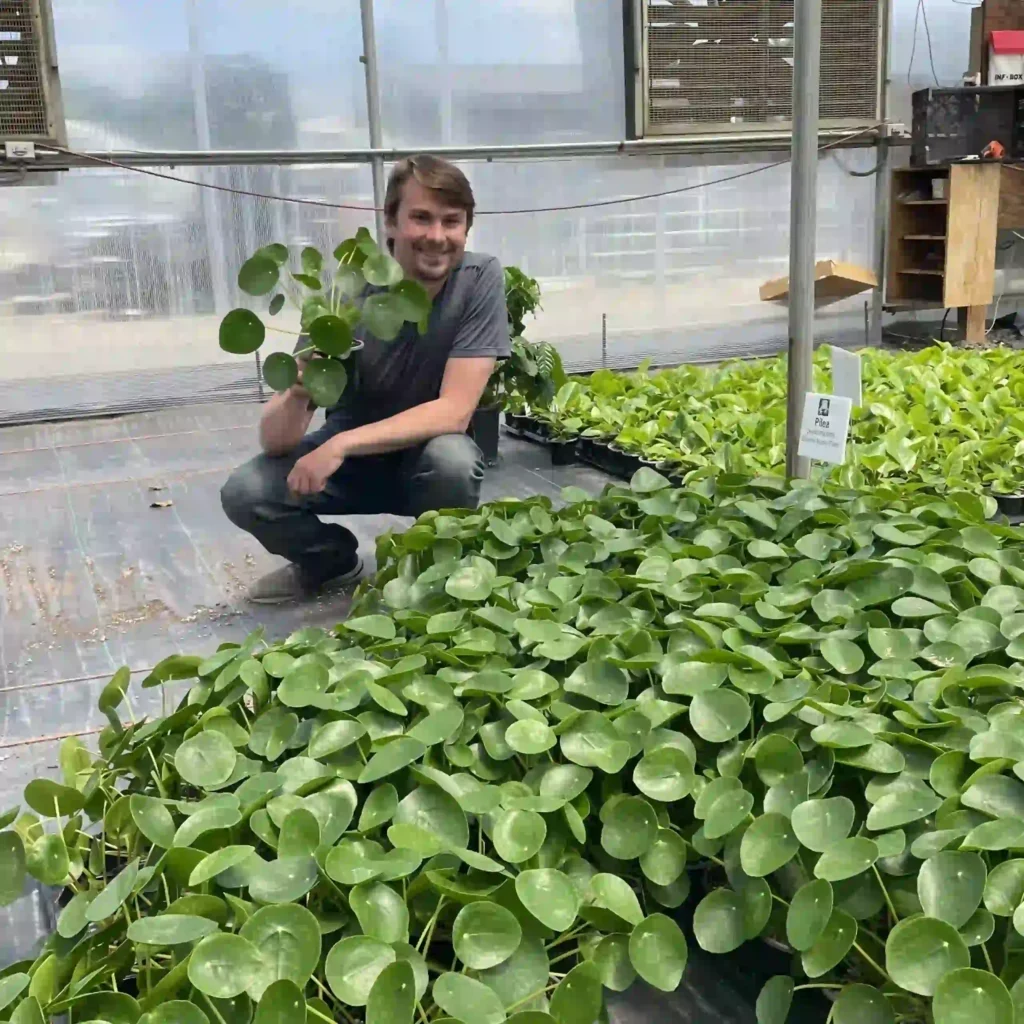
The plant is native to the mountainous parts of southwest China, including Yunnan and Sichuan, where it grows on cool, shaded, rocky slopes. It reached Europe in the 1940s, when a Norwegian missionary named Agnar Espegren brought one home. From there it spread almost entirely through cuttings passed between neighbours and friends, long before garden centres stocked it. That history explains what it wants indoors: mild temperatures, filtered light and soil that drains quickly.
How Much Sun Does a Pilea Need?
Pilea does best in bright, indirect light. In its native hills it grows under tree cover and beside shaded rock faces, so it rarely meets harsh midday sun. Indoors, that translates to a spot near an east-facing window, where it gets gentle morning light, or a few feet back from a south or west window with a sheer curtain between the glass and the leaves. Direct afternoon sun is the main thing to avoid. It bleaches the leaves into pale patches, crisps the edges and makes them curl inward.
Too little light shows up differently. The stems stretch, new leaves come in smaller than the older ones, and the whole plant leans toward the window. A leggy pilea is almost always asking for more light, not more water or food.
Because pilea grows toward its light source, a plant left in one position ends up lopsided, with every leaf facing the glass. Give the pot a quarter turn once a week and the rosette stays round and even. In very dim homes, a basic full-spectrum grow lamp placed about a foot above the plant for several hours a day can make up the difference.
Watering Your Pilea
Overwatering causes more pilea problems than anything else. Let the top 2 to 3 cm (about an inch) of soil dry out, then water thoroughly until the excess runs from the drainage holes. Empty the saucer after a few minutes so the roots are not sitting in water. In summer that usually works out to roughly once a week. In winter, when growth slows, every two weeks or even less is common. Pot size, light and room temperature all change the timing, so trust your finger over the calendar.
The leaves give clear signals. A thirsty pilea droops, and the leaves feel soft and a little limp but stay green. Water it and it often perks up within a day. A plant that is too wet looks different: leaves turn yellow, the stem near the soil goes soft or dark, and the soil can smell sour. If yellowing is the problem and you are not sure what is behind it, this breakdown of why houseplant leaves turn yellow helps separate watering mistakes from light and nutrient issues.
Water quality can also matter. Some growers notice a white crust on the soil surface where tap water is hard. Using filtered or rainwater now and then, or letting tap water sit overnight, is a small habit that may help if you see this.
Soil and Pot Choice
A loose, fast-draining mix keeps pilea roots healthy. A standard indoor potting mix with about a third perlite or pumice blended in works well, and the result should feel light and slightly gritty rather than dense. Avoid heavy, moisture-hungry mixes that stay wet for days.
Always use a pot with drainage holes. Terracotta is a good choice because the clay pulls moisture out of the soil, which gives some protection against overwatering. Plastic and glazed ceramic pots work too, but they hold water longer, so you will need to water a little less often.
Temperature and Humidity
Pilea is comfortable at normal room temperatures between roughly 15 and 27°C (60 to 80°F). It does not like to go below about 10°C (50°F), so keep it away from cold windowsills in winter and from air conditioning vents blowing straight onto the leaves. Sudden swings in temperature are a common reason for curling or dropped leaves.
Average household humidity is fine. There is no need to mist the leaves, and water sitting on them can leave spots. Good airflow and a stable room temperature do more for this plant than extra humidity.
Feeding Pilea Peperomioides
Pilea is a light feeder. During spring and summer, a balanced liquid houseplant fertiliser at half the strength on the label, applied about once a month, is plenty. Water the plant first and feed second, since fertiliser applied to bone-dry roots can burn them. Stop feeding in autumn and winter, when growth slows and unused nutrients can build up as salts in the soil, leading to brown leaf edges. If you are unsure how to choose a product or time your feeding, this overview of how to fertilize houseplants covers the basics.
How to Propagate Pilea Peperomioides
Propagation is the most rewarding part of growing this plant, and it is genuinely easy. Mature plants send up small offshoots, called pups, from the soil near the main stem. Some appear right beside the parent, while others pop up several centimetres away from underground runners. You do not need to harm the parent plant to get new ones.
[Image placeholder: a pilea pup growing at the base of the mother plant, with a small cutting jar beside it]
When to Separate a Pup
Wait until the pup is about 5 to 8 cm (2 to 3 inches) tall and has several leaves of its own. Pups taken much smaller often have too few roots to cope on their own. Spring and early summer are the best times, since the plant is actively growing and recovers quickly.
Step by Step
- Brush away a little soil to see where the pup joins the parent. You will usually find a thin stem or root running underground.
- Cut the connection with a clean, sharp knife or snips, close to the parent. Try to keep a few small roots attached to the pup.
- Choose water or soil for rooting (see below).
- Place the new plant in bright, indirect light and be patient. Fresh growth can take a few weeks to show.
Rooting in Water or in Soil
Water rooting lets you watch the roots form. Stand the pup in a small jar so only the cut end is submerged, change the water every few days, and wait. Roots usually appear within a few weeks. Pot it up once the roots are a few centimetres long, because roots grown in water can struggle if they are moved when too short or too delicate.
Planting straight into soil skips that transition. Use the same gritty mix described above in a small pot, keep the soil lightly moist but never soggy, and avoid tugging at the pup to check for roots. A new leaf at the top is the sign it has settled in.
Both methods work. If you are new to propagating, water gives you more feedback, while soil is a little less fuss.
A single leaf will not grow into a new pilea, so pups are the reliable route. Growing from seed is possible in theory, but indoor plants rarely flower and the seed is hard to source, which makes pups the practical choice for nearly everyone.
When and How to Repot a Pilea
Pilea does not mind being a little snug, but it needs fresh soil and more room eventually. Repotting every one to two years, in spring or early summer, suits most plants.
The signs are easy to spot. Roots may circle the drainage holes or push out of the pot. Water may run straight through because there is more root than soil. A crowd of pups may be competing with the main plant, or the soil may look tired and stay wet for days.
Choose a pot only 2 to 5 cm (1 to 2 inches) wider than the current one. A much larger pot holds extra wet soil that the roots cannot use, which raises the risk of rot. Water the plant the day before so the root ball slides out easily. Tip it out, loosen the outer roots gently, and trim any that are dark, mushy or foul smelling. Set the plant at the same depth as before, fill around it with fresh, airy mix, and water lightly. A little drooping for a few days is normal.
Repotting is also the easiest time to separate pups and share them. If this is your first time, a broader walkthrough on repotting a plant without killing it is handy, since the same principles apply to nearly every houseplant.
Common Pilea Problems
Curling leaves. Usually a response to too much direct sun, cold drafts or uneven watering. Move the plant back from the window or away from vents, then water more consistently.
Brown or black spots. Often caused by sunburn, cold damage or water left sitting on the leaves. Check the light and temperature before changing anything else.
Leggy growth. A sign the light is too low. Move it somewhere brighter and keep rotating the pot.
Fine webbing or speckled leaves. These point to spider mites, which thrive in warm, dry conditions. Isolate the plant straight away and follow the treatment steps in this article on dealing with spider mites on plants.
Lower leaves yellowing. One or two older leaves yellowing now and then is part of normal renewal. Many yellow leaves at once usually means too much water.
No pups. Young plants simply need time. Good light, regular feeding in the growing season and a slightly snug pot often encourage offsets.
Is Pilea Toxic to Pets?
The ASPCA lists Pilea peperomioides as non-toxic to cats and dogs, which makes it a popular choice for homes with pets. Chewing on any plant can still upset an animal’s stomach, so it is sensible to keep it out of easy reach.
A Plant Worth Sharing
Good pilea plant care comes down to a few simple habits: bright but gentle light, water only when the top of the soil has dried, a fast-draining pot and an occasional repot when the roots run out of space. Do these well and the plant rewards you with symmetrical leaves and a steady supply of pups to give away. Start with the light, since it shapes almost everything else. Once the plant is in the right spot, the rest tends to fall into place.
Frequently Asked Questions About Pilea Plant Care
How often should I water a Chinese money plant?
There is no fixed schedule. Water when the top 2 to 3 cm of soil feels dry, which is often about once a week in warm months and every two weeks or less in winter. Checking the soil with your finger is more reliable than counting days.
Why are my pilea leaves drooping?
Drooping with soft green leaves usually means thirst, and a good watering often fixes it within a day. If the leaves are yellow and the soil is still wet, the cause is more likely overwatering or poor drainage.
Can a pilea live in low light?
It can survive for a while, but growth slows, the stems stretch and the leaves come in smaller. Bright, indirect light keeps the plant compact and full.
How long do pups take to root in water?
Roots often show within a few weeks, though timing varies with light and temperature. Wait until the roots are a few centimetres long before potting.
Does a pilea flower?
Rarely indoors. A mature plant may occasionally produce tiny, pale flowers on thin stalks, but most owners never see them.
How big does a pilea get?
Most indoor plants reach roughly 30 cm (12 inches) tall and about as wide, sometimes a bit more, and they often look fuller once pups grow around the base.