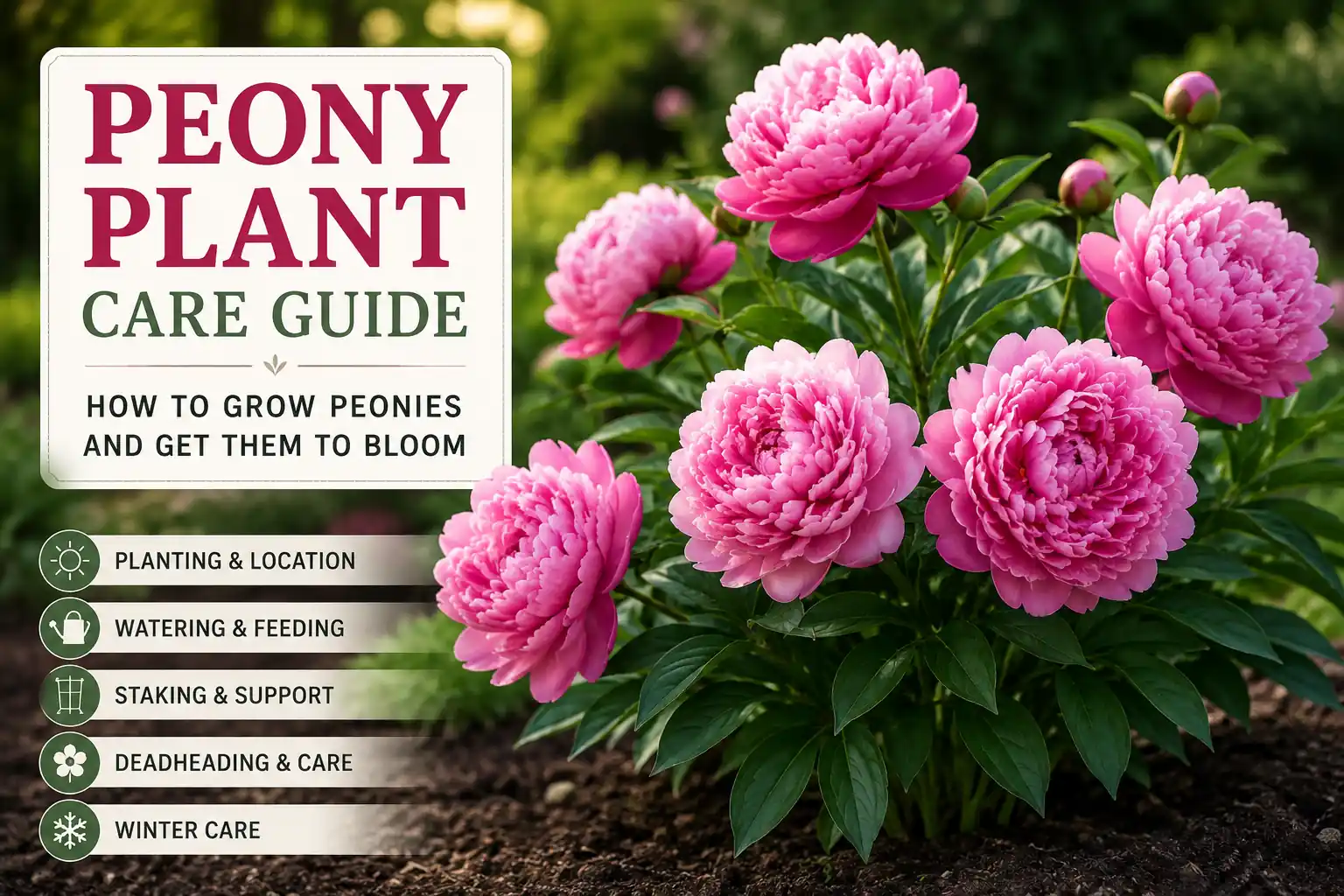
Inside the Blog
I planted three Flowering Peony Plants in my first proper garden and was told they would take two or three years to establish before producing flowers. I planted them, mostly forgot about them through the summer and autumn, and waited. The following spring they each produced a single, modest bloom. The year after that they were covered. By year four those same plants were so full that I had to add stakes to stop the heavy flower heads drooping after rain. Nothing I did changed between years two and four. Peony care mostly requires you to plant them correctly, leave them alone, and wait.
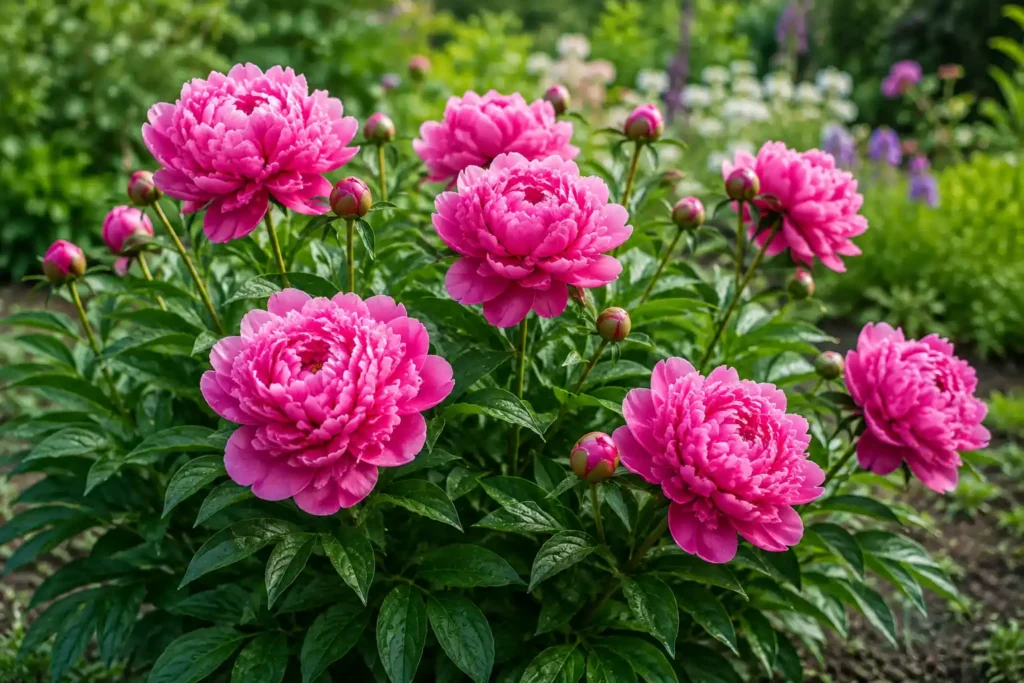
Peony Plants are herbaceous perennials native to Asia, Europe, and North America. They die back completely to the ground in autumn and re-emerge in spring, and a well-planted peony in the right location can live for fifty years or more, which is not something many garden plants can claim. The old saying about planting peonies for your grandchildren is rooted in genuine fact. These are not temporary plants.
How to Care a Peony Plant for the Best Blooms
Planting depth is where most peony failures begin. The eyes, the small pink or red buds on the root crown from which growth emerges, must be planted no more than one to two inches below the soil surface. In warm climates, planting at soil level or even slightly above on a mound of well-draining soil gives better results.
Plant too deep and peonies simply will not flower, sometimes for years, without any other sign that something is wrong. The foliage emerges, the plant looks healthy, but no blooms come. If your peony has been in the ground for three or more years and has never flowered, planting depth is the first thing to check. Dig carefully around the crown in autumn and check where the eyes sit. Replanting at the correct depth in early autumn often produces flowers the following spring.
Where to Plant Peonies: Sun, Soil, and Drainage
Peonies need at least six hours of direct sun to flower well. More is better. They also need good air circulation around the foliage, since poor airflow combined with wet leaves encourages the fungal disease botrytis, which causes browning of buds and blackening of stems in wet spring weather.
Plant them away from the root competition of large trees and shrubs, since peonies have a significant root system that performs poorly when crowded. Good drainage is important too. Peonies tolerate a wide range of soils but will not survive in soil that stays waterlogged through winter. Our guide on how to improve clay soil covers the preparation work worth doing if your soil is heavy before planting.
Do Peonies Need Cold Winters to Bloom?
Peonies require a period of cold dormancy to flower. This chilling requirement means they do not perform well in the warmest parts of the US, particularly south Florida, coastal California, and similar climates where winters are consistently mild. Zone 3 through zone 8 is the reliable range for most herbaceous peony varieties, which covers the majority of the country.
For zone 5 gardeners, peonies are among the best perennial investments you can make. Our best plants for zone 5 gardens guide covers peonies alongside other reliably cold-hardy perennials that perform beautifully in climates with genuine winter cold.
How Often to Water Peony Plant?
Newly planted peonies need regular watering in their first growing season while roots establish. After that, peonies are surprisingly drought tolerant and established plants rarely need supplemental watering except during extended dry spells in summer.
Overwatering, or soil that stays wet, is more harmful than underwatering for established peonies. The roots are thick and fleshy and susceptible to rot in consistently wet conditions. A single deep watering during dry periods is far better than frequent light watering that keeps the soil surface perpetually damp.
How and When to Fertilize Peonies
A single application of a low-nitrogen granular fertiliser in early spring, as the new red shoots emerge, is all established peonies need in most garden soils. High-nitrogen fertilisers produce lush leafy growth at the expense of flowers, so avoiding lawn fertilisers and high-nitrogen blends near peony roots is worth the effort.
In very poor soils, a second light application after flowering is finished helps the plant put energy into root development for the following year. Healthy, well-established peonies in good soil often need no fertilising at all beyond what organic matter in the soil provides naturally.
How to Stake Peonies and Keep Flowers Upright
The large double flowers of most garden peonies are heavy, particularly after rain, and the stems bend and eventually break under the weight if not supported. Wire hoop supports placed around the plant early in spring, before the stems reach their full height, let the plant grow up through the support naturally and hold it upright without looking staked.
Putting supports in after the plant is already tall and falling over is much less effective, since stems that have already bent rarely straighten fully. This is one of those tasks that is easy to keep postponing until the plant is already on the ground, then frustrating to deal with.
How to Deadhead Peonies and Prepare Them for Winter
Remove spent flowers cleanly after they fade to keep the plant looking tidy and prevent seed formation, which diverts energy from root development. Leave the foliage in place through summer and autumn since the leaves continue producing energy for the roots until the first frost.
After frost kills the foliage back, cut stems down to ground level and compost the leaves away from the plant. This is particularly important if you have had any disease issues during the season, since cleaning up foliage removes the spores that would otherwise overwinter in the garden.
Peonies as Companion Plants in the Garden
Peony Plants work well as companions to dahlias in a cutting garden or mixed border, since they bloom in late spring and early summer when dahlias are still developing, giving you a sequence of flowers through the growing season. Our guide on when to plant dahlia bulbs covers the timing for getting dahlias established alongside spring-flowering perennials like peonies.
Plant at the right depth, give them sun and drainage, and then leave them alone to establish. That is the heart of peony care. Everything else falls into place from there.
Frequently Asked Questions About Peony Care
Why is my peony not blooming?
The most common reasons are planting too deep, insufficient sun, being a young plant not yet established, or growing in a climate too warm for reliable winter chilling. Check the planting depth first since this is the cause most people overlook. Eyes should be no more than one to two inches below the soil surface.
Do peonies come back every year?
Yes. Peonies are long-lived herbaceous perennials that die back to ground level in autumn and re-emerge each spring. A well-planted peony in a good location can continue growing and blooming for decades with minimal care.
How do I stake peonies?
Wire ring supports or grow-through supports placed around the plant in early spring are the most effective method. The plant grows up through the support and the stems are held upright without looking artificially staked. Place supports early, before the plant reaches its full height.
Should I deadhead peonies after flowering?
Yes. Removing spent flowers prevents seed formation and keeps the plant looking tidy through summer. However, leave all the foliage in place until it is killed by autumn frost, since the leaves continue producing energy for the roots throughout the growing season.
Can peonies grow in containers?
Peonies can be grown in large containers but they require significantly more maintenance than in the ground, including regular watering and protection from both summer heat and winter freezing, since roots in containers are more exposed than in the ground. Most gardeners find that peonies perform best long term in the garden.
What is eating my peony buds in spring?
Ant activity on peony buds is very common and not harmful. Ants are attracted to the nectar the buds produce and do not damage the flowers. They do not need to be treated or removed. If buds are turning brown and failing to open, botrytis blight from wet weather and poor air circulation is the more likely cause.
Have questions about your peonies? Drop them in the comments below. I read every one and love talking about this stuff.