My peace lily told me it was thirsty before I ever learned the phrase “peace lily care.” I came home from work one evening and found it dramatically drooping, every leaf hanging low like it was exhausted, which it genuinely was. I watered it, went to bed slightly worried, and came down the next morning to find it standing completely upright again with no visible damage. That recovery was the first time I really understood that some plants communicate directly with you if you pay attention. The peace lily is one of them.
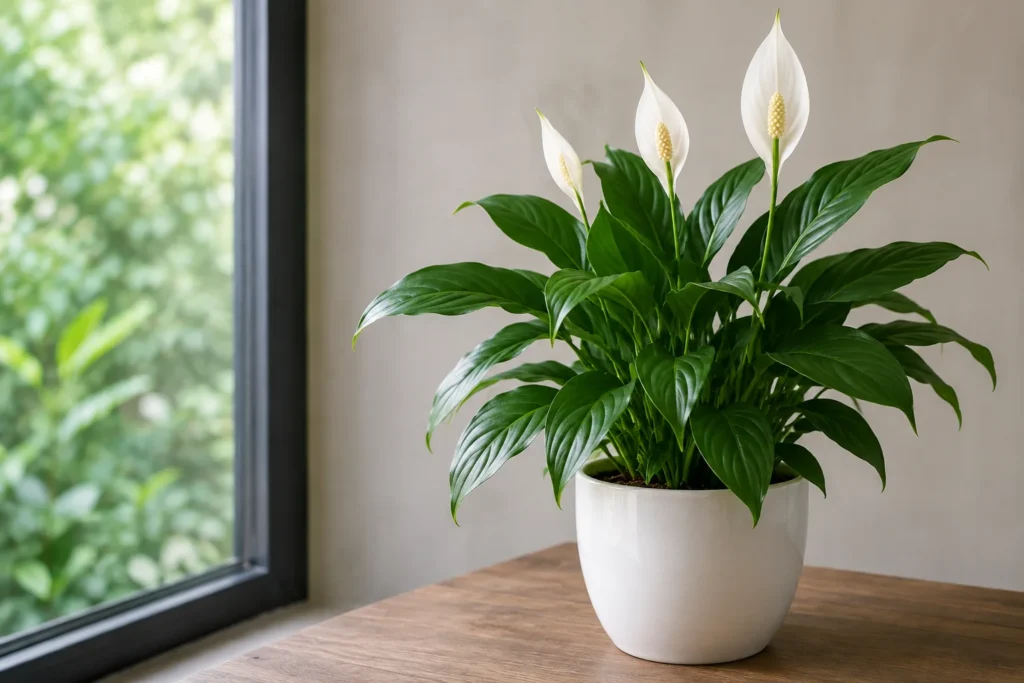
Spathiphyllum, commonly sold under the name peace lily, is one of the most widely kept houseplants in the US for good reason. It tolerates lower light than most flowering plants, it tells you visibly when it needs water, it produces flowers without requiring any special treatment, and it is genuinely forgiving of occasional mistakes. It is not indestructible, particularly when it comes to overwatering, but it is more honest about its needs than most.
How Much Light Does a Peace Lily Need?
Peace lilies are among the most light-tolerant flowering houseplants you can keep. They grow well in medium to low indirect light, which makes them useful in rooms that are too dim for most other plants. A spot several feet from a bright window, or in a room with good ambient daylight but no direct sun, works well.
Direct sun is the one thing to avoid. The large, thin leaves scorch quickly in direct sunlight, developing brown patches that do not recover. If your peace lily is near a window and the leaves are developing brown patches, moving it back from the glass a foot or two usually solves it. The plant will flower with less light than you might expect, though more light, as long as it remains indirect, does produce more blooms.
How to Water a Peace Lily
The famous drooping behaviour is genuinely useful. Peace lilies wilt visibly when they need water and recover quickly after a thorough drink, which gives you a reliable built-in indicator. That said, consistently letting the plant droop before watering does put it under stress, so the goal is to water before the drooping happens rather than in response to it.
Check the soil every few days. Water thoroughly when the top inch feels dry, letting water drain completely from the bottom of the pot. Peace lilies prefer consistently moist but never waterlogged soil. Sitting in water, even for a short time, leads to root rot that can kill the plant without obvious above-ground symptoms until the damage is advanced. Empty the saucer after watering and do not let the pot sit in standing water.
Peace lilies are also sensitive to fluoride and chlorine in tap water, which causes brown leaf tips over time. Leaving tap water out overnight before using it, or switching to filtered water, usually resolves persistent brown tipping that does not respond to any other adjustment.
Peace Lily Humidity and Temperature Requirements
Peace lilies prefer temperatures between 65 and 85°F (18 to 29°C) and do not tolerate cold drafts, air conditioning vents blowing directly on them, or positions near exterior doors in winter. A sudden temperature drop causes leaf yellowing and drop surprisingly quickly in peace lilies, more so than in many other common houseplants.
Average household humidity is acceptable for peace lilies in most homes, but they do appreciate a little extra moisture in the air, particularly during winter when central heating dries things out. A pebble tray with water beneath the pot helps modestly. If you already run a humidifier for other plants, placing the peace lily nearby improves its overall health and flowering. Our guide on choosing a humidifier for plants covers what actually makes a difference.
How to Get a Peace Lily to Bloom Again
A peace lily that has stopped flowering is usually dealing with one of two things: insufficient light or being rootbound. Peace lilies flower most reliably in medium to bright indirect light. Plants in lower light survive and look healthy but produce fewer or no flowers.
If light is adequate and the plant still is not flowering, check the roots. A rootbound peace lily often stops blooming, and repotting into fresh soil one pot size up frequently triggers new flowering within a few months. After repotting, a monthly dose of a balanced liquid fertiliser through the growing season helps too. Our repotting guide covers the process from start to finish.
Peace Lily Soil and Repotting Guide
A standard well-draining indoor potting mix works well for peace lilies. They do not need anything specialised, but the mix should not be so dense that it stays waterlogged after watering. Adding a small amount of perlite to a standard mix helps if drainage feels slow.
Repot every one to two years or when the plant is clearly rootbound. Peace lilies have a fairly vigorous root system and can fill a pot faster than many other common houseplants. The best time to repot is in spring before the main growing season begins.
Are Peace Lilies Toxic to Cats ad Dogs?
Peace lilies contain calcium oxalate crystals and are toxic to cats and dogs if ingested, causing mouth irritation, drooling, and stomach upset. This is covered in detail in our post on whether peace lilies are toxic to cats, which explains specifically what happens and how serious the risk is. Keep peace lilies out of reach of pets, or consider a pet-safe alternative if your animals are persistent leaf-chewers.
Common Peace Lily Problems and How to Fix Them?
Brown leaf tips are almost always caused by fluoride in tap water, low humidity, or inconsistent watering. Switching to filtered water and slightly increasing watering consistency usually resolves it within a couple of months as new leaves grow in cleaner.
Yellow leaves point to overwatering or too much direct light in most cases. Check both before adjusting anything else. Drooping that does not recover after watering, particularly combined with soft or dark roots, points to root rot and the plant needs to come out of its pot for inspection.
Peace Lily Care Tips for Healthy Growth and Blooms
Peace lilies are genuinely rewarding to grow because they communicate their needs clearly and respond visibly to good care. Once you find the right watering rhythm and a spot with decent indirect light, they produce flowers regularly and hold their glossy foliage year round. They sit naturally alongside other medium-light indoor plants, and if you are building out a collection, our best indoor plants for beginners guide covers companions that share similar care needs.
Keep the soil consistently moist without letting it sit in water, find them a bright indirect light spot, and check in on them every few days. That is the heart of peace lily care. Everything else falls into place from there.
Peace Lily Care FAQs
How often should I water a peace lily?
Check the soil every two to three days and water when the top inch feels dry. In most homes that works out to roughly once a week, though it varies with pot size, soil type, and season. Peace lilies prefer consistent moisture and are more forgiving of slightly too dry than of consistently waterlogged conditions.
Why is my peace lily drooping even after watering?
If the plant droops and does not recover within a few hours of thorough watering, the cause is likely root rot rather than thirst. Check the roots by gently removing the plant from its pot. Healthy roots are white or tan and firm. Brown, mushy roots mean rot is present and the plant needs to be repotted into fresh dry soil with damaged roots trimmed away.
Why does my peace lily have brown tips on the leaves?
Brown tips are almost always caused by fluoride or chlorine sensitivity from tap water, low humidity, or inconsistent watering. Try leaving tap water out overnight before using it, or switch to filtered water. If the problem persists, check humidity levels in the room and consider whether your watering has been inconsistent.
How do I get my peace lily to flower?
Increase light levels if the plant is in a dim spot, since flowering requires more light energy than simply maintaining foliage. If light is already reasonable, check whether the plant is rootbound, since a severely cramped root system often suppresses flowering. Repotting into fresh soil and a monthly balanced fertiliser during the growing season usually triggers new blooms within a few months.
Can peace lilies grow in water alone?
Peace lilies can survive growing with their roots in water rather than soil, a method called hydroponics or semi-hydroponics. The roots adapt to fully aquatic conditions over time. Change the water weekly to prevent stagnation and ensure the crown of the plant sits above the water line to avoid rot.
Are peace lilies safe around children?
Peace lilies are mildly toxic if eaten. Ingestion causes mouth irritation, swelling, and stomach upset in both children and adults. The reaction is unpleasant but rarely serious in small amounts. Keep the plant out of reach of young children who might chew on leaves.
Have questions about your peace lily? Drop them in the comments below. I read every one and love talking about this stuff.