Inside the Blog
Pitcher plants were the first plant I ever bought that made me genuinely nervous about caring for it. I had kept houseplants for years at that point and understood the basics well enough, but everything I already knew seemed to be exactly wrong for carnivorous plants. Fertilise with potting mix? No. Water with tap water? No. Let it dry out between waterings? Absolutely not. I bought a Nepenthes from a specialist nursery, read the care card three times, and placed it on a bright windowsill with a saucer of distilled water underneath it. It thrived. That experience taught me that pitcher plants are not actually difficult to grow. They just operate on completely different rules from every other plant.
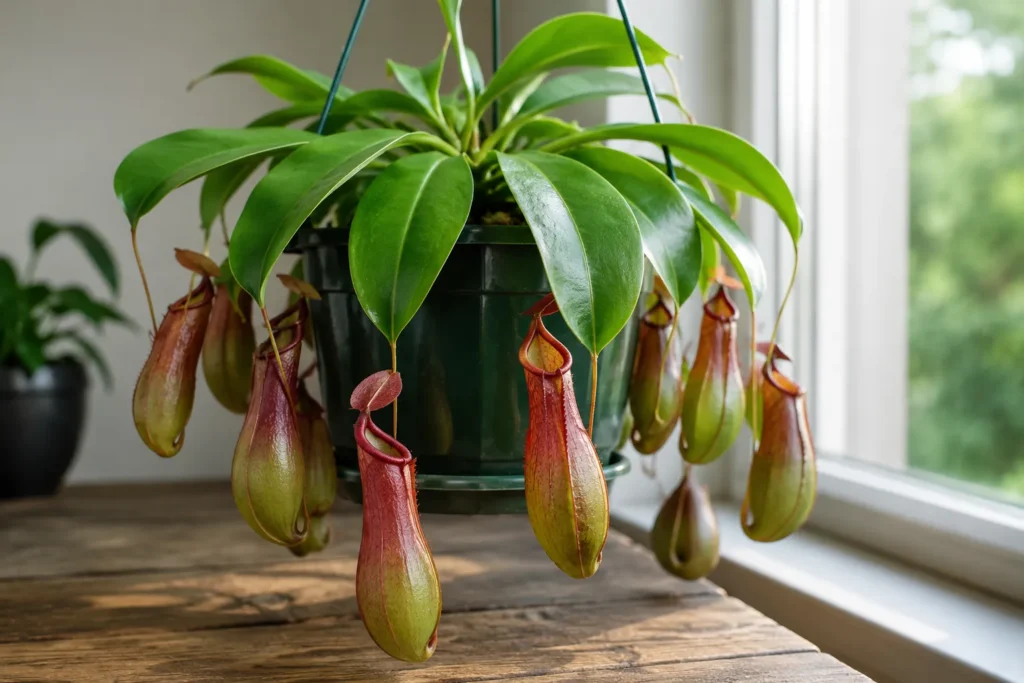
Pitcher plants are carnivorous plants that evolved to capture and digest insects as a way of obtaining nutrients in the nutrient-poor, boggy environments where they naturally grow. The modified leaves that form the pitchers fill with a digestive fluid and trap insects that fall in. Understanding this origins helps explain why conventional houseplant care, particularly anything involving fertiliser or regular potting soil, causes rapid decline in pitcher plants rather than helping them.
Types of Pitcher Plants: Nepenthes vs Sarracenia
Nepenthes, the tropical pitcher plant, is the most widely sold type in the US and the most practical for indoor growing. It produces hanging pitchers from the ends of elongated leaves and does well in bright indoor conditions without requiring the extreme cold dormancy that some other carnivorous plants need. Most Nepenthes sold in garden centres are highland or lowland varieties that tolerate normal indoor temperatures.
Sarracenia, the North American pitcher plant, is a very different plant with upright tubular pitchers and specific needs that include a cold winter dormancy period of several months. Sarracenia is best grown outdoors in bog gardens in most US climates, where it performs well in zones 3 through 9, or in an unheated greenhouse that can provide the cold dormancy it requires. It is not a practical indoor year-round plant in the same way Nepenthes is.
This guide focuses primarily on Nepenthes since it is the most common choice for indoor growing.
How Much Light Does a Pitcher Plant Need Indoors?
Nepenthes needs bright light but generally does better without direct intense sun, particularly through unfiltered afternoon windows. Bright indirect light or a few hours of gentle morning sun produces the best pitcher development and the strongest colouring on the pitchers themselves.
In lower light, the plant survives but pitcher production slows or stops and the existing pitchers may shrink in size over successive generations of growth. If your Nepenthes is growing leaves but not developing pitchers on the ends, insufficient light is one of the first things to check. A grow light supplement during winter months helps significantly in darker homes. Our post on grow lamps and plant lighting covers what specifications actually matter.
How to Water Pitcher Plants: Best Water and Watering Methods
This is the most critical rule in pitcher plant care, and breaking it is the most common reason they decline. Never use tap water. Tap water contains minerals, fluoride, and chloride that accumulate in the plant’s tissues and cause gradual but irreversible damage. Pitcher plants evolved in mineral-free environments and have no tolerance for the dissolved solids in most municipal water supplies.
Use only distilled water, reverse osmosis water, or collected rainwater. In most US cities, buying distilled water by the gallon from a grocery store is the simplest solution. Keep the soil consistently moist by sitting the pot in a shallow tray of distilled water, allowing the plant to absorb water from below. The tray method works well for most Nepenthes and removes the need to judge watering frequency by feel.
Do not let the tray run completely dry. Pitcher plants come from boggy environments and do not tolerate drying out the way succulents and most houseplants do.
Best Soil for Pitcher Plants: Choosing the Right Carnivorous Plant Mix
Standard potting mix is too nutrient-rich for pitcher plants and will damage or kill them. The roots of carnivorous plants evolved in nutrient-stripped conditions and are not adapted to handle the fertiliser and organic matter present in normal potting soil. Use a specialised carnivorous plant mix or make your own by combining pure sphagnum moss with perlite or horticultural sand in roughly equal parts.
No fertiliser. None. Ever. The pitchers are the feeding mechanism, and the plant gets all the nutrients it needs from the insects it captures. Adding fertiliser through the soil overwhelms roots that have no capacity to handle it and causes rapid decline.
Pitcher Plant Temeperature and Humidity Requirements
Nepenthes prefers temperatures between 60 and 85°F (15 to 29°C) depending on whether the variety is a highland or lowland type. Lowland varieties prefer warmer conditions year round. Highland varieties do better with a temperature drop of around 10 to 15°F at night, which many homes naturally provide.
Humidity is where most indoor environments fall short for Nepenthes. They prefer 50 to 70 percent relative humidity, which is higher than most heated homes provide in winter. Grouping with other humidity-loving plants helps marginally, and a terrarium setup for smaller varieties provides the consistent humidity they prefer. A small humidifier is worth considering if you are serious about growing these plants long term. Our guide on choosing a plant humidifier covers the options that work for a small plant grouping.
How to Feed a Pitcher Plant: Do Pitcher Plants Need Insects?
Pitcher plants are quite capable of catching their own food if kept near a window that occasionally admits flying insects. Feeding is not required but can accelerate growth if the plant is in a very clean indoor environment with no insect access.
If you choose to feed, drop small live or freshly killed insects into the pitchers. Do not use meat, cheese, or dead insects that have dried out. Do not overfeed. One or two small insects per active pitcher per month is plenty. Overfeeding can cause a pitcher to rot from the inside before it has finished digesting. The plant manages its own pace and does not need encouragement to be more aggressive.
Why is My Pitcher Plant Turning Brown? Causes and Solutions
Individual pitchers have a natural lifespan. After several months, a pitcher will brown, dry, and die back while the plant produces new ones. This is completely normal and not a sign of a problem. Simply trim the dead pitcher back to the leaf and allow the plant to replace it naturally.
Pitchers that brown very quickly, within weeks of forming, usually point to low humidity, inconsistent water supply, or accidental use of tap water. Check the water source and humidity situation before any other adjustment.
Pitcher Plant Care FAQs
Can pitcher plants survive without insects?
Yes. Pitcher plants grow and survive in clean indoor environments without catching insects. Growth will be somewhat slower without supplemental feeding, but the plants sustain themselves through photosynthesis. The carnivorous feeding supplements nutrient uptake in low-nutrient environments rather than being the plant’s sole source of energy.
Why is my pitcher plant not producing pitchers?
Insufficient light and low humidity are the two most common reasons. Pitchers require the plant to be in reasonably active growth with adequate light and humidity to develop fully. Without both, leaves may grow normally but the tendril at the tip that develops into a pitcher does not complete its growth.
Can I use tap water on my pitcher plant if I let it sit overnight?
No. Leaving tap water overnight allows some chlorine to evaporate but does not remove the dissolved minerals and fluoride that damage pitcher plants. Distilled or reverse osmosis water is the only safe option. Rainwater collected in a clean container is also suitable.
What do I do with a pitcher plant in winter?
For most Nepenthes varieties sold as houseplants, continue care as normal through winter with attention to maintaining warmth and humidity as indoor heating dries the air. Reduce watering slightly if growth slows. Sarracenia species, grown outdoors, should be allowed to experience natural winter cold and go dormant naturally.
How do I know if my pitcher plant is healthy?
A healthy pitcher plant produces pitchers that fill with fluid, are firm and upright, and have the characteristic colour markings of the variety. New leaves develop regularly and the pitchers on new leaves are equal in size or larger than previous ones. Pitchers that are empty of fluid, wilted, or progressively smaller indicate a problem with water quality, light, or humidity.
Have questions about your pitcher plant or other carnivorous plants? Drop them in the comments below. I read every one and love talking about this stuff.