Inside the Blog
I almost gave up on hoyas. I had a hoya carnosa for nearly two years and it grew steadily, produced long trailing vines with those distinctive thick waxy leaves, and resolutely refused to flower. I read everything I could find, tried adjusting light, tried fertilising differently, tried doing nothing at all. Nothing worked. Then I moved it to a smaller pot because the old one cracked, and four months later it bloomed for the first time. Clusters of small, perfectly formed star-shaped flowers with a scent I was not prepared for at all. Turns out being slightly rootbound was the missing piece in my hoya plant care routine, and nobody had told me that.
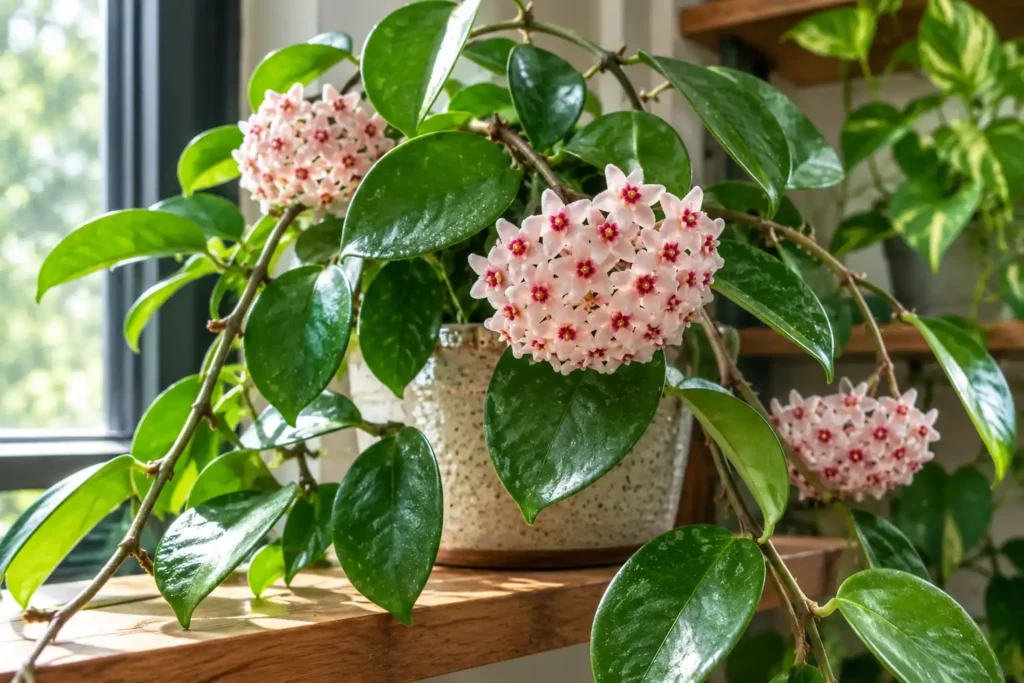
Hoya is a large genus of tropical plants native to Asia and Australia, grown primarily for their attractive waxy foliage and, when conditions are right, their extraordinary flowers. The flowers come in clusters called umbels and many varieties are fragrant, particularly in the evening. Hoya carnosa is the most widely available, but Hoya kerrii, Hoya pubicalyx, and a growing number of collector varieties have all become much easier to find in recent years as the plant’s popularity in the US has grown significantly.
How Much Light Does a Hoya Plant Need?
Hoyas need more light than the average tropical houseplant to grow well and flower. Bright indirect light is the goal, with a couple of hours of gentle direct sun from an east-facing window being genuinely beneficial rather than harmful. South or west-facing windowsills with some filtering work well for most varieties.
In lower light, hoyas survive but grow slowly and rarely flower. If your hoya has been sitting in a dim spot and looking healthy but producing no blooms despite being mature, moving it to a brighter location is almost always the first thing worth trying. The difference between a hoya that flowers and one that does not often comes down entirely to light.
How Often to Water a Hoya Plant
Hoya plants have semi-succulent leaves that store water, which means they need less frequent watering than most other tropical houseplants. Let the top half of the soil dry out before watering, then water thoroughly and let it drain completely. In summer I water mine roughly every ten days to two weeks. In winter I stretch that to three weeks or more.
Overwatering is the most common way hoyas decline, and the damage is often slow and invisible until root rot is already significant. A hoya that is losing leaves from the base of the vines, or producing yellowing leaves despite adequate light, is usually dealing with too much water rather than too little. Our post on yellow leaves on houseplants covers how to read those symptoms and trace them back to the right cause.
How to Get a Hoya Plant to Flower
This is the piece of hoya plant care that most people miss. Hoyas bloom most reliably when slightly rootbound. Giving them too large a pot produces lush vine growth at the expense of flowers, since the plant prioritises root expansion when there is room for it. A pot that fits the root ball with just an inch or two to spare produces the stress response that triggers flowering.
When you do repot, move up one pot size only. If a hoya is mature, has been in its current pot for a year or two, and is not flowering despite good light and consistent care, try leaving it in the same pot rather than sizing up. You may find blooms appear within a season of that decision.
Best Temperature and Humidity for Hoya Plants
Hoyas prefer temperatures between 60 and 80°F (15 to 27°C). Most varieties are not cold hardy and do not tolerate temperatures below 50°F (10°C) for any extended time. They handle average indoor humidity reasonably well, better than calatheas or ferns, though a little extra humidity during winter improves their appearance.
Keep them away from cold drafts near windows in winter and from air conditioning vents that might drop the local temperature suddenly. Consistent warmth matters more than any specific humidity level for most common hoya varieties.
Should You Remove Old Hoya Flower Stalks?
This is one of the most important and least-known aspects of hoya care. After a cluster of flowers fades, the small spur or peduncle it grew from remains on the vine. Do not cut this off. New flower clusters grow from the same spur each year, and removing it forces the plant to grow an entirely new one, which delays flowering significantly. Many experienced hoya growers have learned this lesson the hard way.
Best Soil Mix for Hoya Plants
A chunky, well-draining mix works best for hoyas. A blend of standard potting mix with perlite and orchid bark gives the roots the drainage and air circulation they need. Dense, moisture-retaining mixes cause the root rot that is the main killer of hoyas kept indoors. The mix should feel loose and airy rather than heavy and compacted.
For more on how soil choice affects plant health, our biochar for houseplants post covers how soil amendments can improve drainage and aeration for plants like hoyas that are sensitive to wet conditions.
How to Propagate Hoya Plants From Cuttings
Hoyas root readily from stem cuttings placed in water or moist mix. Take a cutting with at least two nodes, remove the lower leaves, and place in water in a bright spot. Roots typically appear within two to four weeks for most common varieties. Once roots are an inch or two long, pot up into the appropriate mix and treat as a mature plant.
How Long Does It Take a Hoya Plant to Bloom?
Hoyas are not fast-moving plants, and flowering requires a mature plant in the right conditions. A newly purchased hoya may take a year or two before producing its first blooms. That wait is worth it. The flowers are genuinely one of the most rewarding things a houseplant can produce, and once a hoya begins to flower it typically does so more reliably each subsequent year.
If you enjoy plants that reward patience and careful observation, hoyas fit naturally alongside the kind of long-term plant collection described in our best indoor plants for beginners guide. Pair them with lower-maintenance companions while the hoya matures.
Bright light, restrained watering, slightly snug pot, and patience with the flower stalks. That is the heart of hoya plant care. Everything else falls into place from there.
Frequently Asked Questions About Hoya Plant Care
Why is my hoya not flowering?
The most common reasons are insufficient light, a pot that is too large, or the plant being too young. Hoyas need bright indirect light and actually flower more reliably when slightly rootbound. If the plant is mature and has been in good light without flowering, try leaving it in its current pot rather than repotting and see whether blooms appear within the next growing season.
How often should I water a hoya plant?
Let the top half of the soil dry out between waterings, which works out to roughly every ten to fourteen days in summer and every two to three weeks in winter. Check the soil rather than following a fixed schedule, since watering needs vary with pot size, soil type, and season.
Can I cut off the old flower stalks on a hoya?
No. The small spurs that flowers grow from are used again each subsequent year for new flower clusters. Cutting them off forces the plant to grow new ones, which delays flowering significantly. Leave spent flower stalks in place even after the flowers have dropped.
Why are my hoya leaves turning yellow?
Yellowing leaves on a hoya usually point to overwatering. Check whether the soil is staying consistently damp between waterings and extend the drying period before you water again. Less commonly, very low light or a cold draft can cause yellowing.
Is hoya plant toxic to cats and dogs?
Hoyas are generally considered non-toxic to cats and dogs, which makes them a safer choice for households with pets compared to many other popular tropical houseplants.
What is the white sticky substance on my hoya flowers?
The white or clear droplets on hoya flowers are nectar, produced naturally as part of the plant’s flowering process. It is harmless and is actually a sign that the plant is healthy and actively flowering. The nectar can drip onto surfaces below the plant, so placing a small tray underneath during the flowering period is worth considering.
Have questions about your hoya or getting it to finally bloom? Drop them in the comments below. I read every one and love talking about this stuff.