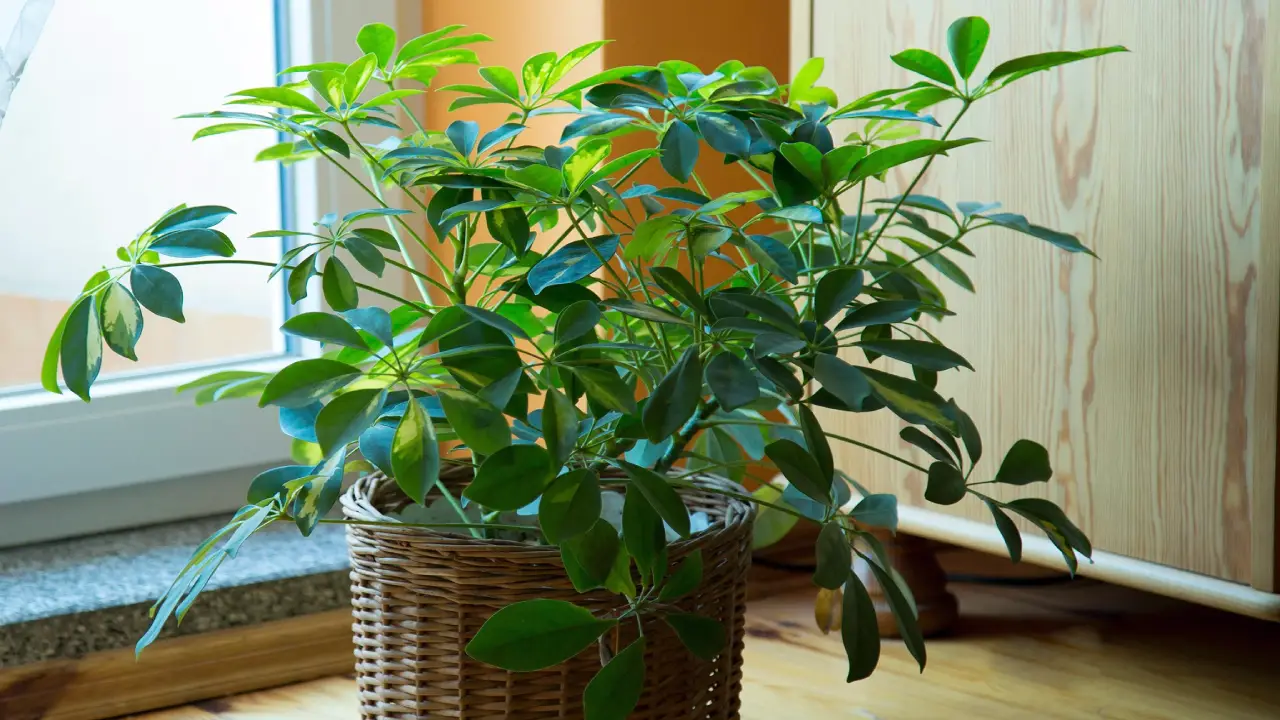
Quick Facts About Amazing Arboricola Plant
| Feature | Details |
|---|---|
| Botanical name | Schefflera arboricola |
| Common names | Amazing Arboricola Plant, dwarf umbrella plant, dwarf umbrella tree |
| Family | Araliaceae |
| Plant type | Evergreen tropical shrub |
| Mature height | 4–8 ft indoors, 10–15 ft outdoors |
| Sun exposure | Bright indirect sunlight |
| Water requirements | Moderate; allow partial drying between watering |
| Soil type | Well-draining potting mix |
| Toxicity | Toxic to cats and dogs |
| Native region | Taiwan and Hainan |
What Is the Amazing Arboricola Plant?
The Amazing Arboricola Plant is a compact tropical houseplant known botanically as Schefflera arboricola. It belongs to the Araliaceae family and is closely related to larger umbrella trees.
The plant develops glossy leaf clusters arranged like umbrella spokes. Its adaptability to indoor environments makes it one of the most reliable foliage plants for homes and offices.
Schefflera arboricola tolerates moderate neglect better than many tropical plants. It performs well in containers, low-maintenance interiors, and bright indoor corners.
Appearance and Growth Habit
Arboricola plants develop woody stems with dense leaf growth. Mature leaves usually contain 7–9 oval leaflets radiating from a central point.
Key growth characteristics:
- Upright branching structure
- Glossy green or variegated foliage
- Moderate indoor growth rate
- Compact canopy suitable for pruning
- Flexible adaptation to bonsai shaping
Indoor plants commonly reach 4–6 feet tall with regular pruning. Outdoors in warm climates, the plant becomes a dense shrub.
Types of Arboricola Plants
Green Arboricola
Green varieties have solid deep-green leaves with faster growth and better low-light tolerance.
Popular cultivars include:
- ‘Compacta’
- ‘Green Gold’
- Standard green dwarf umbrella plant
These varieties generally require less light than variegated forms.
Variegated Arboricola
The variegated arboricola plant has cream, yellow, or white markings on the leaves.
Common varieties include:
- ‘Trinette’
- ‘Gold Capella’
- ‘Janine’
Variegated forms need brighter indirect sunlight to maintain leaf coloration.
Compact Dwarf Varieties
Compact cultivars remain smaller and bushier, making them suitable for desks, shelves, and apartments.
These plants respond well to aggressive pruning and bonsai training.
Ideal Growing Conditions
Sunlight Requirements
Schefflera arboricola grows best in bright indirect sunlight.
Direct afternoon sun can scorch leaves, especially variegated varieties. Low light slows growth and causes stretched stems.
Ideal lighting conditions:
- East-facing windows
- Filtered south exposure
- Bright office lighting
- Sheer-curtain filtered sunlight
The plant tolerates medium indoor light but grows denser in brighter conditions.
Watering Needs
Arboricola watering needs depend on temperature, light, and container size.
Water thoroughly when the top 1–2 inches of soil feel dry. Never keep the soil constantly wet.
General watering schedule:
- Spring/summer: every 7–10 days
- Fall/winter: every 2–3 weeks
Overwatering is the primary cause of root rot.
Signs of overwatering:
- Yellow leaves
- Soft stems
- Mushy roots
- Soil odor
Signs of underwatering:
- Drooping foliage
- Dry leaf edges
- Leaf drop
Best Soil Mix
The best soil for arboricola plants drains quickly while retaining moderate moisture.
Recommended mix:
- 2 parts indoor potting mix
- 1 part perlite
- 1 part orchid bark or coarse sand
Containers must have drainage holes to prevent standing water.
Heavy soil increases fungal disease risk.
Temperature and Humidity
Ideal temperature range:
- 65–80°F (18–27°C)
Avoid:
- Cold drafts
- AC vents
- Temperatures below 55°F
Average indoor humidity is usually sufficient. Dry air may cause brown tips or spider mites.
To increase humidity:
- Use a humidity tray
- Group tropical plants together
- Use a humidifier during winter
How to Care for an Arboricola Plant Indoors
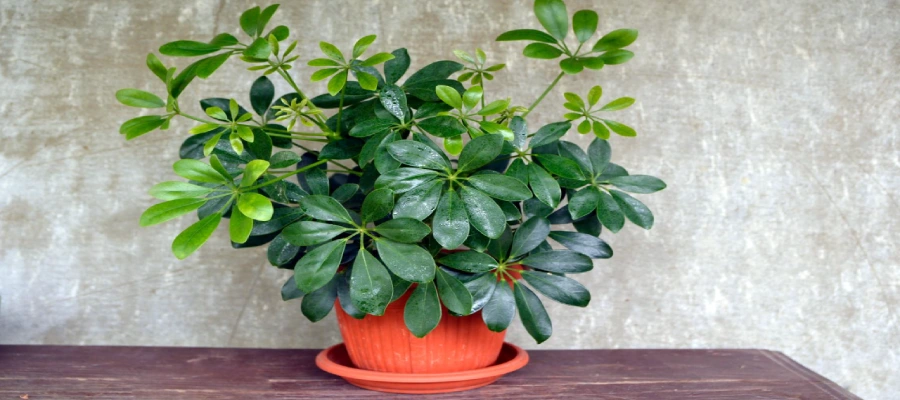
Indoor arboricola plant care focuses on light balance, controlled watering, and pruning.
Essential indoor care checklist:
- Rotate the plant every 2–3 weeks
- Wipe dust from leaves monthly
- Inspect undersides for pests
- Prune leggy stems regularly
- Empty drainage saucers after watering
Schefflera plant indoor care becomes difficult when plants receive insufficient light and excessive water simultaneously.
Outdoor Arboricola Plant Care
Arboricola grows outdoors in USDA zones 10–12.
Outdoor plants prefer:
- Partial sun
- Wind protection
- Well-draining soil
- Warm humid climates
In tropical landscapes, the plant functions as:
- Hedge shrub
- Patio specimen
- Foundation plant
- Tropical accent
Outdoor growth becomes significantly faster than indoor growth.
Best Fertilizer for Arboricola Plants
Use a balanced liquid fertilizer such as 10-10-10 or 20-20-20 during active growth.
Fertilizer schedule:
- Every 4–6 weeks in spring and summer
- Stop fertilizing during winter dormancy
Excess fertilizer causes:
- Salt buildup
- Brown leaf edges
- Weak elongated growth
Flush the soil occasionally to remove mineral accumulation.
How to Propagate Schefflera Arboricola
Arboricola propagation is easiest through stem cuttings.
Stem Cutting Method
- Cut a healthy 4–6 inch stem below a node.
- Remove lower leaves.
- Dip the cut end in rooting hormone.
- Place in moist potting mix.
- Keep warm with indirect sunlight.
Rooting usually occurs within 3–6 weeks.
Water Propagation
Stem cuttings root effectively in water.
Steps:
- Place nodes below water level
- Change water every few days
- Transfer to soil after roots reach 2 inches
Water propagation allows easy root monitoring but may produce weaker transition roots.
Soil Propagation
Soil propagation creates stronger root systems immediately.
Use:
- Sterile potting mix
- High humidity
- Warm temperatures
- Bright filtered light
Covering the cutting with a plastic bag improves humidity retention.
Common Arboricola Plant Problems
Yellow Leaves
Yellow leaves usually indicate overwatering or poor drainage.
Other causes:
- Low light
- Nutrient deficiency
- Root stress
Check soil moisture before watering again.
Dropping Leaves
Leaf drop often occurs after:
- Sudden temperature changes
- Relocation stress
- Underwatering
- Cold exposure
Environmental inconsistency is a major trigger.
Root Rot
Root rot is caused by waterlogged soil and fungal pathogens.
Symptoms include:
- Black mushy roots
- Persistent yellowing
- Stem softness
- Sour-smelling soil
Remove affected roots and repot into dry fresh soil immediately.
Leggy Growth
Leggy growth develops from insufficient light.
Solutions:
- Move closer to brighter windows
- Prune stretched stems
- Rotate the plant regularly
Bright indirect sunlight produces denser branching.
Brown Leaf Tips
Brown tips usually result from:
- Dry air
- Inconsistent watering
- Fertilizer salt buildup
Flush the soil and stabilize watering frequency.
Also Read: 5 Common Plant Care Mistakes Beginners Make
Common Pests and Diseases
Spider Mites
Spider mites thrive in dry indoor air.
Symptoms:
- Tiny webbing
- Speckled leaves
- Faded foliage
Neem oil and insecticidal soap are effective treatments.
Mealybugs
Mealybugs appear as white cotton-like clusters near stems and leaf joints.
Remove infestations using:
- Rubbing alcohol on cotton swabs
- Neem oil sprays
- Repeated inspections
Scale Insects
Scale insects attach to stems and feed on plant sap.
Heavy infestations weaken growth and cause leaf yellowing.
Manual removal combined with horticultural oil works best.
Fungal Issues
Fungal diseases develop in overly wet conditions with poor airflow.
Common problems:
- Root rot
- Leaf spot
- Stem rot
Improve drainage and reduce watering frequency immediately.
Pruning and Maintenance Tips
Pruning controls height and encourages bushier growth.
Best pruning practices:
- Trim above leaf nodes
- Remove weak stems
- Sterilize pruning tools
- Prune during spring growth
Regular pruning improves airflow and reduces pest problems.
Dwarf umbrella tree care often requires shaping to maintain compact indoor form.
Repotting Guide
Repot arboricola plants every 2–3 years or when root-bound.
Signs repotting is needed:
- Roots emerging from drainage holes
- Fast soil drying
- Slowed growth
- Compact root mass
Choose a container only 1–2 inches wider than the current pot.
Oversized pots retain excessive moisture.
Is Arboricola Toxic to Cats and Dogs?
Yes. Schefflera arboricola is toxic to cats and dogs.
The plant contains insoluble calcium oxalate crystals that irritate the mouth and digestive system.
Possible symptoms:
- Drooling
- Vomiting
- Oral irritation
- Difficulty swallowing
Keep the plant away from pets and children.
Arboricola Plant Benefits
Arboricola plant benefits include visual appeal, adaptability, and indoor environmental improvement.
Key advantages:
- Tolerates indoor conditions well
- Adds tropical foliage texture
- Responds well to pruning
- Suitable for offices
- Helps trap indoor dust particles
Like many foliage plants, it contributes modestly to indoor air quality improvement.
Indoor Styling and Placement Ideas
Best placement locations:
- Bright living rooms
- Office corners
- Entryways
- Covered patios
- Minimalist interiors
Variegated varieties work well as focal plants because of their contrasting foliage.
Avoid placing the plant directly beside heaters or air conditioners.
Final Practical Takeaway
- Use bright indirect sunlight for dense healthy growth.
- Allow soil to partially dry between watering.
- Always use pots with drainage holes.
- Prevent root rot by avoiding soggy soil.
- Increase humidity if spider mites appear.
- Prune regularly to maintain compact shape.
- Repot only when roots become crowded.
- Keep arboricola away from pets due to toxicity.
- Inspect leaves frequently for mealybugs and scale insects.
- Use a fast-draining potting mix with perlite.
Frequently Asked Questions
How often should I water an arboricola plant?
Water when the top 1–2 inches of soil become dry. Most indoor plants need watering every 7–10 days during active growth.
Does arboricola need direct sunlight?
No. Schefflera arboricola grows best in bright indirect sunlight. Harsh afternoon sun can scorch leaves.
Why are my arboricola leaves turning yellow?
Yellow leaves usually indicate overwatering, poor drainage, or insufficient light. Check root moisture immediately.
Can arboricola grow outdoors?
Yes. Arboricola grows outdoors year-round in USDA zones 10–12 with warm temperatures and partial sun.
Is Schefflera arboricola toxic to pets?
Yes. The plant is toxic to cats and dogs because it contains calcium oxalate crystals.
How fast does arboricola grow?
Schefflera arboricola grows moderately fast indoors and can add 12–24 inches annually under ideal conditions.
Can arboricola survive low light?
Yes, but growth becomes slower and leggier. Bright indirect light produces healthier foliage and denser branching.