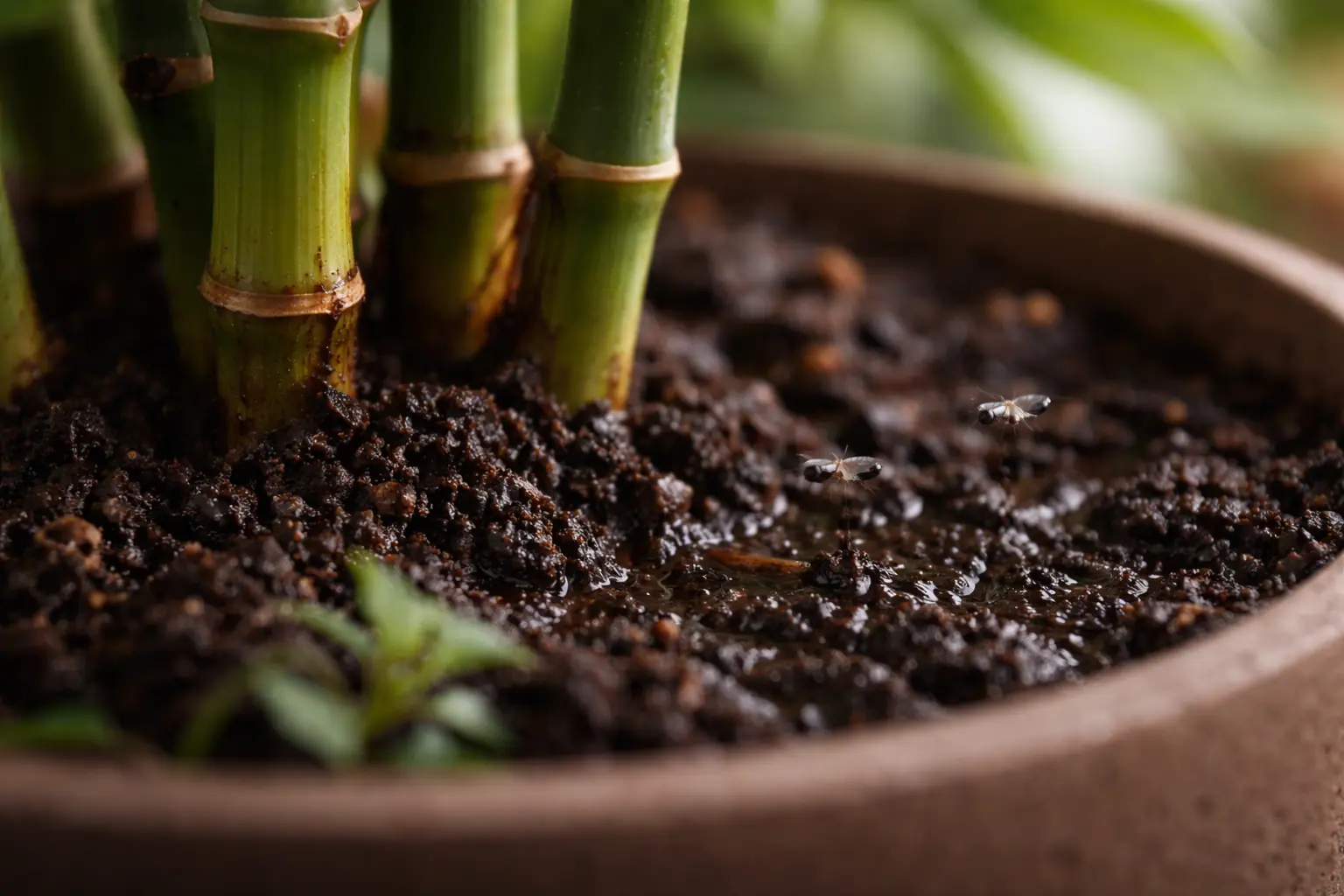
Lucky bamboo is the ultimate low-maintenance roommate. It adds a pop of vibrant green to your desk, thrives in low light, and supposedly brings good fortune to your home. It is also one of the best indoor plants for beginners because it requires very little attention while still making a space feel fresh and inviting. But nothing kills the Zen vibe faster than a cloud of tiny, dark insects swarming around your plant every time you move the pot.
If you are seeing small, fly-like bugs hovering near your bamboo, you are likely dealing with fungus gnats. While they might look like fruit flies, these pests are attracted to moisture rather than your fruit bowl. They are annoying, persistent, and can eventually harm your plant if left unchecked.
The good news is that you do not need to toss your lucky stalks in the trash. Getting rid of gnats in bamboo is straightforward once you understand why they are there.
Why Are Gnats Attracted to Your Bamboo?
Before you start the eviction process, it helps to know why these uninvited guests showed up. Fungus gnats love two things: moisture and decaying organic matter.
Lucky bamboo is unique because it can grow in either soil or directly in water with pebbles. Each environment offers a different appeal to gnats:
- Soil-Grown Bamboo: If your bamboo is in a pot with soil, gnats are drawn to the damp top layer. They lay their eggs in the moist dirt, where the larvae feed on organic material and, occasionally, the delicate root hairs of your plant.
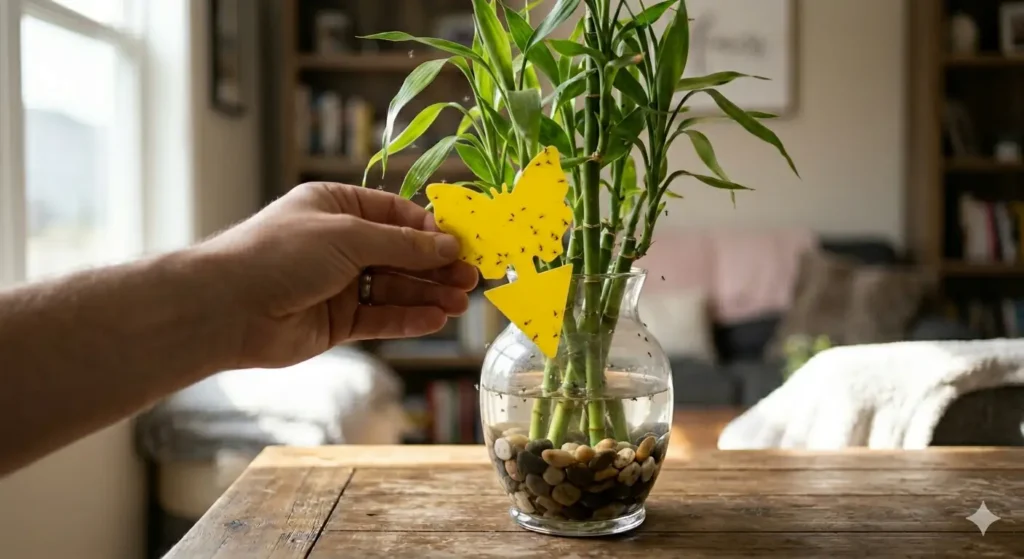
- Water-Grown Bamboo: In water setups, gnats are attracted to stagnant water or the “sludge” that can build up on the pebbles and roots over time. If the water is not changed frequently, it becomes a breeding ground for bacteria and algae, which gnats find irresistible.
Step 1: Deep Clean the Growing Environment
The first step to a bug-free plant is a fresh start. You need to remove the current breeding ground to stop the life cycle of the gnats.
For Bamboo in Water
If your bamboo lives in a vase of water, follow these steps:
- Remove the stalks: Gently take the bamboo out of the container.
- Rinse the roots: Use lukewarm tap water to gently wash away any slime or debris from the roots.
- Sterilize the container and pebbles: Wash the vase with mild dish soap and warm water. If you use pebbles, boil them for 10 minutes or soak them in a diluted bleach solution (one part bleach to ten parts water) to kill any hidden eggs. Rinse them thoroughly afterward.
- Refill with fresh water: Use distilled or filtered water if possible, as bamboo is sensitive to the chlorine found in many US city water supplies.
For Bamboo in Soil
If your bamboo is in a traditional pot, you should replace the top 2 inches of soil. This is where most of the eggs and larvae live. If the infestation is severe, you might want to repot the entire plant using a well-draining potting mix. Make sure the new pot has drainage holes so water does not sit at the bottom.
Step 2: Use Targeted Treatment Methods
Once the environment is clean, you need to catch the adults that are still flying around and kill any remaining larvae.
The Vinegar Trap
This is a classic DIY solution. Fill a small ramekin with apple cider vinegar and add two drops of liquid dish soap. Place it right next to the bamboo. The gnats are attracted to the fermented scent, but the soap breaks the surface tension of the liquid, causing them to sink.
Yellow Sticky Traps
Fungus gnats are naturally drawn to the color yellow. You can buy small, butterfly-shaped sticky traps at most garden centers or hardware stores in the US. Poke them into the soil or tape them to the side of the vase. This is the most effective way to monitor the population and stop adults from laying more eggs.
Hydrogen Peroxide Soak
To kill larvae in the soil without harming your bamboo, mix one part 3% hydrogen peroxide with four parts water. Water your plant with this solution. It fizzes upon contact with the larvae and eggs, killing them instantly. The peroxide then breaks down into oxygen and water, which actually gives the roots a little boost.
Step 3: Introduce Natural Predators (Beneficial Bacteria)
If you want a professional-grade solution that is safe for pets and kids, look for products containing Bacillus thuringiensis israelensis (Bti). You can find this in “Mosquito Bits” or “Mosquito Dunks” at local home improvement stores.
Simply soak the bits in water for about 30 minutes, strain them out, and use that “tea” to water your bamboo or fill your vase. This naturally occurring bacteria specifically targets the digestive systems of gnat larvae, stopping the infestation at the source without using harsh chemicals.
Step 4: Long-Term Prevention Strategies
Keeping gnats away is all about managing moisture. If you make the environment inhospitable for them, they will find somewhere else to live.
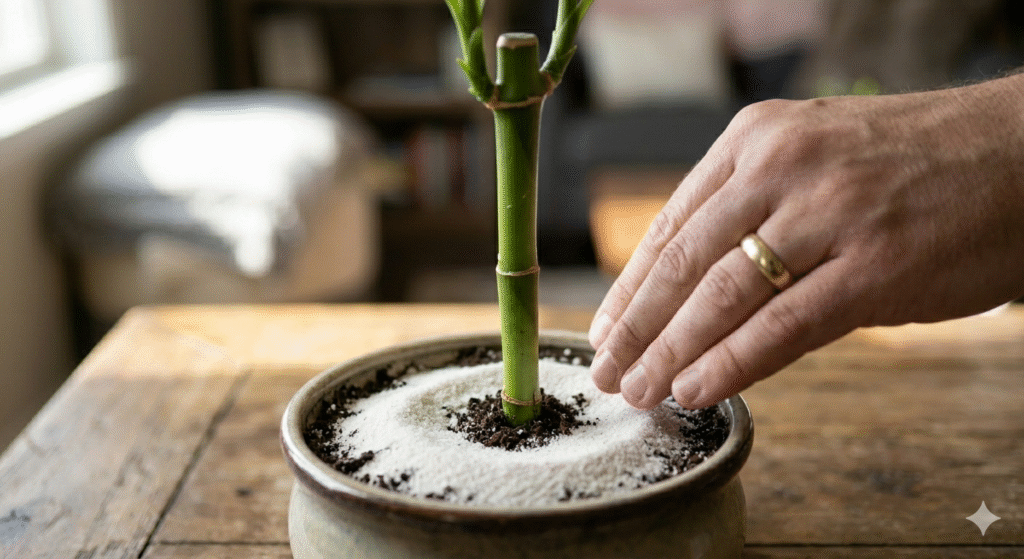
- Top-Dress the Soil: If your bamboo is in soil, add a half-inch layer of sand or fine gravel on top. This dries out quickly and prevents gnats from reaching the moist soil to lay eggs.
- Change Water Regularly: For water-grown bamboo, change the water every 7 to 10 days. This prevents the buildup of organic “biofilm” that gnats love.
- Avoid Overwatering: Bamboo likes to stay moist, but it should never be soggy. If the soil feels damp to the touch, wait another day or two before watering.
- Circulate the Air: Using a small desk fan near your plants can make it difficult for the weak-flying gnats to land and lay eggs.
When to Seek Extra Help
Most gnat problems can be solved within two weeks using the methods above. However, if you notice your bamboo leaves turning yellow or the stalks feeling soft and mushy, the gnats might be a symptom of a larger problem like root rot.
If the roots look brown and slimy instead of white or orange, trim away the damaged parts with sterilized scissors before putting the plant back in fresh water or soil. A healthy plant is much better at resisting pests than a stressed one.
FAQs
How to get rid of gnats on bamboo?
To eliminate gnats, start by cleaning the vase and pebbles or replacing the top layer of soil. Use yellow sticky traps to catch flying adults and treat the water or soil with a diluted hydrogen peroxide mix to kill larvae.
Can you put vinegar in plant soil to kill gnats?
No, you should not pour vinegar directly into the soil. Vinegar is highly acidic and can change the pH level of the dirt, which may burn the roots or even kill your bamboo. Use vinegar in a separate trap next to the plant instead.
Do coffee grounds keep gnats away?
Actually, coffee grounds can make the problem worse. While some believe the scent repels bugs, moist coffee grounds create a layer of organic mold that fungus gnats love to eat and breed in. It is better to stick to sand or gravel for a top layer.
How do I get rid of bugs on my bamboo plant?
For gnats, focus on moisture control and traps. For other bugs like spider mites or mealybugs, wipe the stalks and leaves with a soft cloth dipped in a mixture of water and a few drops of mild dish soap.
What kills gnats without killing plants?
Neem oil, hydrogen peroxide (diluted), and Bacillus thuringiensis israelensis (Bti) are all safe options. These target the pests specifically while leaving your bamboo unharmed. Sticky traps are also a 100% plant-safe way to reduce the population.
Can I spray vinegar on bamboo?
It is not recommended. Bamboo leaves are sensitive, and the acetic acid in vinegar can cause spotting or wilting. If you need to clean the leaves, use plain filtered water or a very weak solution of insecticidal soap designed for plants.
Conclusion
Dealing with gnats is a rite of passage for many indoor gardeners. To keep your lucky bamboo healthy and your home bug-free, remember these core tips:
- Identify the Source: Check if the gnats are coming from damp soil or stagnant water.
- Clean Thoroughly: Scrub vases, boil pebbles, or replace the top layer of soil to remove eggs.
- Trap the Adults: Use yellow sticky traps or apple cider vinegar to stop the breeding cycle.
- Kill the Larvae: Use a hydrogen peroxide mix or Bti-infused water for a deep clean.
- Maintain Hygiene: Change water weekly and avoid letting soil stay excessively wet.
By taking these steps, you can get back to enjoying the beauty of your bamboo without the frustration of unwanted pests.