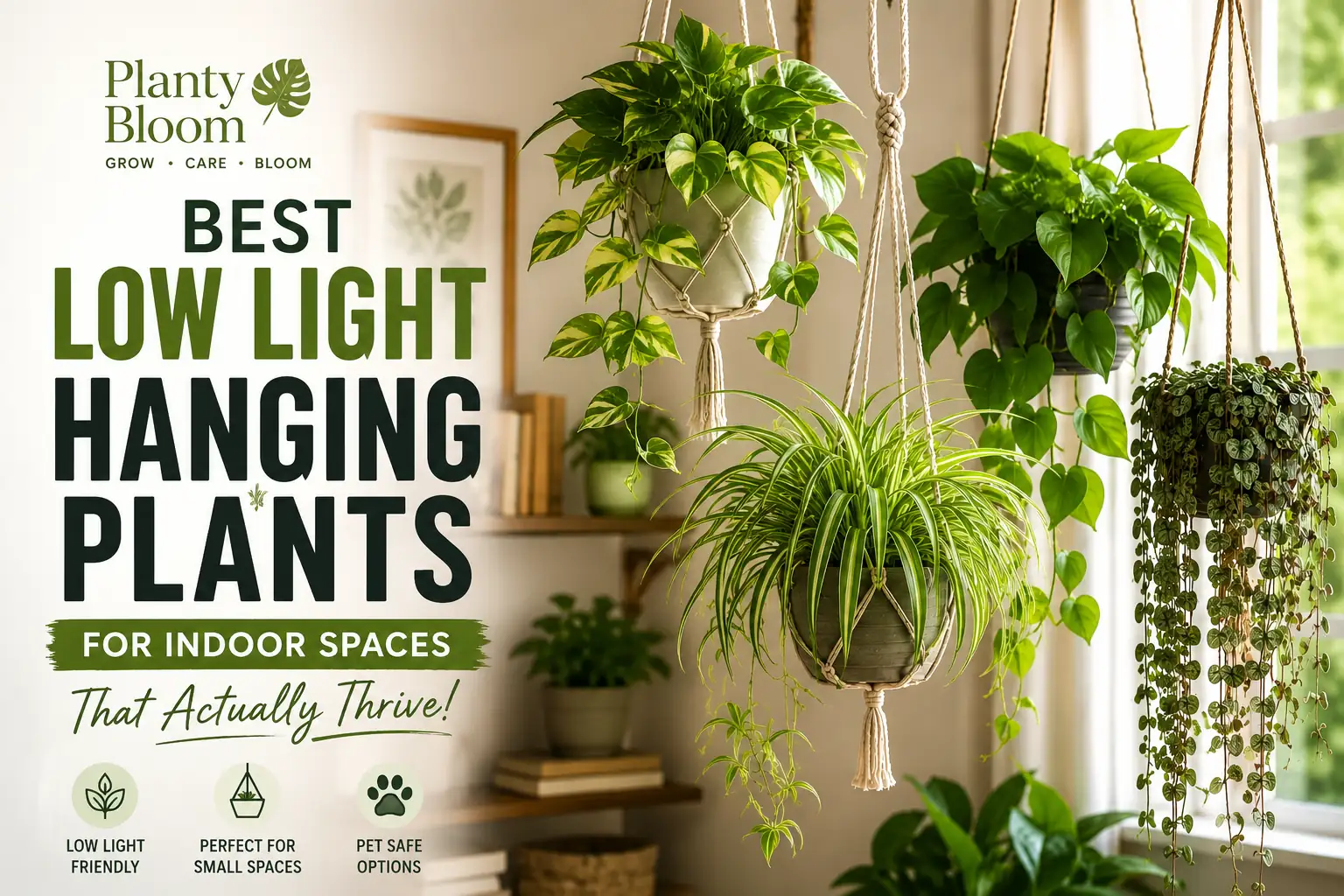
Low light plants are the perfect solution for homes that do not receive strong natural sunlight throughout the day. Many indoor spaces such as apartments with compact windows, shaded balconies, north-facing rooms, and even bathrooms can make it difficult for regular houseplants to thrive. That is where choosing the right greenery makes all the difference.
Hanging plants work especially well in these settings because they save valuable floor space while adding a fresh decorative touch. They can instantly make blank corners feel softer, bring texture to walls, and create visual interest around shelves, ceilings, and windows.
For anyone searching for low light hanging plants indoor spaces can actually support long term, selecting plant varieties that naturally tolerate indirect or filtered light is far more important than simply following popular trends.
Why Hanging Plants Usually Do Better Indoors
A hanging plant naturally gets a bit of an advantage.
When you place a plant on a low shelf or the floor, it often gets blocked by furniture, curtains, or just poor room layout. But hanging it a little higher can make a real difference. Even half a meter closer to a window matters more than people think.
A lot of the best indoor hanging plants for low light come from tropical regions where they naturally grow under tree cover. They’re used to filtered light, humidity, and not being blasted by harsh afternoon sun.
So if your home feels a little dim, don’t assume plants are off the table.
You just need the right ones.
Before You Buy Anything
Quick reality check.
“Low light” doesn’t mean “stick it in a windowless cave and hope for the best.”
Plants still need some light to stay healthy. Low light simply means they can manage with less of it compared to fussier plants.
Before buying any low light hanging plants indoor growers usually do well with, think about your space first.
Ask yourself:
- Does this room get at least some natural light during the day?
- Is the room humid, dry, or somewhere in between?
- Do you have pets who like chewing leaves for no reason?
- Can you actually reach the plant to water it without creating a daily obstacle course?
That last one matters more than people admit.
Pothos Is Still the Easiest Recommendation
If someone asks me for one plant recommendation and they’re a beginner, I usually say pothos without thinking twice.
There’s a reason it shows up on almost every plant list.
Pothos grows fast, trails beautifully from hanging baskets, and forgives inconsistent watering better than most houseplants. I’ve seen pothos survive in some truly dark corners where other plants would’ve simply given up.
Golden pothos is a classic if you like a little yellow mixed into the leaves. Jade pothos is darker and moodier, which I personally prefer in bedrooms or office spaces.
It’s also easy to propagate, which means one plant can quietly become five before you know it.
That’s how plant collections start. Dangerous hobby.
For anyone searching for the best hanging plants for low light, pothos is usually the safest bet.
Heartleaf Philodendron Feels More Relaxed
Heartleaf philodendron has a slightly softer, more casual look than pothos.
The vines trail down nicely, the leaves are shaped like little hearts, and overall it just looks less structured and more effortless.
It handles medium to low light well and doesn’t ask for much beyond occasional watering.
Mine tends to be happiest above a bookshelf where it gets indirect light most of the day and zero drama.
If you like leafy indoor spaces, adding a few evergreen indoor plants alongside trailing varieties creates a fuller look without making your room feel overcrowded.
Spider Plant Is Great If You Want Something Easy
Spider plants are weirdly satisfying.
They grow fast, throw out little baby plants, and somehow always look cheerful.
Their striped leaves spill outward in all directions, which makes them ideal for hanging baskets. Once mature, they start producing tiny offshoots that dangle down like plant babies on strings.
They tolerate lower light better than most people assume, though they definitely appreciate brighter indirect light when available.
Also worth mentioning, if you have pets, this is one of the more reliable cat safe hanging plants low light plant lovers can keep around.
That alone makes it worth considering.
Boston Fern Loves Bathrooms, But It Has Opinions
Boston ferns can look amazing.
Big, full, and slightly wild in the best way.
But fair warning: they can be a little dramatic.
If they dry out too much, they’ll absolutely let you know by dropping leaves everywhere like a tiny passive-aggressive protest.
That said, bathrooms are often the perfect home for them.
Higher humidity plus softer light makes Boston fern one of the strongest hanging plants for bathroom low light spaces. If your bathroom has even a small frosted window, you’re probably in business.
Just don’t forget to check moisture levels.
English Ivy for a More Traditional Look
English ivy feels a bit more classic.
Smaller leaves, tighter growth, and a neater trailing habit make it look cleaner than some of the looser tropical options.
It works nicely in cooler rooms or near filtered light.
Not my personal favorite for absolute beginners, but visually, it does look great in ceramic hanging pots or woven baskets.
Peperomia Is Low Maintenance and Underrated
Peperomia doesn’t get enough attention.
It stays fairly compact, doesn’t need constant watering, and comes in different leaf shapes and textures depending on the variety.
Trailing peperomia works especially well in kitchens, smaller bedrooms, or desks where you want greenery but not a giant overflowing plant.
It’s one of those plants you kind of forget about, which honestly is part of the appeal.
String of Hearts for a More Minimal Look
String of hearts is for people who like cleaner, lighter styling.
Long trailing vines with tiny heart-shaped leaves make it look a little more decorative than leafy.
It does better in brighter indirect light but can adapt to moderate light if placed close enough to a window.
Not the most forgiving plant here, but definitely one of the prettiest.
ZZ Plant Is Almost Too Easy
ZZ plants are famously low maintenance.
Almost suspiciously low maintenance.
Most people keep them on tables or the floor, but smaller ones can work surprisingly well in elevated planters too.
They handle low light very well, need very little watering, and seem built for people who travel, forget schedules, or simply cannot commit to high-maintenance plants.
If your watering routine is basically “whenever I remember,” this one gets it.
Best Hanging Plants for Bedroom Low Light
Bedrooms usually have softer lighting and a calmer atmosphere, which actually suits certain plants well.
The ones I’d personally choose first are:
- Pothos
- Heartleaf philodendron
- Spider plant
- Peperomia
They’re simple, adaptable, and don’t need constant babysitting.
If your bedroom has just one small window, hang the plant as close to the brightest area as possible. Even small adjustments help.
Simple Care Tips That Actually Matter
Caring for low light indoor hanging plants is mostly about avoiding common mistakes.
The biggest one is overwatering.
Because plants in lower light dry out more slowly, watering on a rigid schedule is usually a bad idea. Check the soil first. Always.
A few habits that help:
- Rotate your plant every few weeks so it grows evenly
- Dust the leaves occasionally because dusty leaves struggle more indoors
- Feed lightly during growing months
- Don’t panic over slower growth in lower light
Slow growth is normal.
Dead roots are not.
Conclusion
A darker room doesn’t mean you have to give up on indoor plants.
You just need realistic expectations and smarter plant choices.
Low light hanging plants are one of the easiest ways to make a room feel more alive without taking over your entire floor space or demanding constant attention.
Start simple. A pothos, philodendron, or spider plant is more than enough to begin with.
Once you keep one alive for a few months, confidence kicks in.
Then suddenly you’re looking at empty corners thinking, “You know what would look good there?”
That’s how it starts.